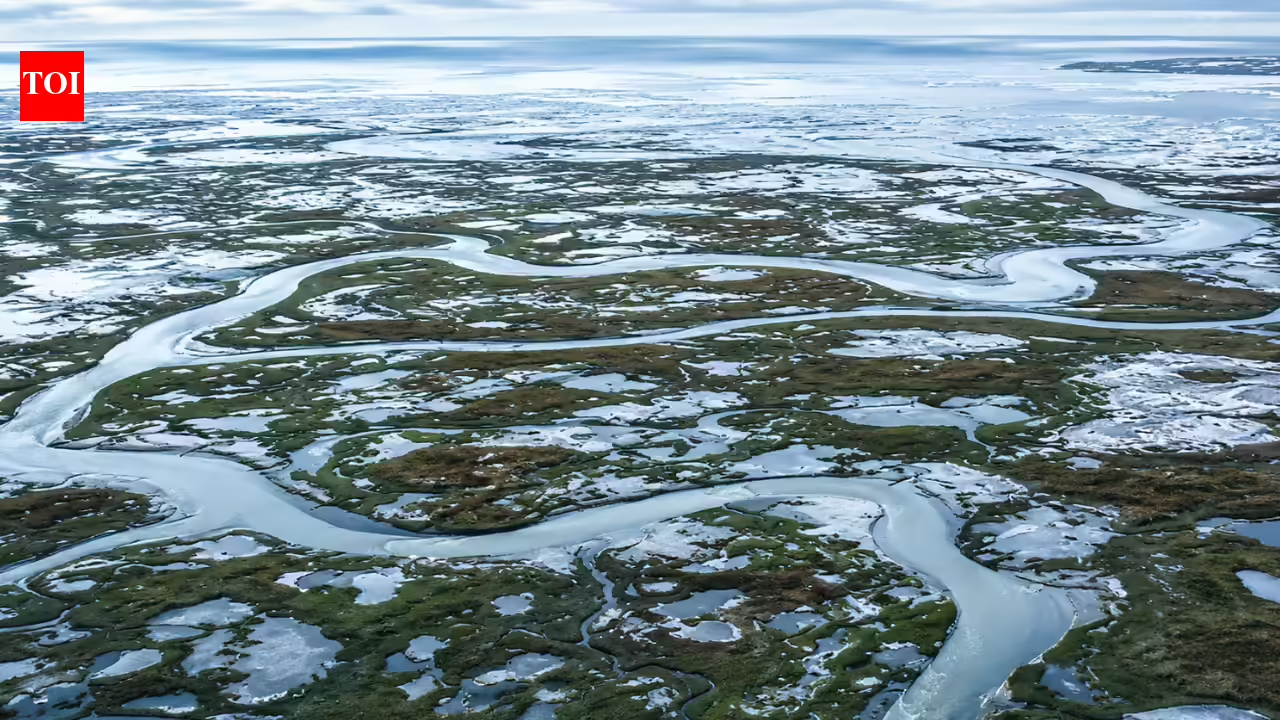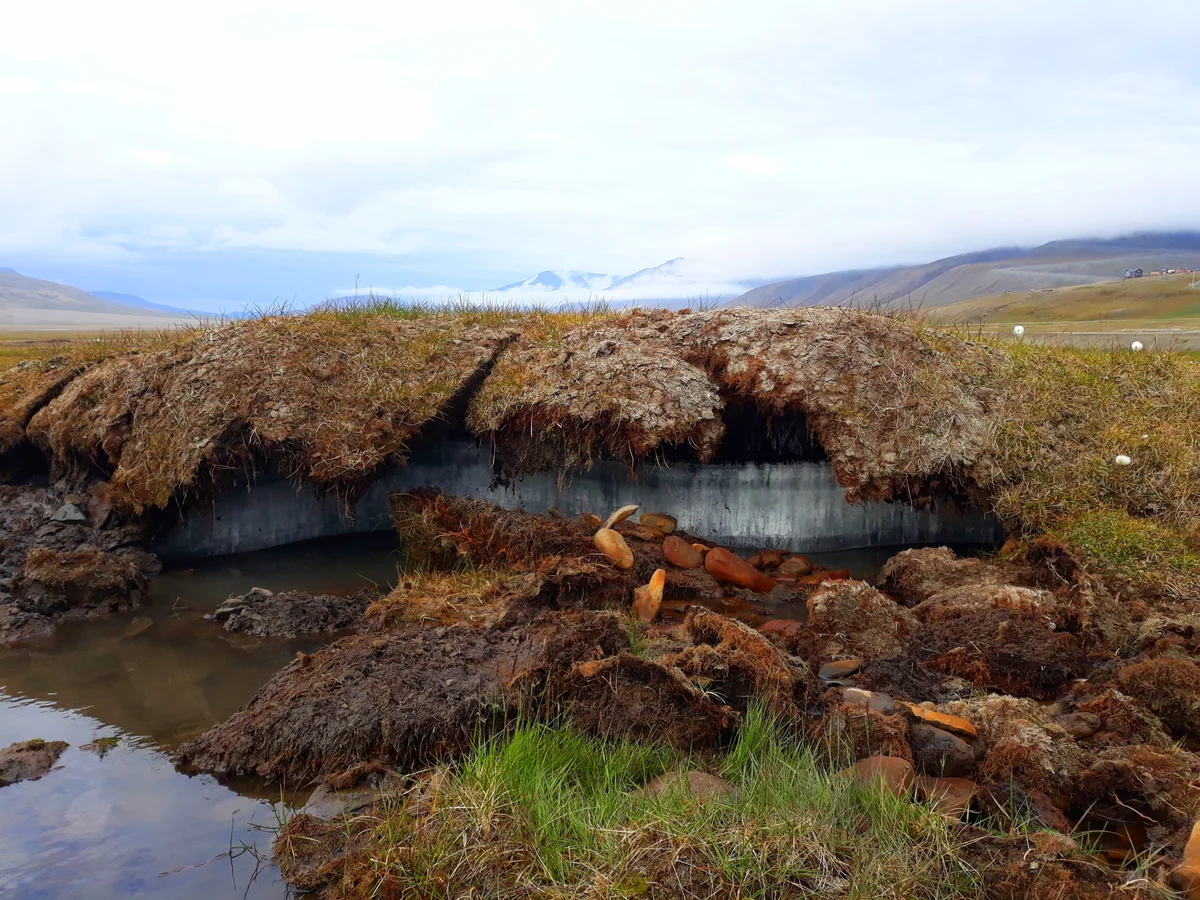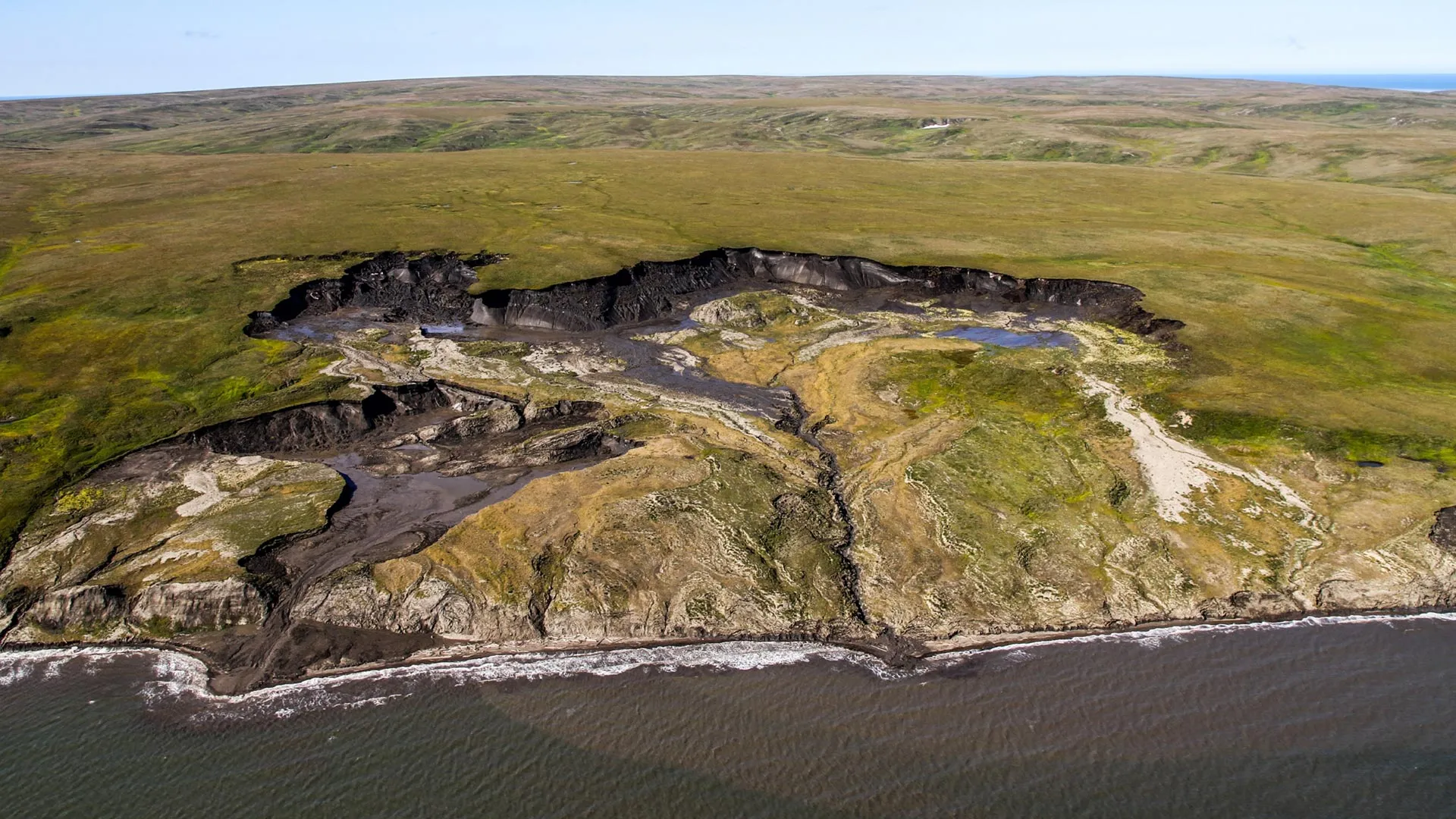
The Arctic's frozen ground contains enormous stores of organic carbon. As permafrost thaws and coastlines erode, some of that carbon is carried into the ocean. There, microorganisms can break it down and release greenhouse gases that contribute to climate change.
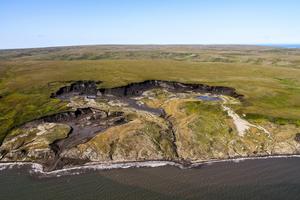
Until now, scientists have had limited information about how much of this carbon returns to the atmosphere and how much remains trapped in the ocean. Researchers from the Alfred Wegener Institute and MARUM - Centre for Marine Environmental Sciences at the University of Bremen have now examined this process along the permafrost coast of Qikiqtaruk (Herschel Island) in Canada.
By studying sediment cores, the team found that large amounts of carbon from land are preserved in the seafloor. They also discovered that marine microorganisms behave like selective eaters, favoring fresh carbon from the ocean over older carbon released from permafrost. The findings were published in Nature Geoscience.
Vast Carbon Stores Are Beginning to Thaw
Permafrost ecosystems on Arctic land contain about 1,300 gigatonnes of organic carbon, much of it from plant remains. Another 400 gigatonnes are stored in ocean sediments and river deltas.