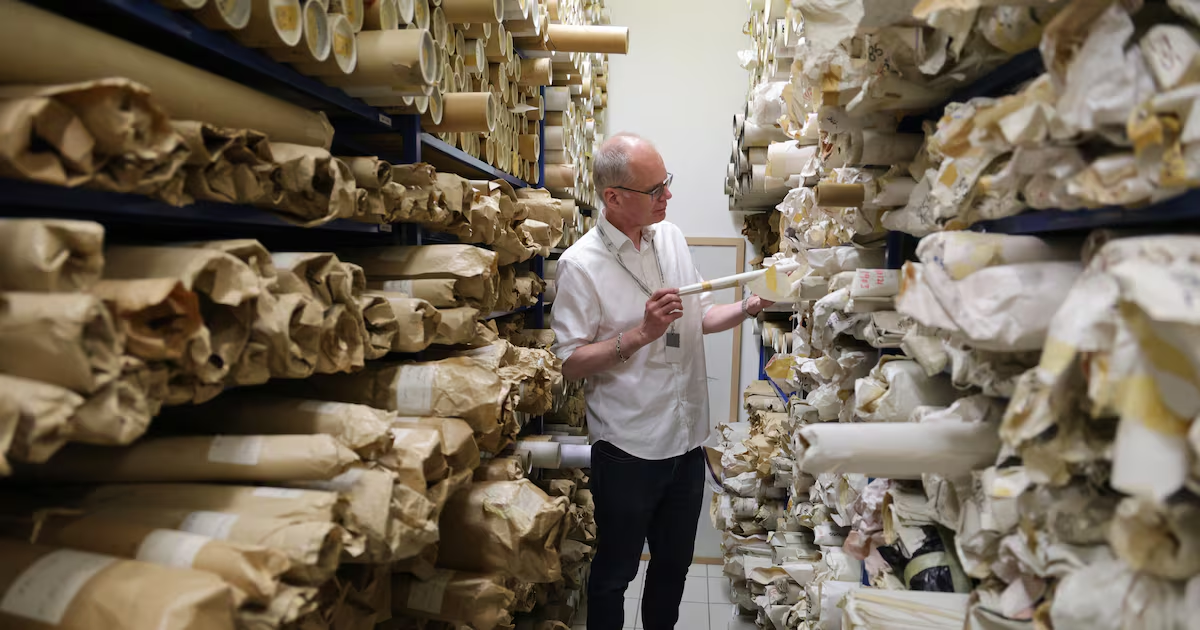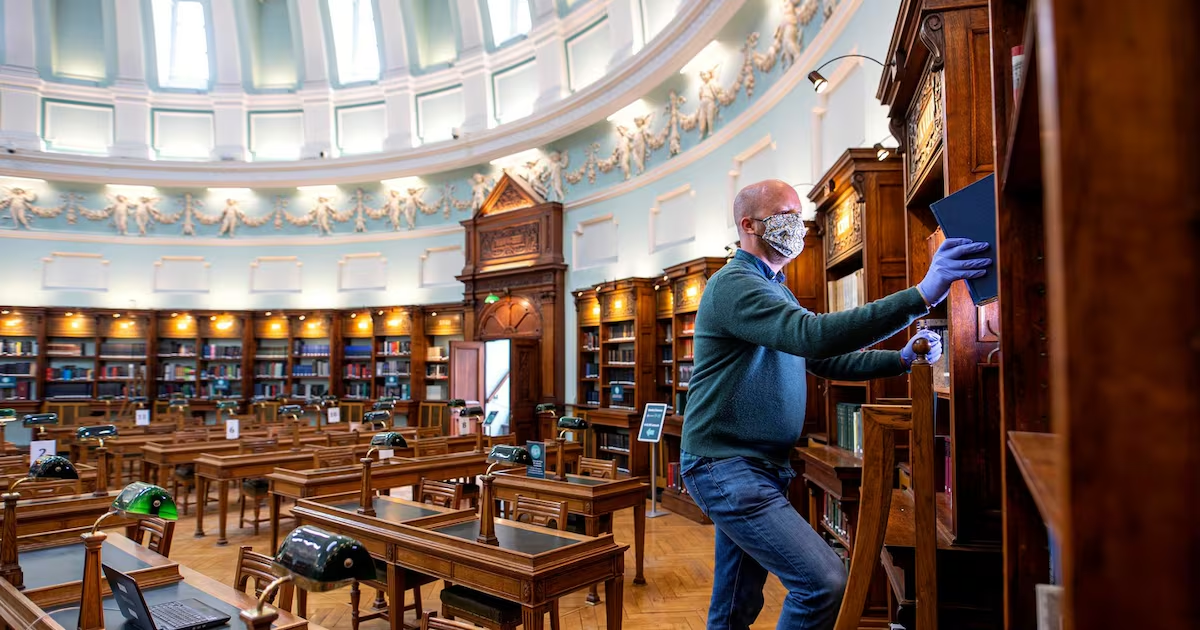
Recently, on the last week of the law term, I found myself in court 13, on the second floor of the Gandon Building in Dublin’s Four Courts, waiting for the judge to arrive.There as a reporter, I sat to the side of the high-ceilinged room, on a short bench, between two tall sash windows that someone had opened. The breeze from the Liffey was pleasantly cool. In their assigned seats around a battered old wooden table sat two solicitors and three barristers, while the registrar, on his perch below the judge’s bench, looked out on the empty public seating.It was a warm, sunny morning and I’d stopped on my way there at the Oxmantown cafe, on the corner of Mary’s Abbey and East Arran Street, where they do a nice coffee and a superior sausage sandwich. I looked through the morning edition of The Irish Times while two busmen chatted amiably with the cafe staff. It was one of those good, city moments.Adequately caffeinated, I entered the Four Courts complex through the gate on Chancery Place and climbed the stairwell beside the Central Office to the second floor of the Gandon Building (built 1776-1802). Walking along the echoing corridor with wooden doors on one side and windows on the other that looked across the small inner yard to courts 24, 25 and 26 on the far side, it crossed my mind that a felicitous aspect of a reporter’s work is the amount of time spent in the rooms and corridors of Ireland’s premier public buildings.Between 1996 and 2010, I spent a large part of my working life in Dublin Castle (the Record Tower dates from circa 1220), going in and out of George’s Hall on the first floor of West Range Building on the upper yard (built circa 1715) while the various tribunals wound their way through the murkier aspects of Irish public life. Whenever there was a break, reporters could slip out through the Palace Street Gate (1756) to Chez Max for some good takeaway coffee.Archives manager Ellen Murphy at the Registry of Deeds office. Photograph: Bryan O’Brien Earlier in my career I spent a few months working in the press gallery, observing the proceedings of the Dáil in Leinster House (1745-48), while later I was regularly sent to the same building to cover Oireachtas committee meetings and other events. Work has also brought me on a regular basis to the Taoiseach’s department and the Department of Finance in Government Buildings.On the morning of September 30th, 2008, I raced there in time to hear the then minister for finance, the late Brian Lenihan, talk about the dramatic events of the night before, when the cabinet arrived at its fateful decision to guarantee the debts of our main banks. Some of the conversation took place in a huddle in a black and white tiled hallway on the ground floor while early morning civil servants scurried about.Before digitalisation, snooping reporters interested in other people’s property would go to the Registry of Deeds in the King’s Inn building on Constitution Hill, a complex started by James Gandon in 1800. Visitors looked through the files in a lovely, high-ceilinged room with sash windows that face on to Henrietta Street. The room was floor to ceiling with shelves of cloth-bound volumes and the ones you asked for were delivered to you at a counter where you sat on a high stool. It was straight out of Harry Potter.Even before starting out as a reporter, I got to spend a lot of my time in well-built rooms. Secondary school brought me to Coláiste Mhuire (1760s) on Parnell Square, which had generously sized classrooms with high sash windows looking out on to the Garden of Remembrance. Huckleberry Finn-type bunking off moments could be spent wandering through the Hugh Lane Gallery (1763-78) next door. I went from secondary school to Trinity College (founded in 1592 by Elizabeth I), where my lectures included ones given in the magnificent Museum Building (1853-57). Occasionally, I indulged in periods of study in what was then called the Berkeley Library (1967), now the Evan Boland Library, and has at all times been another of Dublin’s architectural treasures.Later in life, when doing research, I spent quite a bit of time in the Reading Room in the National Library (1885-90) on Kildare Street. It is, I think, my favourite of all the public rooms I have ever spent time in, though I have resolved not to say this to people for fear too many might decide to check it out and it would lose its precious, quiet ambience.Coming back from the Four Courts to the newsroom of The Irish Times on Tara Street that day near the end of the law term, I walked past the building on Lower Ormond Quay where I lived in a flat in the late 1980s and early 1990s.It has long looked dirty, derelict and unloved, as do too many buildings along that stretch of the quays, and, indeed, too much of the north inner city.It’s a crying shame.
Doing time: Colm Keena reflects on how he has spent much of his career in lovely buildings
A felicitous aspect of a reporter’s work is the amount of time spent in the rooms and corridors of Ireland’s architectural treasures
840 words~4 min read