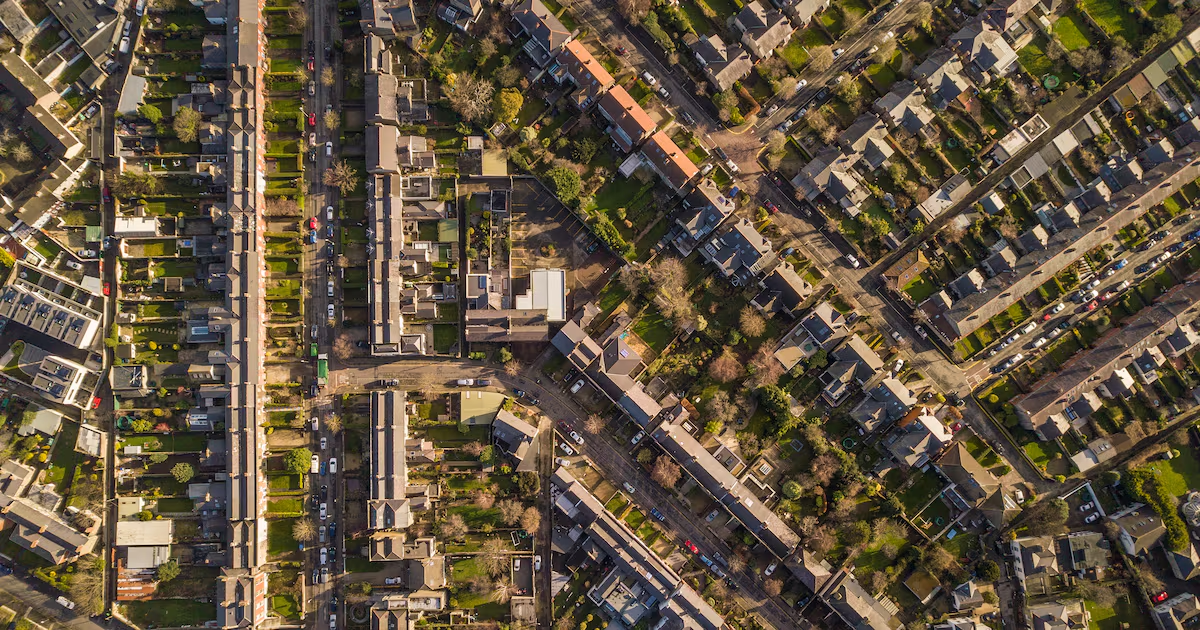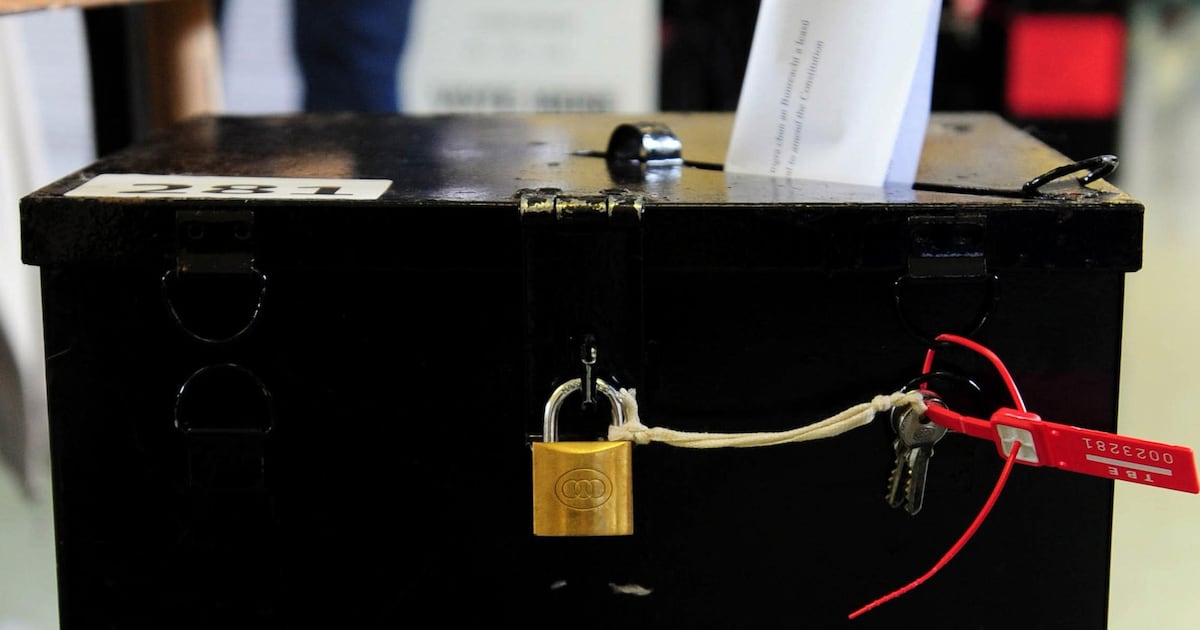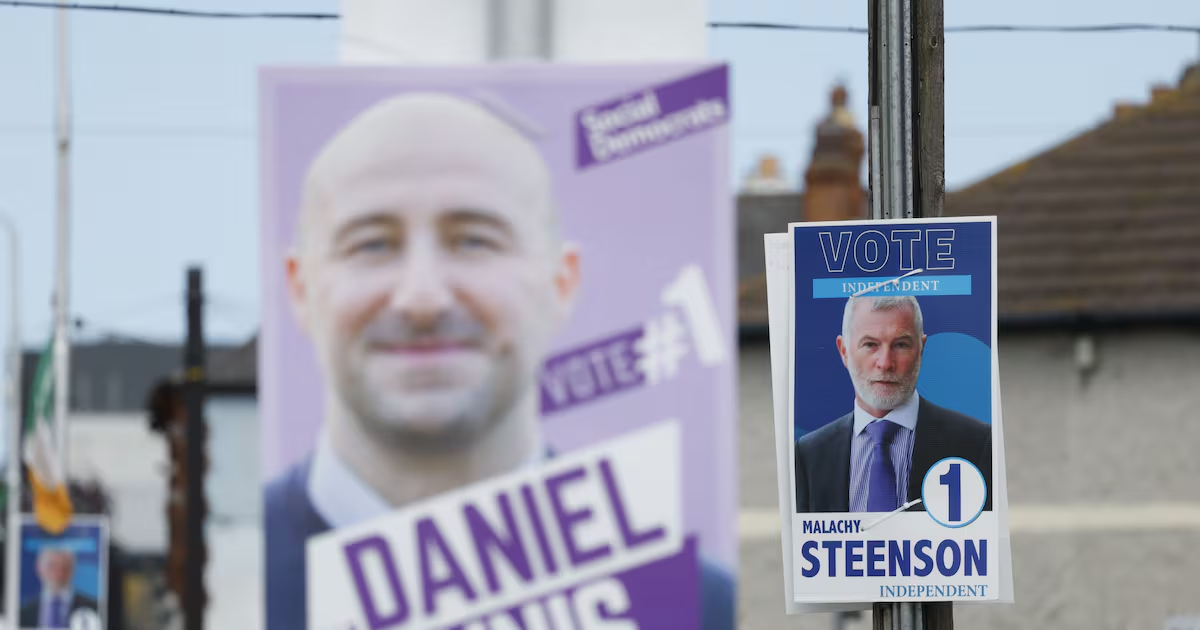
Cliched travel articles tend to begin by describing a place as “a land of contrasts”. But when it comes to Dublin Central, on the precipice of a high-stakes byelection and the constituency I call home, that feels appropriate. This is a place where you may live in something approaching a tenement or in a luxury penthouse. Mostly, you probably live in a terraced house, flat or apartment. It is a place where gleaming offices line the Liffey and less gleaming lines of people wait for food from the Muslim Sisters of Éire at the GPO or outside the Capuchin Day Centre on Bow Street. Dublin Central holds many things at once, including the architecture of corporate wealth and the street life of destitution. It is home to generations of working-class families and the gentrifiers that displace them. I have never been more canvassed in my life. Eoin Ó Broin of Sinn Féin arrived one day, Ray McAdam (Fine Gael), Janet Horner (Green Party), People Before Profit knocked twice, Fine Gael and Fianna Fáil canvassers have done double shifts at my door. One Fianna Fáil canvasser told me a reason for the housing crisis in the area was because so much money was being spent on the MetroLink. Obviously, that wasn’t the party’s only canvassing clanger. If that’s the fabled party machine, there is a reason Fianna Fáil doesn’t fly in the constituency any more.[ Following the canvass: Frustrations emerge in Dublin central Sinn Féin heartland ]In Dublin Central, Dublin 1 tends to pull focus. Next year, the Mulvey Report will be 10 years old, a plan that outlined the social and economic regeneration of Dublin’s northeast inner city in response to a wave of gangland murders. In the foreword, Kieran Mulvey described his period of consultation with the community as informative and instructive, but also “emotive, harrowing and difficult”. In an Irish Times/TG4/Ipsos B&A poll last week, a third of voters cited the cost of living as the most important election issue. The housing crisis was also a big concern. A combined 35 per cent cited house prices and the cost of rent as the most important issues. Fifty-three per cent wanted radical change. One in 10 people homeless in Ireland live on Gardiner Street, Dublin 1. It’s a sobering statistic for an area with its own story to tell about poverty, struggle and the trauma of the heroin epidemic. Yet it is also expected to soak up the broader housing failings of the State.But of course that is not Dublin 1’s only tale. It is also a story of remarkable communities and deep bonds, of culture, talent, resilience, humour and history. This is encapsulated by the Dublin 1 anthem, Up De Flats, written by the artist Gemma Dunleavy. “We found laughs in the middle of the violence,” she sings. “They said we had nothing, but we had it all, shouting up the flats from the rooftops.” [ What are voters’ five big issues in Dublin Central and Galway West byelections? ]Travel down the North Circular Road towards the Phoenix Park and you’ll come to what was O’Devaney Gardens, flats that ended up in a Byzantine series of redevelopment failures, where there are now apartments flying up. For years it was wasteland, people from the community painting their thoughts on the surrounding tarmac as weeds encroached: “Great Flats And People”, “O.D.G. Stick Together”, “Yous Took Our Homes”, “Shame On You All”. Next to that, Stoneybatter’s cottages are now among the most expensive real estate in the country relative to their size, reaching up to €10,000 per square metre.“You have so many [election] posters,” said a friend from the UK who landed in Dublin last week. The constituency is indeed blanketed. Well, much of it. Not so in one part of Dublin Central, the area bordered by the Liffey’s North Wall Quay and Sheriff Street. “Once a working industrial zone, the area has transformed into a thriving hub of business, tech and culture,” the development Urban Rest declares on its website. Renting a three-bedroom penthouse apartment in Quayside Quarter will cost you €75,600 a year. Politicians are apparently not minded to advertise their candidacies overly to the residents here. Apartments are hard to canvass, of course, but is this not a real place? Or is it, as Greystar describes Quayside Quarter on its website, merely an “opportunity” that offered “a tailwind for future investment prospects in Dublin”? The mostly bare poles tell their own story. In a glass structure here you venture underground into the International Centre for the Image. In the New Irish Works exhibition, the artist Mandy O’Neill explores housing and planning in Cabra, including a piece on the role of the pub Matt’s of Cabra in the community. It has been derelict for a decade, and plans are afoot to build student accommodation on the site. Objections to this demonstrate a core friction in Dublin Central: what the area needs versus what it gets.What is easy to forget during this campaign is that this was once at least a sort of bastion of establishment political power, whether that was through the Bertie Ahern era or indeed Paschal Donohoe’s long stint. Now political power is still centralised around – and perhaps has increasingly returned to – working-class communities. It may be a desire for “someone not like the others” that throws up a candidate such as Gerry Hutch, who has the highest name-recognition factor on the ballot and is in effect a bizarre sort of anti-establishment celebrity candidate. Malachy Steenson represents another strand of thinking that frames all of society’s problems as a result of immigration. Other candidates have run optimistic campaigns, such as the Social Democrats’ Daniel Ennis, who will, it is likely, be in a battle with Sinn Féin. The “vote left, transfer left” movement will matter in the area.In Dublin Central, people care deeply about their area. Whoever gets nearest to representing the sentiment that working-class communities deserve better is in with a shout. But whatever happens, the time of Dublin Central voting for government parties may be over.
Una Mullally: Ó Broin called once, McAdam and Horner twice - I’ve never been more canvassed in my life
Dublin Central a place of shiny corporate wealth, grinding poverty and nation’s most expensive cottages
1,013 words~5 min read