France or Spain may sit higher on most travellers’ lists than Germany — which, for the curious traveller, is actually an advantage. It means there is a great deal to discover off the beaten track, in places few people have heard of. In some ways, I find Germany comparable to Rajasthan or Uttar Pradesh: you will find cities with a centuries-old independent history, with courts and kings, their own cultural particularities, and their own identity and traditions. Most people know the larger cities — Berlin, Hamburg, Frankfurt, Munich. So let us take a look at the hidden gems.
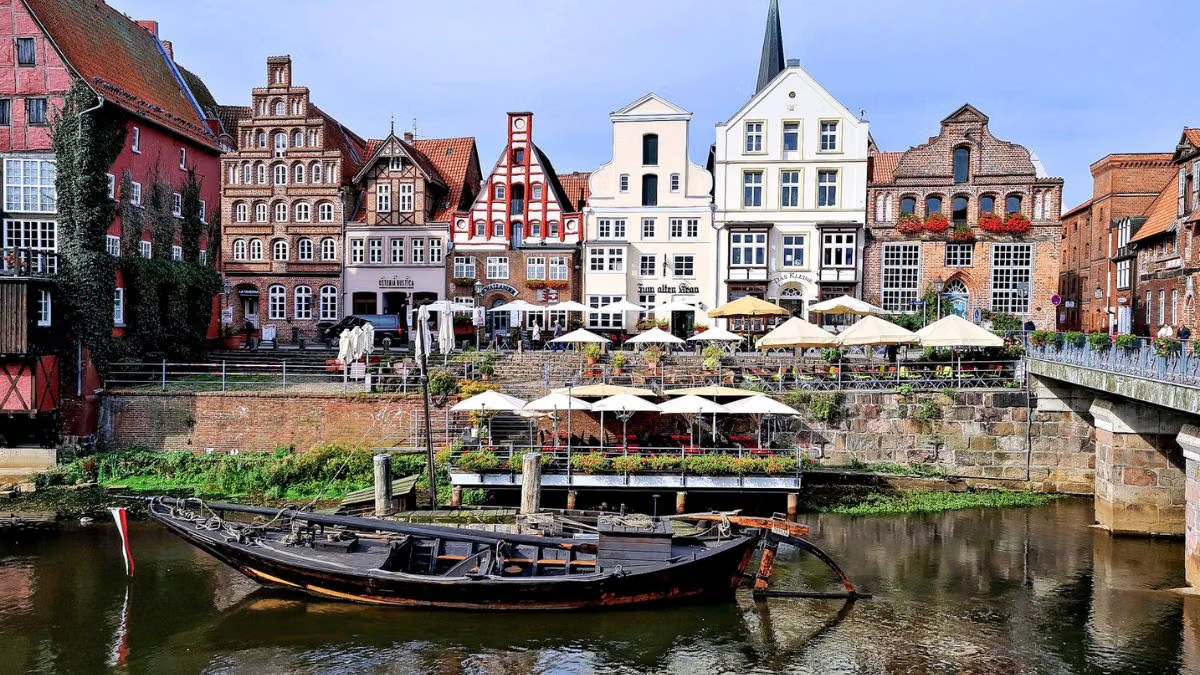
In the north, there is Lübeck. You may have heard of it if you either have a sweet tooth or are a literature buff. For those who like mithai, Lübeck is the birthplace of one of Germany’s signature sweets, marzipan: a blend of almonds, sugar, and a dash of rosewater, often finished in dark chocolate. You can buy Lübecker marzipan in any good German supermarket, but nothing beats tasting it where it was invented. And if you have read the German Nobel laureate Thomas Mann, you will know Buddenbrooks. Set in Lübeck, this book tells the saga of a fictional trading dynasty. At the city’s Buddenbrookhaus, you can step into the world of Thomas Mann — who came from a very similar background — and of the Buddenbrooks themselves.Another northern city worth exploring is Lüneburg. Its wealth rested on a vast underground salt deposit — the ‘white gold’ that made it one of Germany’s richest cities. As it happens, the salt was shipped out through the port of Lübeck. Lüneburg has a maze of charming small alleyways, a beautiful historic market square, and a very peaceful atmosphere.