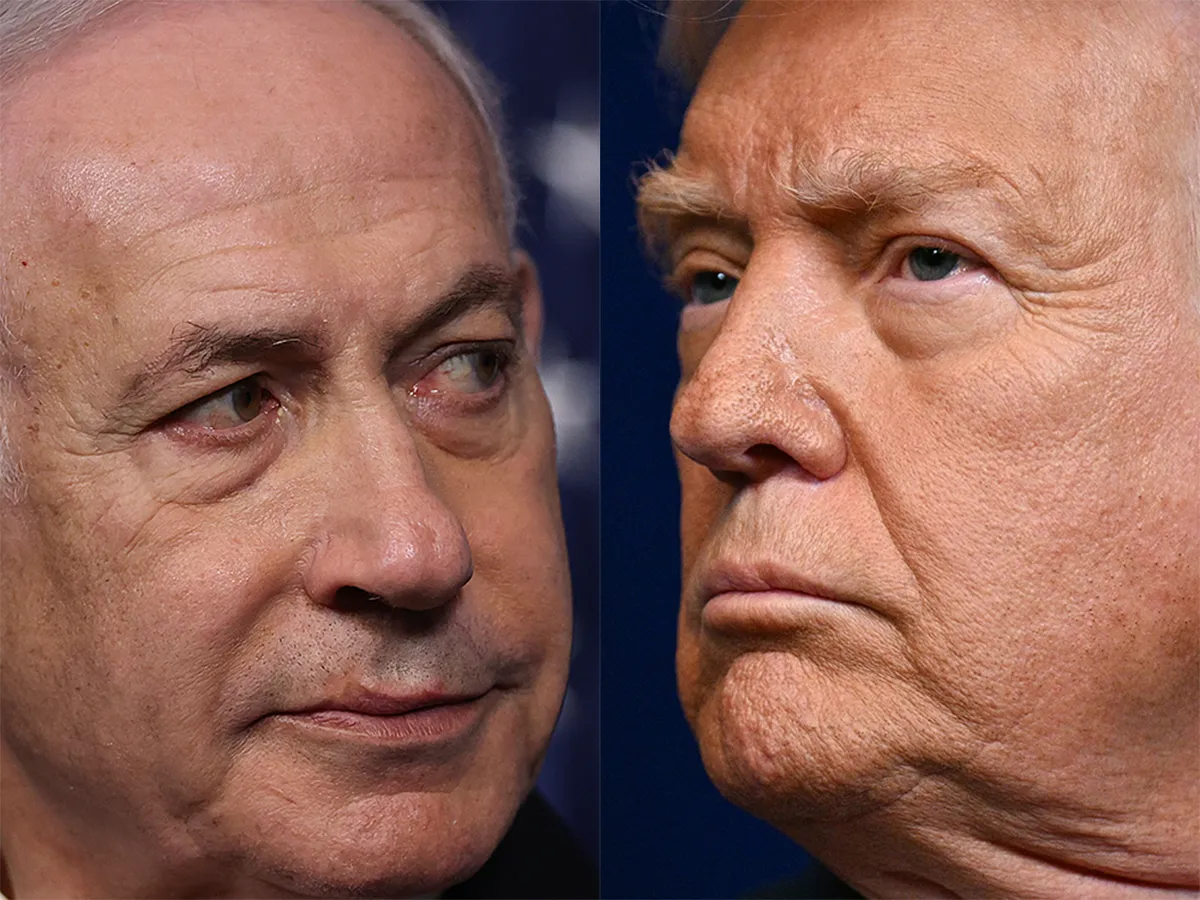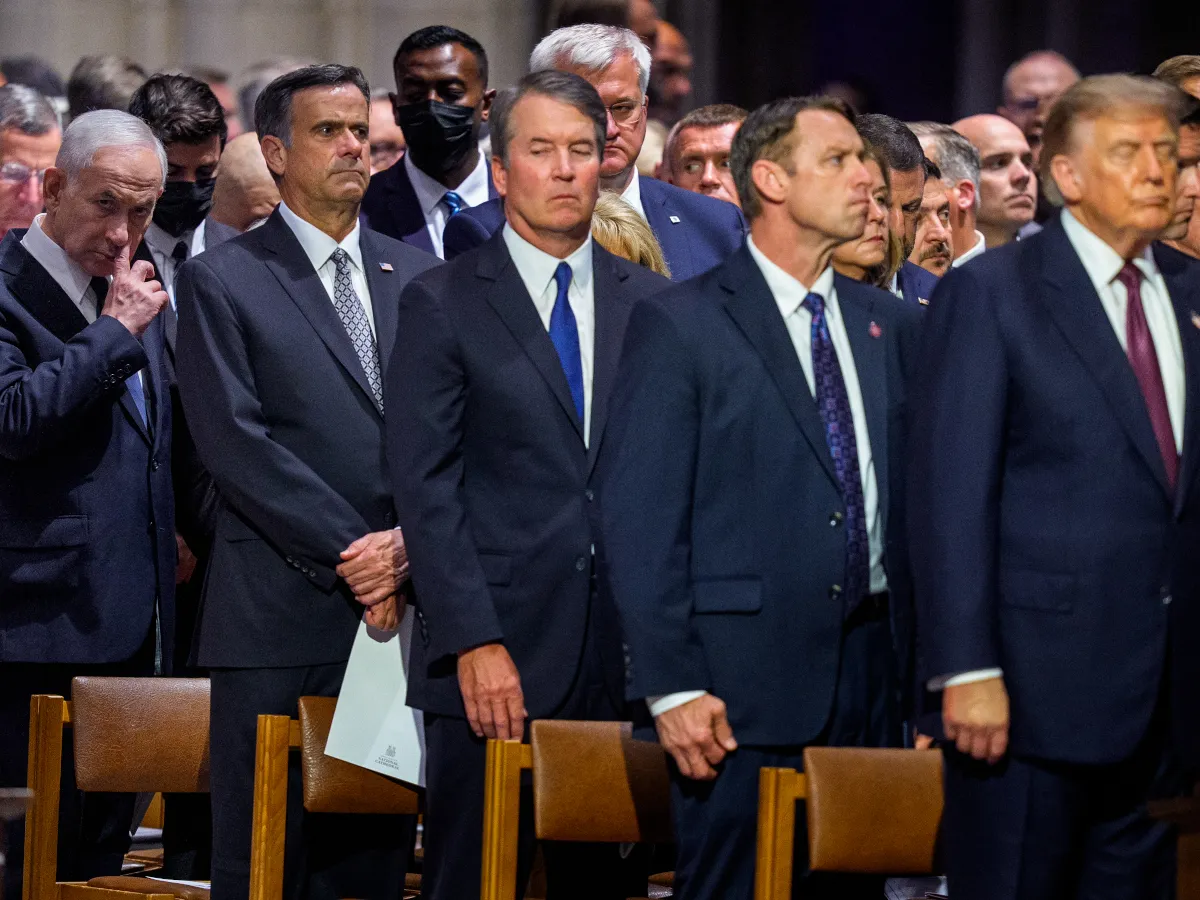
Skip to Content Subscribe Our Offers My Account Manage My Subscriptions FAQ Newsletters Canada Canadian True Crime Canadian Politics Health World Israel & Middle East Financial Post NP Comment Longreads Puzzmo Diversions Comics NP News Quiz New York Times Crossword Horoscopes Life Eating & Drinking Style Sponsored Play for Ontario Travel Travel Canada Travel USA Travel International Cruises Travel Essentials Culture Books Celebrity Movies Music Theatre Television Business Essentials Advice Lives Told Tails Told Shopping Buy Canadian Home Living Outdoor Living Kitchen & Dining Tech Style & Beauty Personal Care Entertainment & Hobbies Gift Guide Travel Guide Amazon Prime Day Deals Savings National Post Store More Sports Hockey Baseball Basketball Football Soccer Golf Tennis Driving Vehicle Research Reviews News Gear Guide Obituaries Place an Obituary Place an In Memoriam Classifieds Place an Ad Celebrations Working Business Ads Archives Healthing Epaper Manage Print Subscription Profile Settings My Subscriptions Saved Articles My Offers Newsletters Customer Service FAQ Newsletters Canada World Financial Post NP Comment Longreads Puzzmo Diversions Life Shopping Epaper Manage Print Subscription HomeNP CommentRaymond J. de Souza: The world grapples with the limits of military forceThe U.S. and Israel have the force. But force may no longer be enough, even against a much weaker rivalLast updated 24 minutes ago You can save this article by registering for free here. Or sign-in if you have an account.Israeli Prime Minister Benjamin Netanyahu, left, and U.S. President Donald Trump, right, attend the funeral for the late U.S. Sen. Lindsey Graham at the Washington National Cathedral in Washington, D.C., on Tuesday. Photo by Andrew Harnik/Getty ImagesVIENNA, Austria – Was Tuesday’s Washington, D.C., funeral for Sen. Lindsey Graham a requiem for an era of which Graham was a champion? The use of military force to achieve geopolitical goals is facing limits not evident even five years ago. Have the war hawks been grounded?Enjoy the latest local, national and international news.Exclusive articles by Conrad Black, Barbara Kay and others. Plus, special edition NP Platformed and First Reading newsletters and virtual events.Unlimited online access to National Post.National Post ePaper, an electronic replica of the print edition to view on any device, share and comment on.Daily puzzles including the New York Times Crossword.Support local journalism.Enjoy the latest local, national and international news.Exclusive articles by Conrad Black, Barbara Kay and others. Plus, special edition NP Platformed and First Reading newsletters and virtual events.Unlimited online access to National Post.National Post ePaper, an electronic replica of the print edition to view on any device, share and comment on.Daily puzzles including the New York Times Crossword.Support local journalism.Create an account or sign in to continue with your reading experience.Access articles from across Canada with one account.Share your thoughts and join the conversation in the comments.Enjoy additional articles per month.Get email updates from your favourite authors.Create an account or sign in to continue with your reading experience.Access articles from across Canada with one accountShare your thoughts and join the conversation in the commentsEnjoy additional articles per monthGet email updates from your favourite authorsSign In or Create an Accountor“Lindsey liked war, to be honest with you,” U.S. President Donald Trump told Fox News on the morning of Graham’s funeral. “I jokingly say, and there’s nothing funny about it, but he’s never seen a war that he didn’t like.”I followed the ceremonies in Washington while travelling from Warsaw to Vienna, historic capitals where history invites reflection on what it means to be the victim of imperial forces, and the limits of imperial power.The National Post newsletter that doesn’t hold back, giving readers the unvarnished truth on media, politics and culture.By signing up, you consent to receive the above newsletter from Postmedia Network Inc.A welcome email is on its way. If you don't see it, please check your junk folder.The next issue of Right? will soon be in your inbox.We encountered an issue signing you up. Please try again(Summertime trivia for those who like geography questions: how many sovereign countries have capital cities beginning with W in their own languages? Five: Washington, Warsaw, Wien (Vienna), Wellington and Windhoek, Namibia.)Another W question, put to music back in 1970: “War, what is it good for?” Several important things, actually, beginning with defending sovereignty, liberty and justice. Not always, though, as war can be used for conquest, oppression and injustice. And war always brings suffering, destruction and death.Another question: What if even a war with just goals doesn’t work? Then what is it good for?Graham’s funeral brought two wartime leaders, Israeli Prime Minister Benjamin Netanyahu and Ukrainian President Volodymyr Zelenskyy, to Washington. Two wars, two continents, two Oval Office meetings, but one common theme: the limits of pure military force are becoming evident.Russia’s full-scale invasion of Ukraine in 2022 was launched on the premise that the relative balance of armed forces greatly favoured the larger invader. Moscow did not count on the bravery of the Ukrainian resistance and, while it claimed territory in the east, Russian military force was simply not capable to seizing the centre of the country. Rapid technological transformations have turned the war moderately toward Ukraine, though Russia is still able to send missiles into residential neighbourhoods, which used to be recognized as a war crime.Between 2014, when Russia seized and annexed Crimea without much effort, and 2026, the limits of military power have become more evident. Graham, the last of the soaring war hawks, died just as that new reality was dawning, not only in Ukraine (to his delight), but also Gaza and Iran (to his dismay).After the Hamas invasion and massacre of October 2023, Netanyahu launched a crushing operation in Gaza, defending it against accusations of “war crimes” on the grounds that Hamas had deliberately embedded its fighting forces among civilians. The Israel Defence Forces, with total control of Gaza’s borders, absolute control of Gaza’s airspace and the ability to send ground troops wherever it wished in the tiny territory, had no limit on its power and reduced wide swaths to rubble.Nevertheless, after two years of pulverization, when the ceasefire was declared in October 2025, Hamas was still in power in Gaza, with effective control of the territory not under direct IDF occupation. If the might of the IDF could not eliminate Hamas after two years of intense fighting in Gaza, it may well be that sheer might is not mighty enough.In Iran, Trump infamously threatened that “a whole civilization will die tonight, never to be brought back again.” There is no doubt that American-Israeli air strikes could eliminate all of Iran’s bridges, major roads, ports, electrical grid and refineries. Hundreds of thousands of civilians could be killed and millions more could die from disease, hunger and lack of water access. That hasn’t happened because those would be clear war crimes.Yet it also hasn’t happened because it is not clear that it would achieve the military objective. Set aside the evidently false claim that Iran was “weeks away” from a nuclear bomb — the nuclear program was already “obliterated” in last year’s Operation Midnight Hammer, according to Trump — the war is now about opening the Strait of Hormuz and protecting America’s allies from lesser, but real, damage from Iran.Former U.S. president Ronald Reagan used naval power to keep Hormuz open nearly 40 years ago when Iran tried to close it at the end of the Iran-Iraq War. The original “peace through strength” president succeeded and it stayed open for four decades until Trump began his war. But Reagan did not have to worry about Iran’s missile and drone arsenal — or the Houthis using the same to cut off Red Sea access to the Arabian Sea.It is not evident that even the pulverization of Iran — an enormous territory of over 90-million people — could put an end to attacks on shipping in the Persian Gulf and Red Sea, as well as attacks on ports, airports, refineries and desalination plans.Consider Kuwait, which hosts a massive American military presence. It would be impossible now for any neighbour to invade it as Iraq did in 1990. But Iran needn’t invade. Kuwait gets 90 per cent of its drinking water from desalination, and Iran has hit its facilities, though they have been repaired. What if they were taken out? Kuwait exports all its oil — two-million barrels daily — through Hormuz. Iran has largely closed it for months.Similar, though less severe, situations prevail in Saudi Arabia, Bahrain, Qatar and the United Arab Emirates. Hence Trump and Netanyahu’s conundrum. They have the force. But force may no longer be enough, even against a much weaker rival.Their military power is formidable. War has changed. After Gaza and Iran, even as the late senator Graham was buried, it may be that the flight of the hawks has ended.National Post Join the Conversation This website uses cookies to personalize your content (including ads), and allows us to analyze our traffic. Read more about cookies here. By continuing to use our site, you agree to our Terms of Use and Privacy Policy.
Raymond J. de Souza: The world grapples with the limits of military force
The U.S. and Israel have the force. But force may no longer be enough, even against a much weaker rival
1,490 words~7 min read