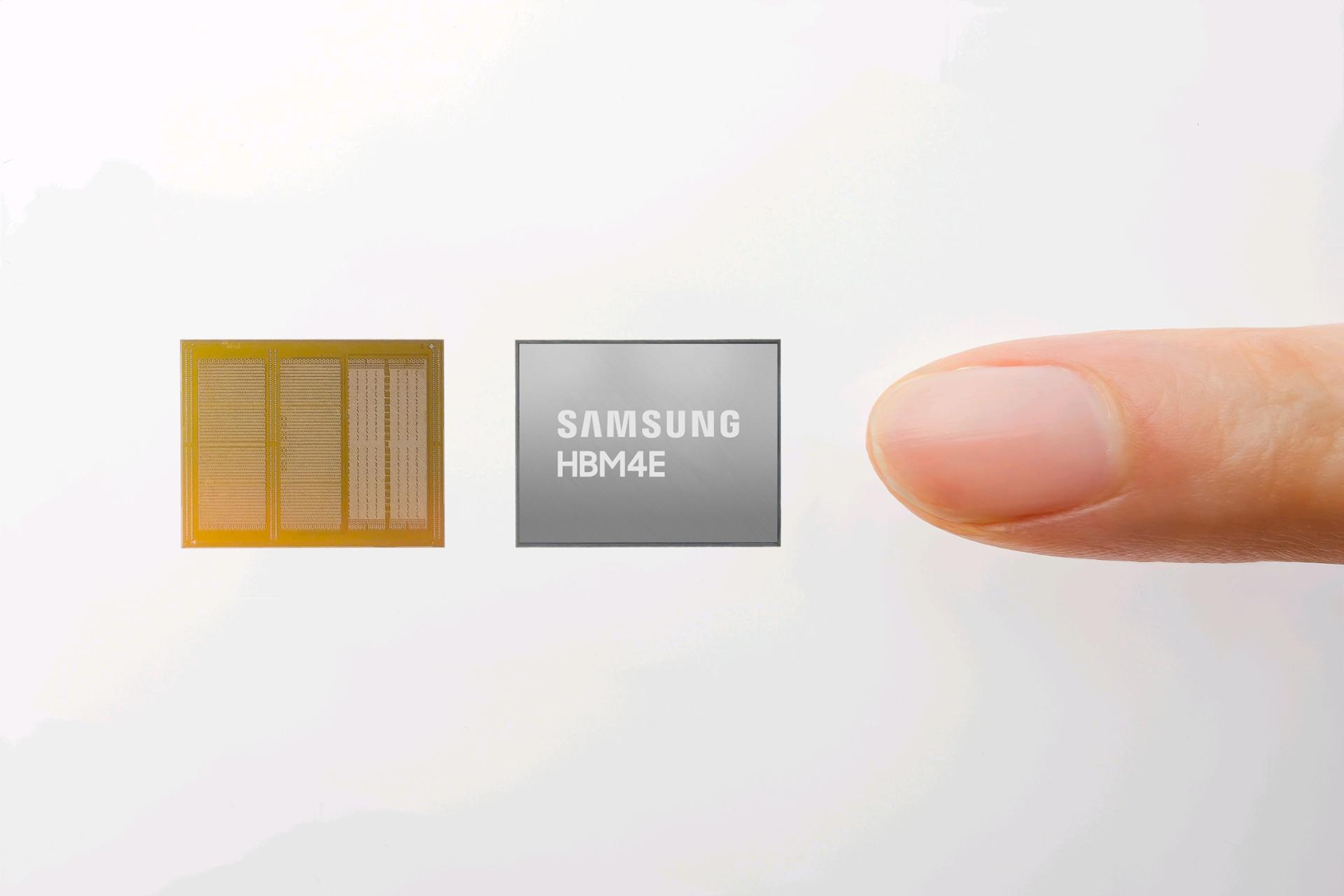
Samsung Electronics’ headquarters in Suwon (left) and SK hynix’s in Icheon, both located in Gyeonggi Province (Newsis) Samsung Electronics is expected to overtake SK hynix in the high-bandwidth memory market, fueled by the rapid expansion of its next-generation HBM4 business, according to a global investment bank’s report on Sunday.UBS projects Samsung to account for 41 percent of global HBM bit shipments in 2027, narrowly ahead of SK hynix at 39 percent, while Micron Technology is expected to hold a 20 percent share. The forecast marks an acceleration from UBS’ May projection that Samsung would reach parity with SK hynix by next year. SK hynix is expected to remain the market leader this year with a 48 percent share.Samsung is counting on a rapid expansion of HBM4 production to close the gap. During its second-quarter earnings conference call Thursday, the company said HBM4 revenue in the third quarter would more than triple from the previous quarter. It also said HBM4 is expected to account for more than 60 percent of its total HBM revenue in the second half.The company has signaled its intention to expand its HBM market share toward the level it holds in the broader DRAM market. According to Counterpoint Research, Samsung led the global DRAM market in the first quarter with a 38 percent share, while SK hynix ranked second with 29 percent.“Samsung is making the fastest progress in HBM4 certification and yield improvement,” an industry source familiar with the company said. “Given the pace of hyperscaler certifications and the expected increase in shipments, the market could develop largely in line with UBS’ forecast.”SK hynix, meanwhile, is seeking to defend its lead by leveraging its established customer relationships. During its second-quarter earnings conference call Wednesday, the company said it had begun mass-producing and supplying HBM4 to key customers in the second quarter, with yields and product quality approaching those of its mature HBM3E products.Production capacity will also play a crucial role in determining the outcome. UBS estimates that SK hynix’s HBM production capacity will rise from 230,000 wafers per month by the end of this year to 270,000 wafers per month by the end of next year.SK hynix is accelerating the production schedule for its M15X facility in Cheongju, North Chungcheong Province, and plans to bring the clean room at its first fab in Yongin, Gyeonggi Province, online early next year. Samsung is also expanding its manufacturing base, including by accelerating construction of its P5 facility at the campus in Pyeongtaek, Gyeonggi Province.Industry observers say the next phase of HBM competition will depend less on technology leadership than on manufacturing execution and customer validation.“Samsung has moved ahead in some aspects of HBM4 development and is ramping up production quickly, but there may be little difference in the products’ overall performance,” an industry source said. “The market will ultimately be shaped by who can secure stable yields and quality while maintaining the trust of key customers such as Nvidia.”
Samsung poised to overtake SK hynix in HBM race
Samsung Electronics is expected to overtake SK hynix in the high-bandwidth memory market, fueled by the rapid expansion of its next-generation HBM4 business, ac
491 words~2 min read