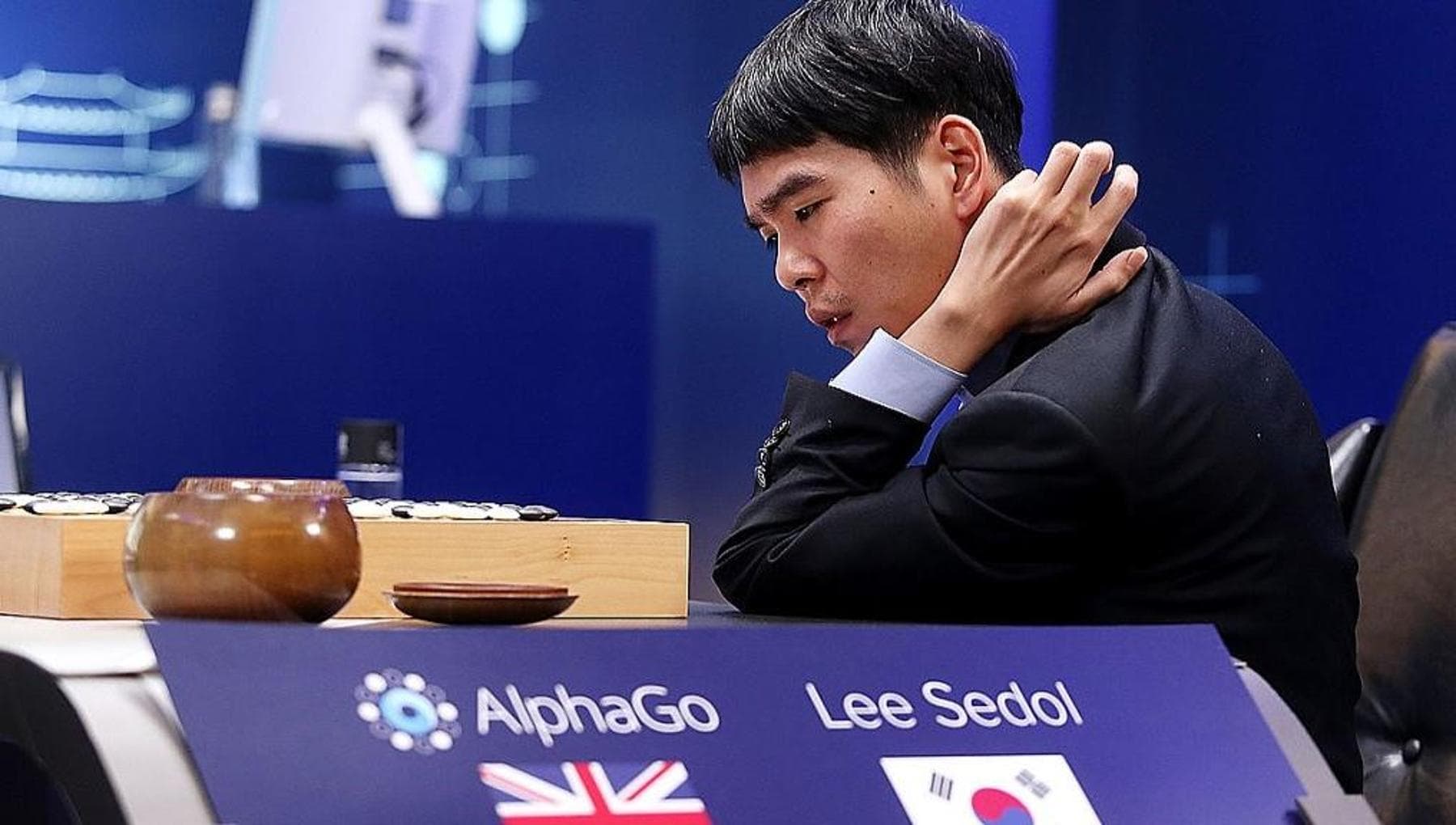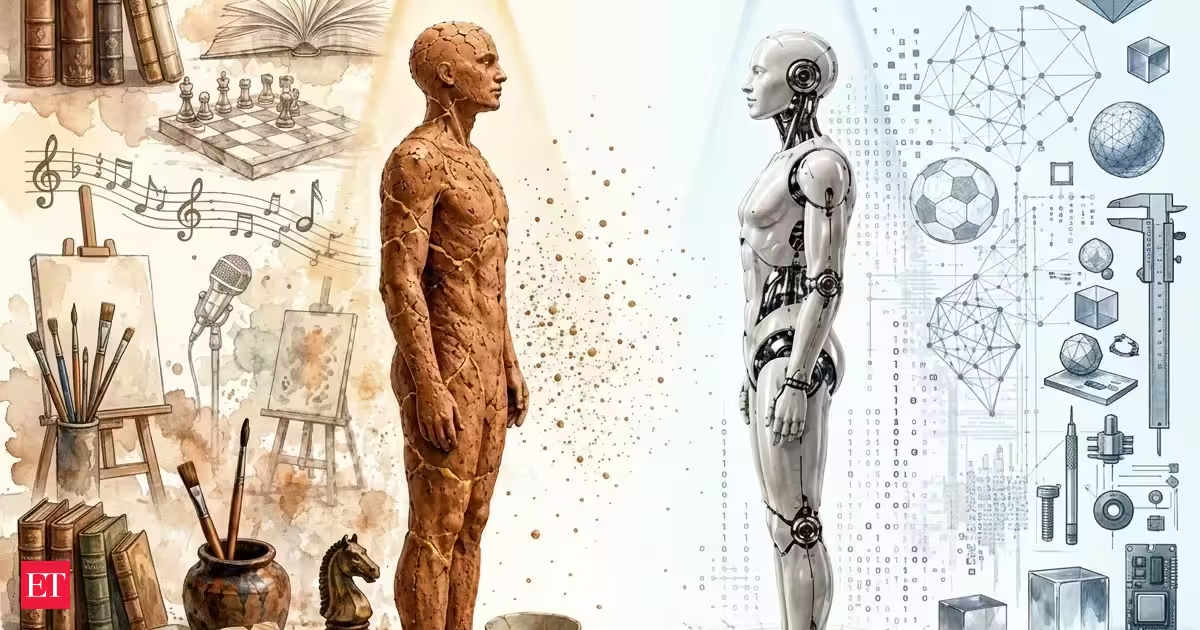
Garry Kasparov lost to IBM's Deep Blue, and our belief in human supremacy over machines took a big blow.The ancient game of chess, created in India and perfected by other civilisations, was al-ways regarded as the highest theatre of pure human intelligence. But now it was conquered by a machine. Since then, the machine has only become more powerful.Today a decent chess engine on a mobile phone can defeat the strongest human grand master. Magnus Carlsen or R Praggnanandhaa is not better than Stock fish, and no human being ever will be.And yet, playing chess has become even more popular.An increasing number of people watch Carlsen and Pragga play They watch because the point of human chess is not only the perfect move, but the vulnerability of two hu mans like us who would hesitate, mis calculate, panic and improvise, get tired and then suddenly find a move that feels like magicIt is human drama, and machine-like perfection of two computers playing each other will leave them cold, the very antithesis of drama. This peculiar quest for imperfection may be come the defining truth of the Alage.Also read | After making inroads into healthcare, private equity players are targeting India's schoolsWe have spent the last few years asking whether Alcan write, draw.code and create as well as human beings. Increasingly, the answer seems to be yes, or at least close enough, for most practical purposes.Al can write a clean LinkedIn post, generate a hummable song, produce a perfectly structured memo, make a McKinsey-like slide and finish off by summarising all of it in a competent email. It is fluent, smooth, tireless, often near perfect; 10 out of 10, almost.The problem is that we may soon become sick of 10 out of 10.MARK OF THE HANDWe are already seeing this in the plague of AI slop on LinkedIn. You can spot it from a mile away: the smooth opening line, the neat three lessons, the inspirational paragraph, the carefully balanced humility, the "here is what it taught me" ending.It is grammatically correct and emotionally dead. In response, we have started hunting for posts that are messy, opinionated, oddly structured, perhaps even badly punctuated, but unmistakably written by someone who has lived that thought.The same is happening with books. Amazon is reportedly flooded with AI-generated titles, many polished but soulless. As a result, we increasingly look for books from known publishers rather than self-published ones as a signal of human authorship.In such a world, the value of a human book lies not just in how well it is written, but in how clearly it has been felt. When text becomes infinite, real authorship becomes scarce.This phenomenon is not new Human beings have always valued the mark of the hand.Also read | GLP-1 craze stirs up demand for a new type of talentA machine can make a perfect ceramic bowl, smooth, symmetrical and identical to the next thousand bowls. But we often pay more for the potter's bowl precisely because it is not perfect. The uneven lip, the thumbprint, the mi-nor dent, or the slight tilt in the body of the pot: these are not defects, but provenance, signal-ling that a human hand passed through here.The Japanese have a phrase for this: wabi sabi, the beauty of something that is impermanent, imperfect and incomplete, and thus its art of kintsugi, where a broken pot is mended back together with gold lacquer:In India, we have our own version of it. We have the nazarbattu, the small black spot on a baby's face or the fiercely ugly face mask hung above doors. Perfect beauty feels dangerous, almost inhuman. Persian carpet makers were said to leave a flaw in their carpets because perfection belonged only to God. The flaw was not a failure, but a human signature.Great art has always under-stood this. Picasso did not paint faces the way a camera sees faces. MF Husain did not draw horses like they should look like; his horses were restless, elongated, full of motion rather than anatomy, their power coming not from accuracy but from distortion.AI will become very good at beauty, with symmetrical faces, flawless prose, balanced compositions and correct answers. But beauty is not the same as perfection; it is in the cracked note of a singer, the pause before an actor remembers a line and the grandmother who never measured any-thing but always got the dish right.This is why author Sangeet Paul Choudary says that in the age of AI, humans will become "luxury goods". He uses the example of a wine sommelier-it is for their knowledge, selection and cork-sniffing performance that we pay a premium in a restaurant.Similarly, we pay a huge premium to go to a live concert over a Spotify rendition. When machine output becomes abundant and cheap, human output becomes premium not because it is perfect, but because it carries human presence and lived experience.AUTHENTICITY OVER EFFICIENCYThe mistake humans will make in the Al age is to compete with machines on the finish and polish. The worst thing a writer or an artist can do now is try to sound like AI, as many of us are doing on our LinkedIn posts sounding smooth, agreeable, optimised and dead. The winners will be those who become more of themselves, not less. Authenticity will always win over efficiency.We began with chess, so let us end with football. Imagine if the recent football World Cup was played by perfect AI robots. There would be no misplaced passes or bad tack-les, nerves or exhaustion, no striker missing from two yards, and no Messi walking for 70 minutes and then suddenly bending space-time. It would be technically astonishing and emotionally hollow.In a world where machines can generate perfection on demand, the most valuable thing a human being may do is remain un-mistakably, recognisably imperfect.The author is co-founder, AI&Beyond(Disclaimer: The opinions expressed in this column are that of the writer. The facts and opinions expressed here do not reflect the views of www.economictimes.com.)
Age to be imperfect: In the AI era, flaw is not failure -- it's human signature
Artificial intelligence has reached a point where it rivals human creativity across various domains. However, as machines produce impeccable work, audiences may begin to crave the unique touch only a human can provide. Flaws and authenticity in creative expression will increasingly be seen as valuable, emphasising the importance of lived experiences in art and storytelling.
TL;DRAI
AI masters technical perfection in writing and design; human imperfection—authenticity and lived experience—becomes the scarcest premium asset as machine output floods the market. Tech leaders win by emphasizing irreplaceable judgment and domain intuition; authenticity, not efficiency, defines competitive advantage.
996 words~5 min read