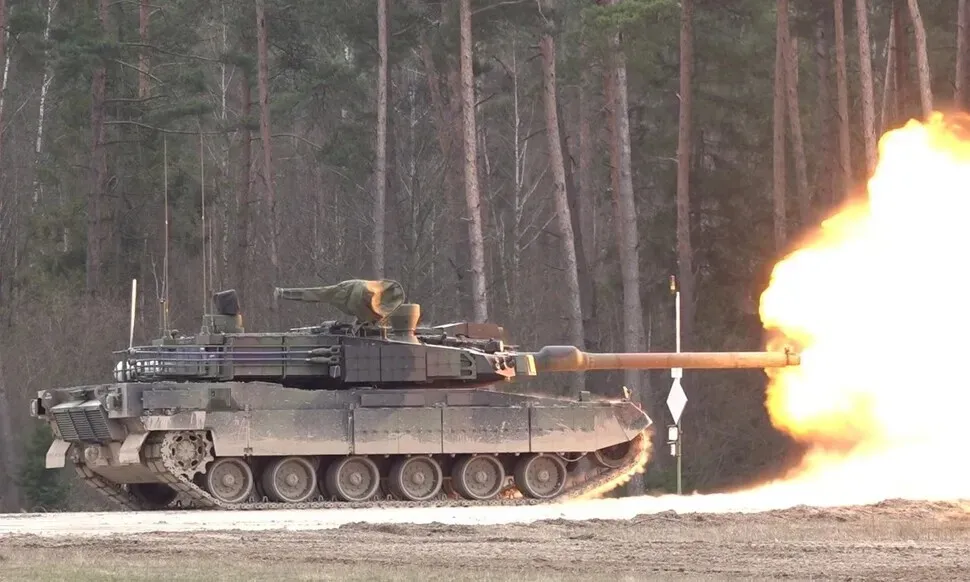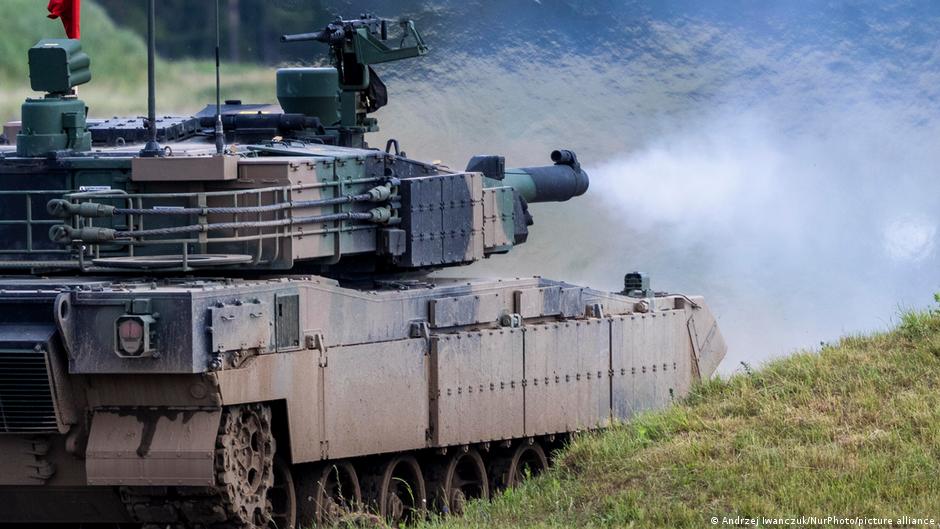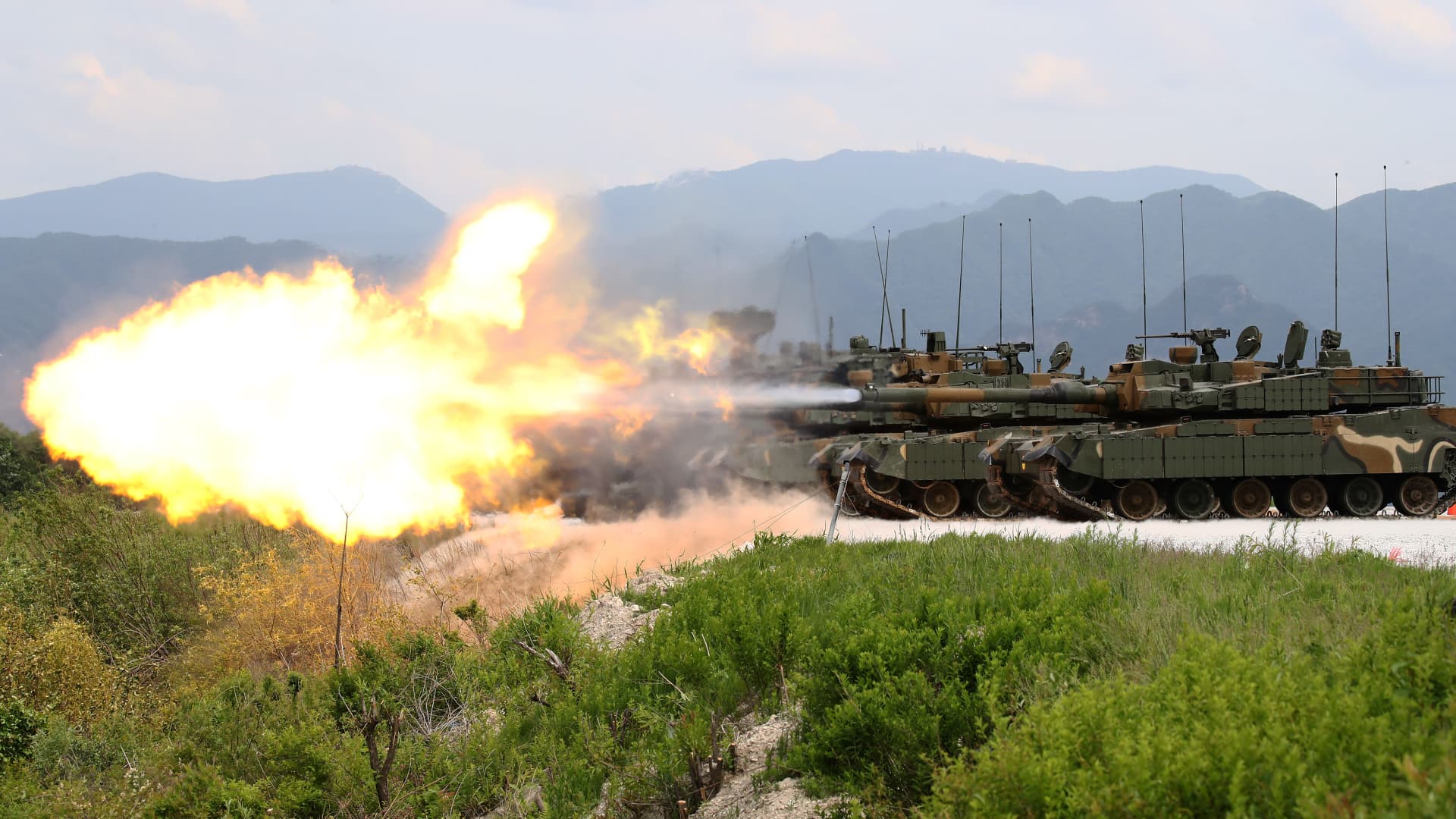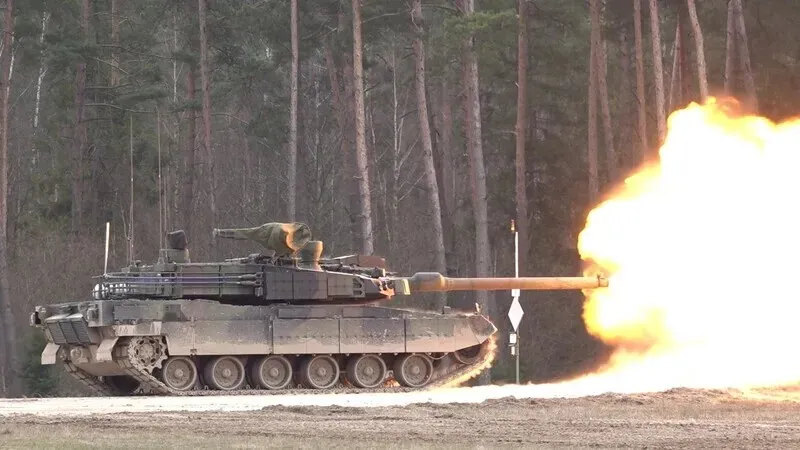
A K2 tank carries out a firing test in Poland. (courtesy Hyundai Rotem)
By Kim Yeon-chul, former minister of unification and current professor at Inje University The arms industry is booming. With wars breaking out around the world all too easily, the majority of nations have increased their spending on national defense. As international alliances falter, the world is in the midst of a shift from an era of relying on superpowers for national security to one of self-reliance. Korea is already a powerhouse when it comes to its defense industry. However, there are a number of issues to be resolved. Korea needs to change the structure of its national defense cooperation and improve the ecosystem of the domestic defense industry. However, at this point there is one fundamental question that must be asked: Is it possible to talk about peace while selling arms?This is not a matter of ethics or morality. Korea is obligated to obey international laws governing arms exports. Article 2(4) of the UN Charter, which prohibits the use of force, applies not only to the direct use of force but also to indirect acts that support the use of force. There is precedent for the International Court of Justice holding a country liable in cases where their arms exports led to the illegal use of force. The Arms Trade Treaty, which restricts the export of weapons in the event of a breach of international humanitarian law, was signed by Korea in 2013 and ratified in 2016. This makes Korea a legal signatory that must comply with the treaty.There are even cases in which arms exports have been suspended over a breach of international humanitarian law. One such decision came from the Hague Court of Appeal in 2024. Dutch NGOs had filed a case calling for a ban on the sale of F-35 fighter jet parts to Israel due to violations of international humanitarian law and conventions against genocide in the Gaza Strip, and the Court of Appeal overturned the lower court’s ruling and ordered the Dutch government to suspend licenses for the export of fighter jet parts. This was the first time the Arms Trade Treaty had been invoked on a domestic level. In 2024, the United Kingdom also revoked 30 of 350 or so licenses for exporting arms to Israel. The Netherlands and the UK are both strong US allies and stalwarts of the global defense industry.Although the decision by the Dutch court stopped short of confirming the fact that an importing nation had breached international humanitarian law, it demonstrates that a probable breach can be enough to have weapons export licenses revoked. As part of a reexamination of arms export licenses, the UK also announced it would review whether Israel has the intention of honoring international humanitarian law.It has never been proven that weapons exported by Korea have been used in violation of such laws, but there are some probable cases. In September 2016, hand grenades produced by Hanwha were discovered by an international human rights organization during the civil war in Yemen. It is believed these weapons were exported to Saudi Arabia before making their way into Yemen, but the case blew over as there was no proof. In 2019, Korea also exported submarines to Myanmar, a key actor in the ethnic cleansing and human rights violations against the Rohingya people. At present, civic groups are calling for an end to the export of aviation and defense parts to Israel. Korea is obligated to investigate whether its exported arms are being deployed in civil wars, human rights violations, or the invasion of other countries.Article 5(1) of the Constitution stipulates that the Republic of Korea “shall endeavor to maintain international peace and shall renounce all aggressive wars.” The duties to maintain transparency and accountability for arms exports and uphold human rights are constitutional norms. For the sake of respecting international humanitarian law, Korea needs to inspect its arms export system and remedy any deficiencies. A thorough evaluation and verification system must be implemented during the export screening process to look into the political and military circumstances of the importing country, the end users of weapons, and the purpose of such use. At the same time, it is necessary to establish a follow-up system that is capable of immediately restricting or suspending exports if it is discovered that exported weapons are being used for purposes other than those intended.The Foreign Trade Act and the Defense Acquisition Program Act currently contain provisions for restricting weapons exports, but the language is abstract. Detailed guidelines akin to those in the UK or the European Union are needed. Following on from the previous National Assembly, a proposed amendment to the Foreign Trade Act that would limit defense cooperation with countries in violation of international humanitarian law is currently being considered by the Korean legislature. This bill must be enacted into law after undergoing appropriate discussion. Ensuring compliance with international humanitarian law requires the National Assembly to play a stronger role and systems of cooperation between departments to be improved across the entire process from preliminary screenings to follow-up management. This is not a matter that should be left to the Defense Acquisition Program Administration.When the world was staring down the prospect of nuclear war during the Cold War era, Pope Paul VI famously said, “If you want peace, work for justice.” We are once again in the middle of an arms race. I do not wish to deny opportunities for arms exports. However, we must not forget the maxim of putting justice before profits. Korea has experienced war, and still lives in a state of division. On the Korean Peninsula, peace is far more than an abstract value. Peace is a long-cherished wish, has an impact on our everyday lives, and will determine the sustainability of our future. I hope the world will remember Korea as a country that builds peace rather than a country that sells weapons. “Because I have felt the pain of being invaded by another nation, I do not want my nation to invade others.” The words of Kim Koo still ring true today.Please direct questions or comments to [english@hani.co.kr]