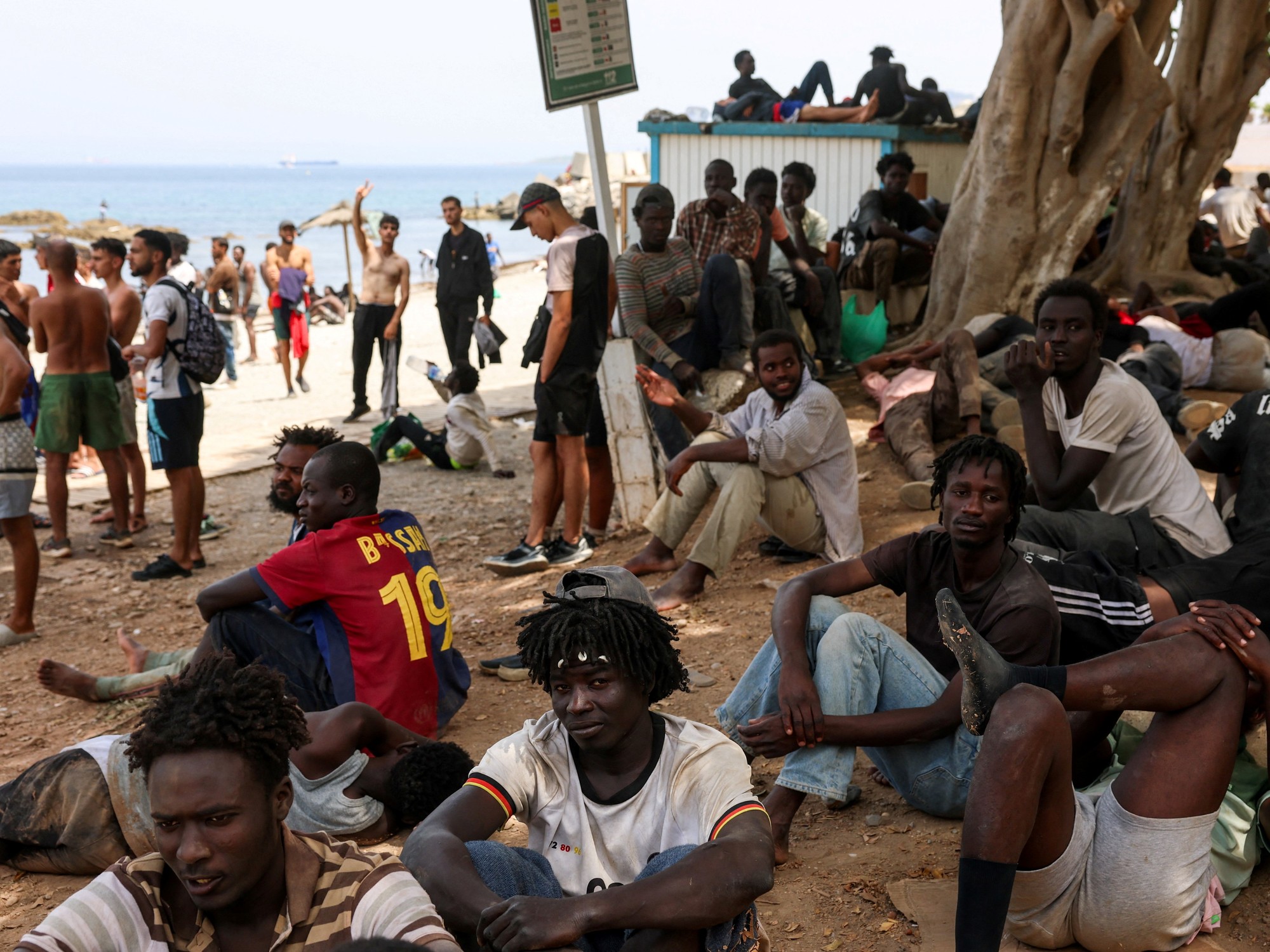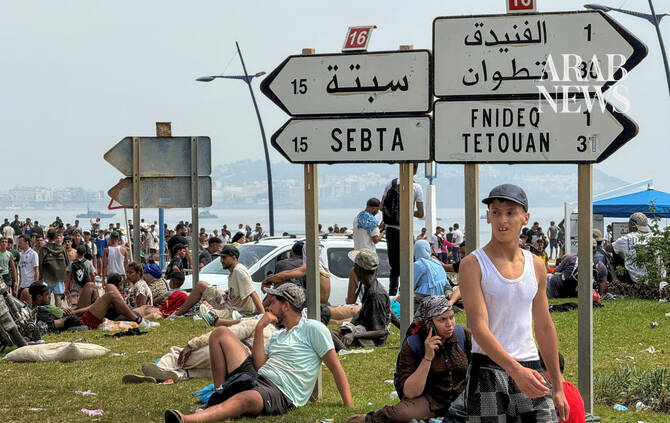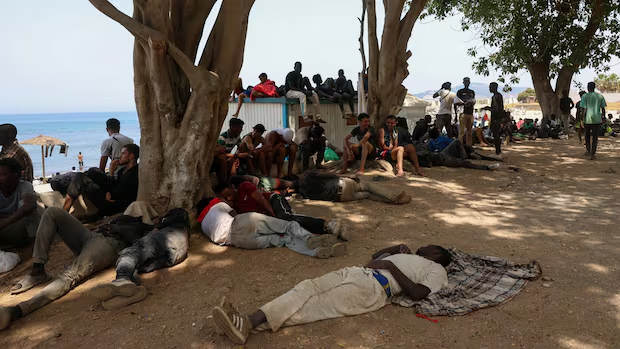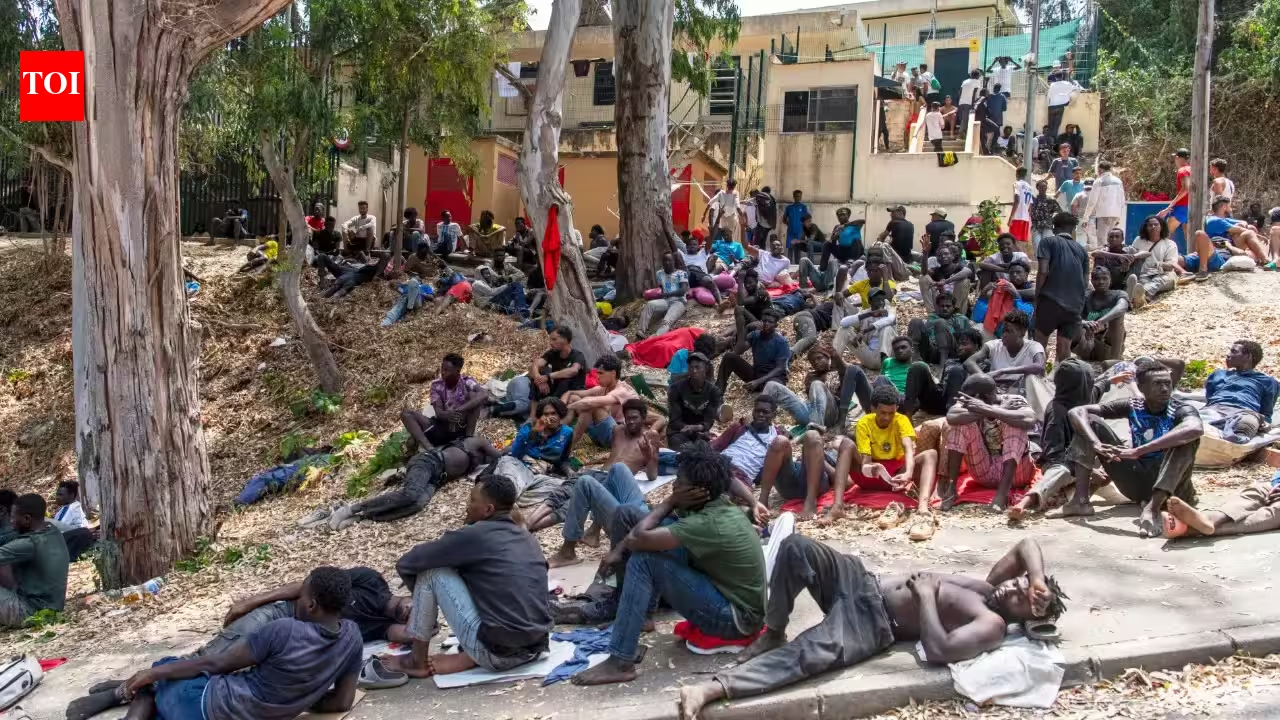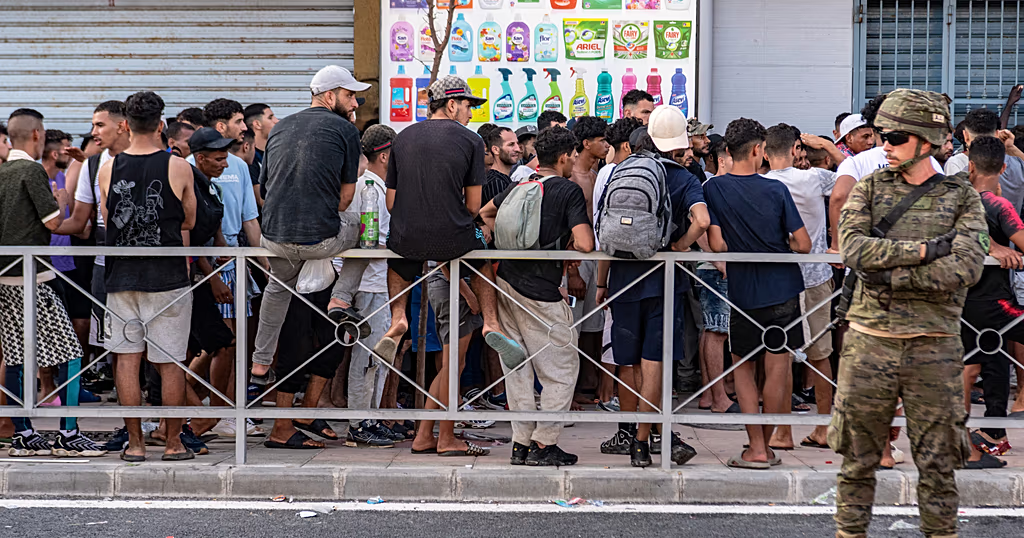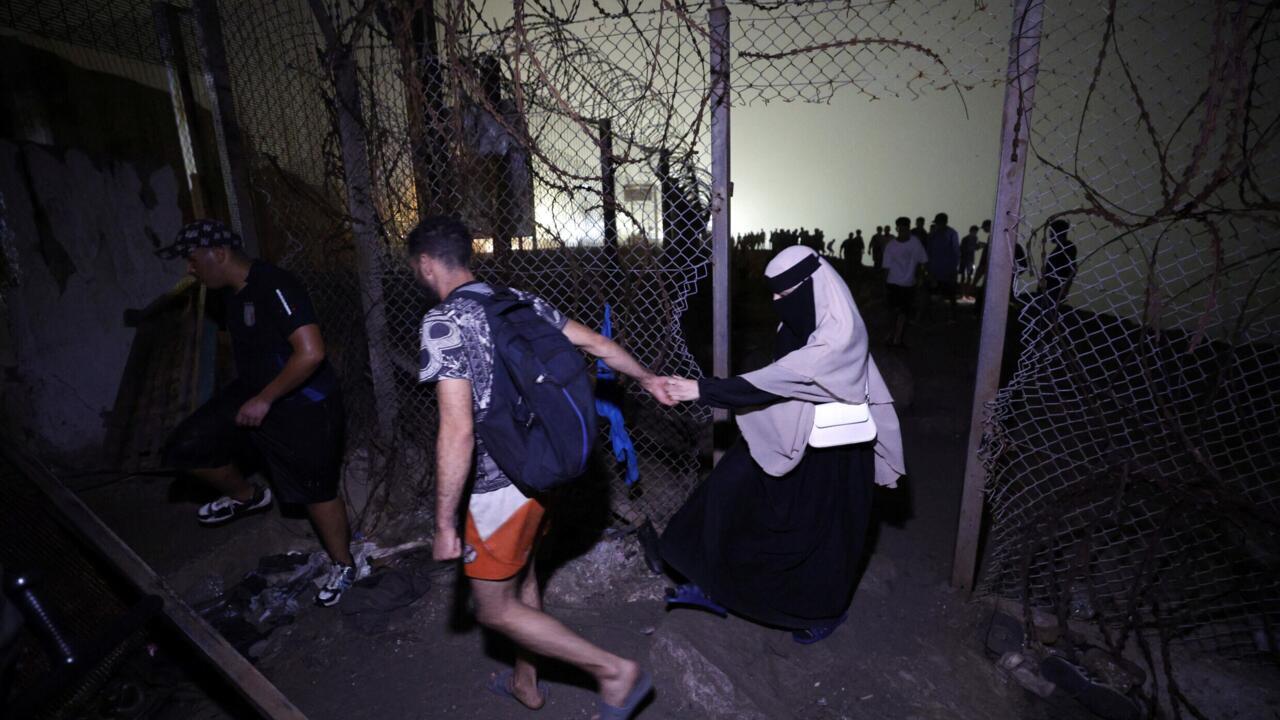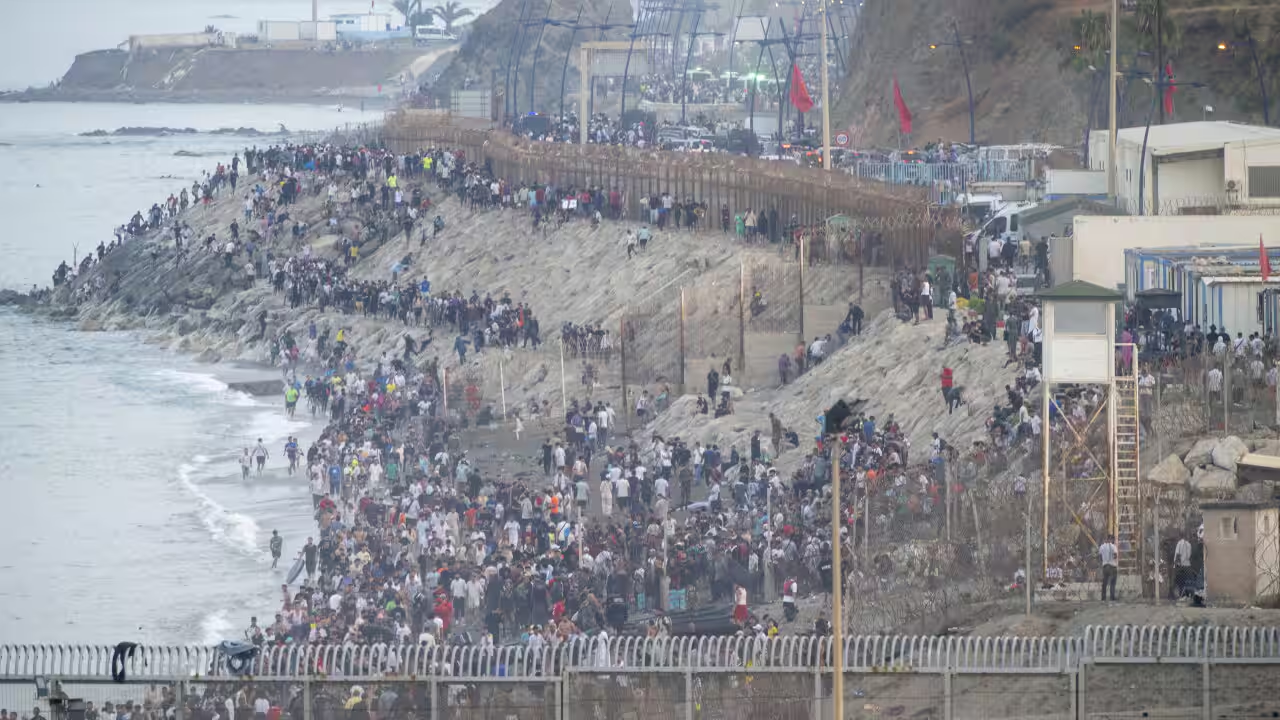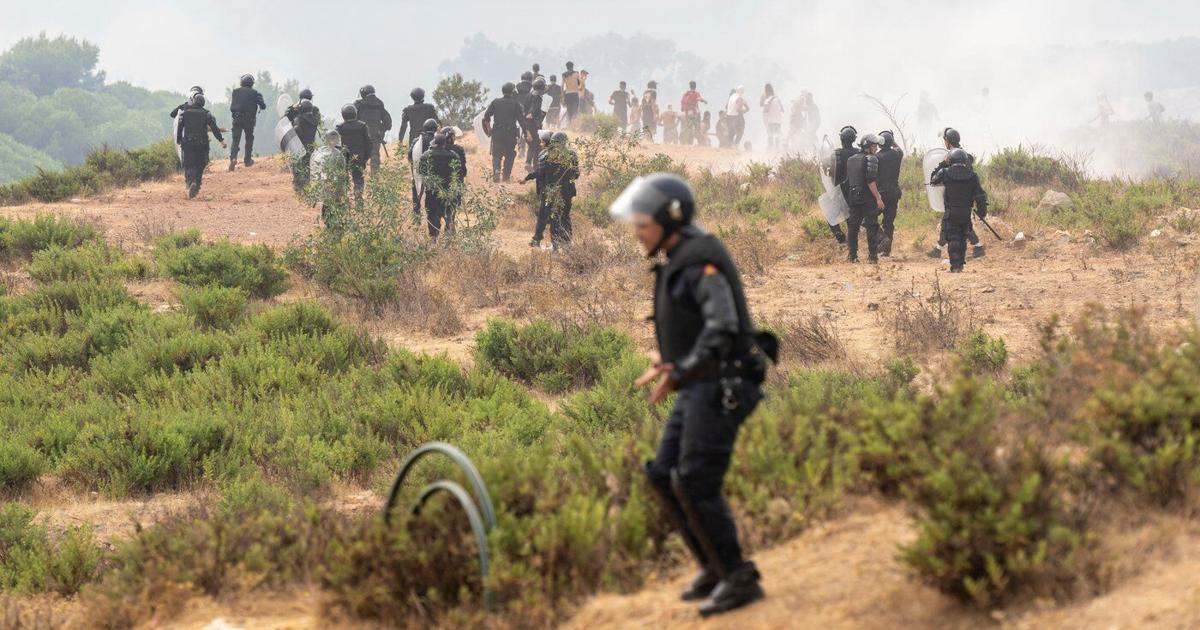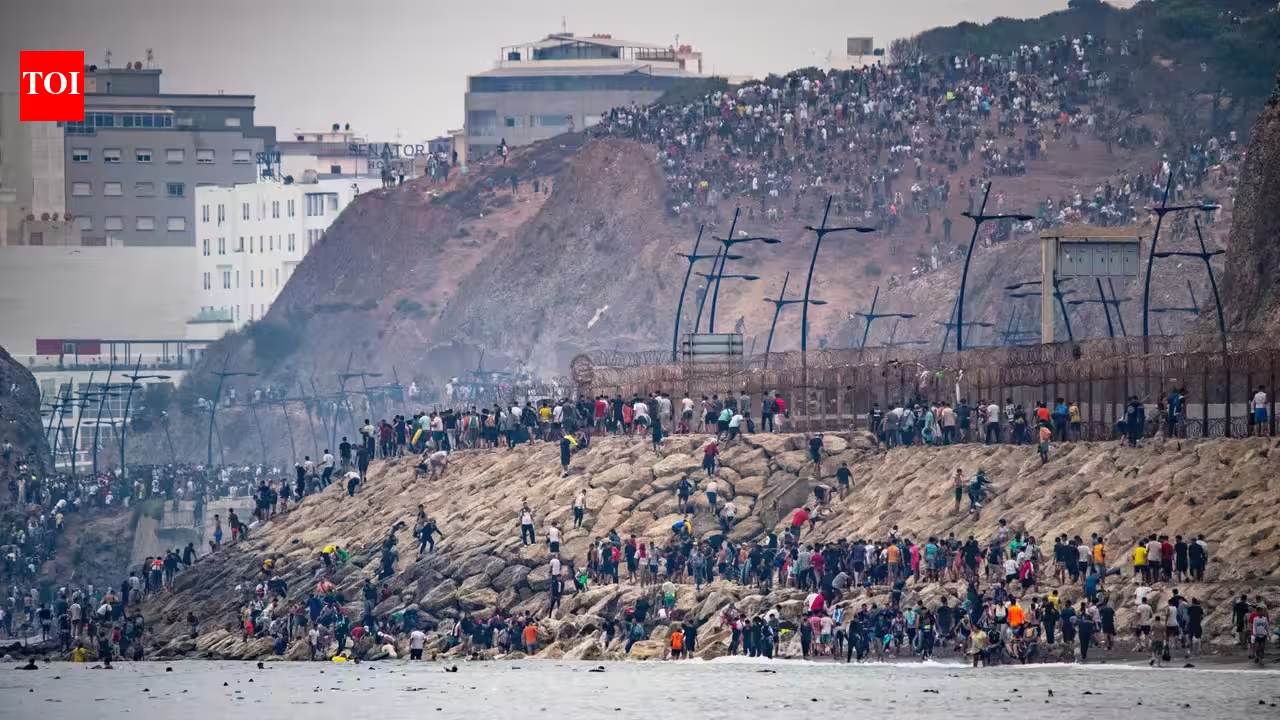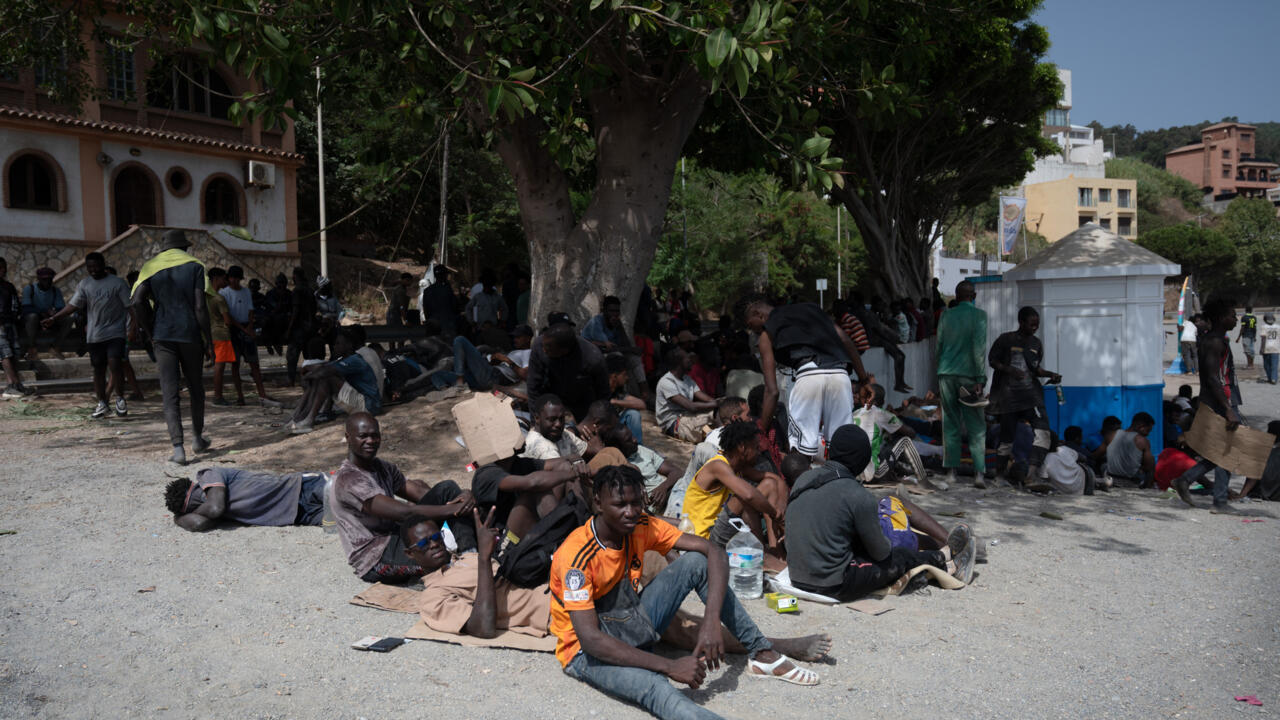
On Saturday morning, Spanish soldiers and Civil Guard officers directed a steady flow of people -- mostly very young men -- toward the exit at the border crossing. Some were barefoot, others had Red Cross blankets draped over their shoulders. Many were visibly exhausted after days of wandering around the town."I'm leaving because there's no food. I thought I'd be welcomed, but that wasn't the case at all," said 23-year-old Abdel Latif before crossing back over the border.He had tried his luck to "find work\" because "there are no jobs in Morocco," lamented the young man. He survives by doing odd jobs as a mechanic.Latif was one of as many as 60,000 migrants who crossed into Ceuta, mostly swimming around the small border post that juts into the Mediterranean Sea, in an unprecedented surge that prompted an international crisis for Spain and questions about immigration. A few intrepid young men still attempted to reach the enclave by swimming on Saturday.Two men collapsed on the sand in plain view of the soldiers, exhausted from their sea crossing. One of them, severely weakened, had to be attended to by Red Cross rescuers, wrapping him in blankets -- despite the heat -- before taking him away on a stretcher.A soldier was ushering another man toward the exit, his still-soaked clothes bore witness to his recent arrival.Further along, another man attempting to swim across was picked up by a Spanish Civil Guard boat and then taken back toward Morocco.– 'No future in Morocco' –Around 60,000 migrants arrived over the course of two or three days, according to an estimate by the head of the local government, Juan Jesus Vivas.
In Spain's Ceuta, exhausted migrants end short trip with little hope
Migrants streamed back across the border into Morocco in small groups after spending two or three days in the Spanish enclave of Ceuta, wandering the streets with almost nothing to eat, and little welcome.
646 words~3 min read