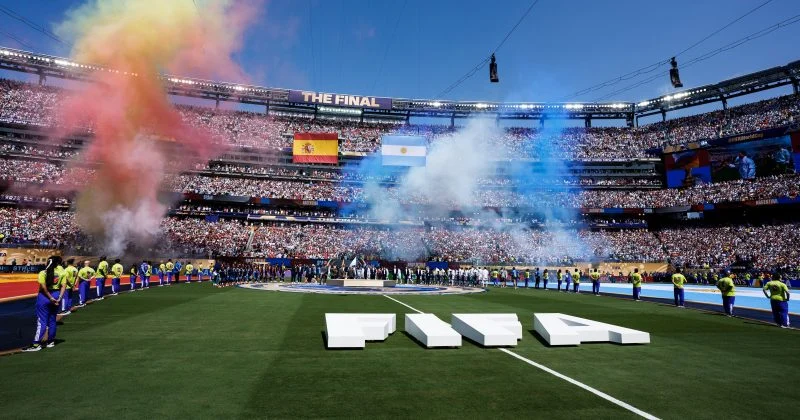
FIFA’s plan for the 2026 World Cup is catching heat for a fundamental tension: the organization wants to make more money than ever while also filling more seats than ever. BBC economics editor Faisal Islam laid out the case for why those two goals might be pulling in opposite directions.
The expanded 48-team tournament, spread across the US, Canada, and Mexico, is projected to generate between $3 billion and $7 billion in ticket and hospitality revenue. For context, the 2022 Qatar World Cup brought in $929 million from the same revenue streams.
The asset-light gamble
FIFA is leaning on what’s being called an “asset-light” model, plugging matches into existing NFL venues rather than pouring billions into new infrastructure. That’s a sharp departure from the Qatar playbook, where the host country spent enormous sums constructing purpose-built facilities.
FIFA is deploying dynamic pricing for tickets, a strategy borrowed from airlines and concert promoters where costs fluctuate based on demand. Some tickets will reportedly start as low as $60.