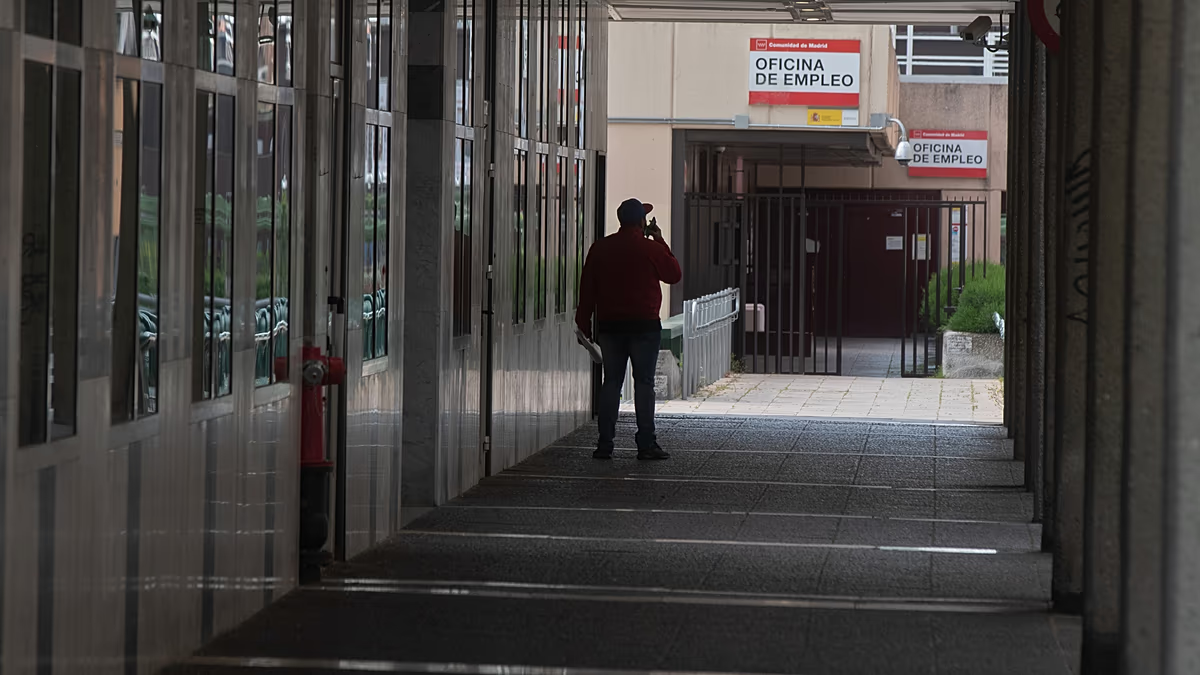
Greece’s unemployment rate fell to 8% in June, down from 9.2% a year earlier, marking its lowest level in decades after a decline of more than 20 percentage points from the peak of the crisis. However, unemployment edged up from 7.8% in May, suggesting the long-running downward trend may be stabilizing.
The increase is not yet a cause for concern. Hiring remains strong, with labor demand in industry, construction, retail, and tourism continuing to outstrip supply. The easier gains have already been made, and further reductions will require broader structural reforms beyond labor market policies.
Recent data from Greece’s statistical authority, ELSTAT, showed youth unemployment rising to 19.5%, more than double the overall rate, raising concerns about younger workers. Meanwhile, the Foundation for Economic and Industrial Research (IOBE) warned that Greece continues to have a high share of people aged 15-29 who are not in employment, education, or training.
Unlike in many EU countries, Greek university graduates remain outside both the labor market and education. The challenge is no longer simply creating jobs, but creating higher-quality positions that make better use of skilled workers.