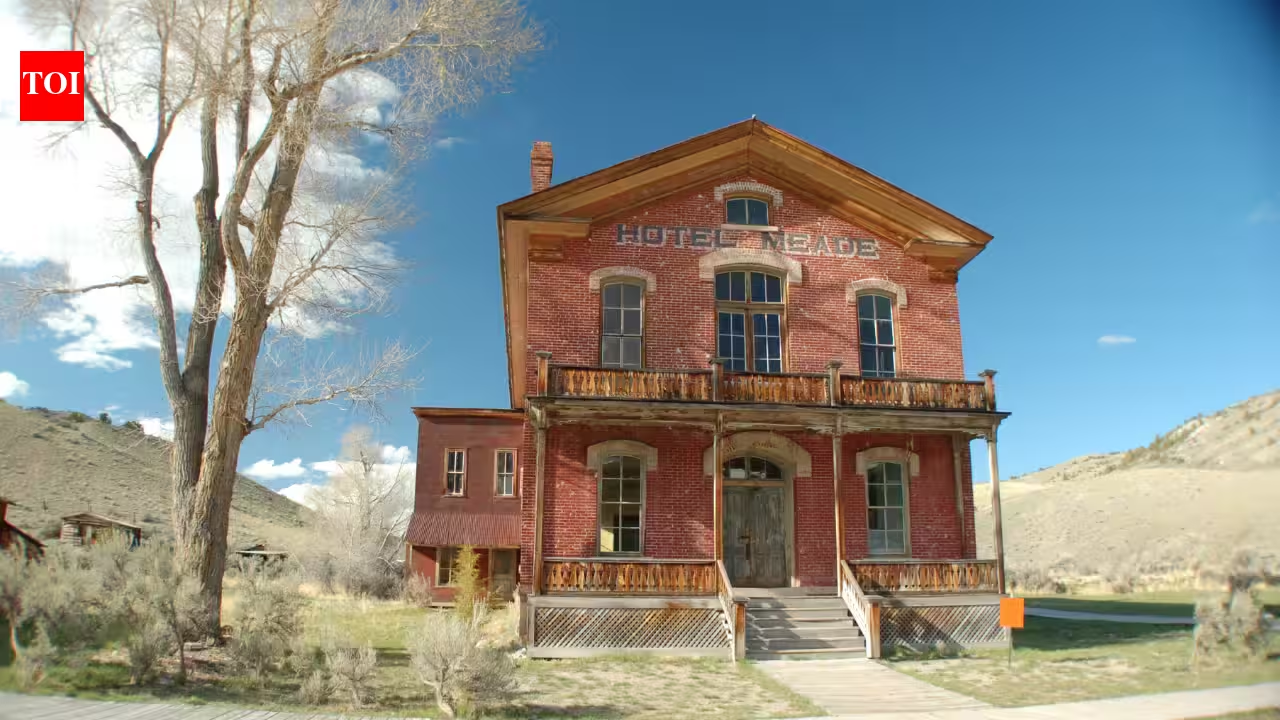
Hotel Meade | Wikimedia CommonsThe course of Montana’s history changed in 1862 because of a few weathered wooden buildings that were standing beside Grasshopper Creek. Prospectors discovered rich deposits of gold in the area and established Bannack, the territory’s first major mining town. Thousands of miners, merchants, and fortune seekers poured into the remote settlement within months, and transformed it into one of the busiest places in the northern Rockies. But the boom would not last. As richer discoveries pulled miners elsewhere, Bannack’s population steadily declined until it became one of the best-preserved ghost towns in the American West. Montana ended up designating Bannack as a state park in 1954 rather than allowing the site to disappear, which preserved dozens of original structures that continue to tell the story of the Gold Rush. According to Montana Fish, Wildlife & Parks, Bannack State Park now contains more than 50 historic buildings, making it one of the country’s most complete surviving frontier towns.Main street in Bannack | Wikimedia CommonsA gold strike that built Montana’s first territorial capitalJohn White’s discovered placer gold on July 28, 1862, which sparked such a rush that the region changed almost overnight. It was named after the local Bannock people, and quickly developed into a thriving frontier community with hotels, stores, saloons, blacksmith shops, churches, schools, and homes lining its dusty streets. Bannack even served as the first capital of Montana Territory before that role shifted to Virginia City in 1865. But life in the booming camp was often harsh, since supplies arrived slowly, law enforcement struggled to keep pace with the rapidly growing population, and stories of road agents and vigilantes became part of the town’s legend. Residents gradually moved away as nearby gold deposits were exhausted and new strikes attracted prospectors elsewhere. Mining continued on a smaller scale for decades, but by the mid-20th century Bannack had become a largely abandoned reminder of Montana’s earliest mining era.Saving a ghost town before it disappearedLocal preservation advocates recognised its historical value and worked to protect what remained before the aging buildings started falling apart due to weather and neglect. According to the Bannack Association, much of the town site was donated to the State of Montana in 1954, which allowed Bannack to become Montana’s first state park that was established specifically to preserve a historic site. Restoration efforts focused on stabilizing buildings rather than rebuilding them, which helped retain the authentic appearance of the original settlement. Visitors today can walk through surprisingly intact streets where many of the structures still stand in their original locations, including the Meade Hotel, Masonic Lodge, Methodist Church, schoolhouse, jail, assay office, general store, and numerous homes. Preservationists chose to conserve what history had already left behind instead of recreating a frontier town from scratch. This gave visitors a rare opportunity to experience an original mining community with much of its historic fabric still in place.Hotel Meade | Wikimedia CommonsMore than 50 buildings still stand nearly 170 years laterBannack gives us an unusually complete snapshot of life during the American Gold Rush, unlike many ghost towns that survive only as scattered ruins. The wooden boardwalks, weathered storefronts and abandoned homes stretch across the valley much as they did more than a century ago, while interpretive exhibits explain how residents lived and adapted to the boom-and-bust cycle that defined mining communities across the West. The park also hosts annual living history events, including Bannack Days, when volunteers in period clothing demonstrate blacksmithing, gold panning, stagecoach rides and other aspects of frontier life. According to Montana Fish, Wildlife & Parks’ history of the state park system, Bannack officially became a state park in 1954, and secured long-term protection for one of Montana’s most important historic landmarks. The preserved town continues to attract visitors from around the world nearly seventy years after that decision, and offers something increasingly rare: the chance to walk through an authentic Gold Rush settlement where history remains standing, building by building, instead of existing only in photographs and museum displays.
In 1954, Montana turned an abandoned gold-rush town into a state park: Today, Bannack has over 50 buildings visitors can explore
The course of Montana’s history changed in 1862 because of a few weathered wooden buildings that were standing beside Grasshopper Creek. Prospectors discovered rich deposits of gold in the area and established Bannack, the territory’s first major mining town.
669 words~3 min read