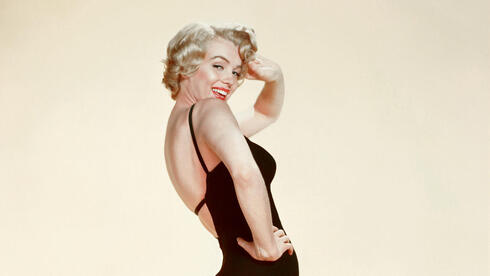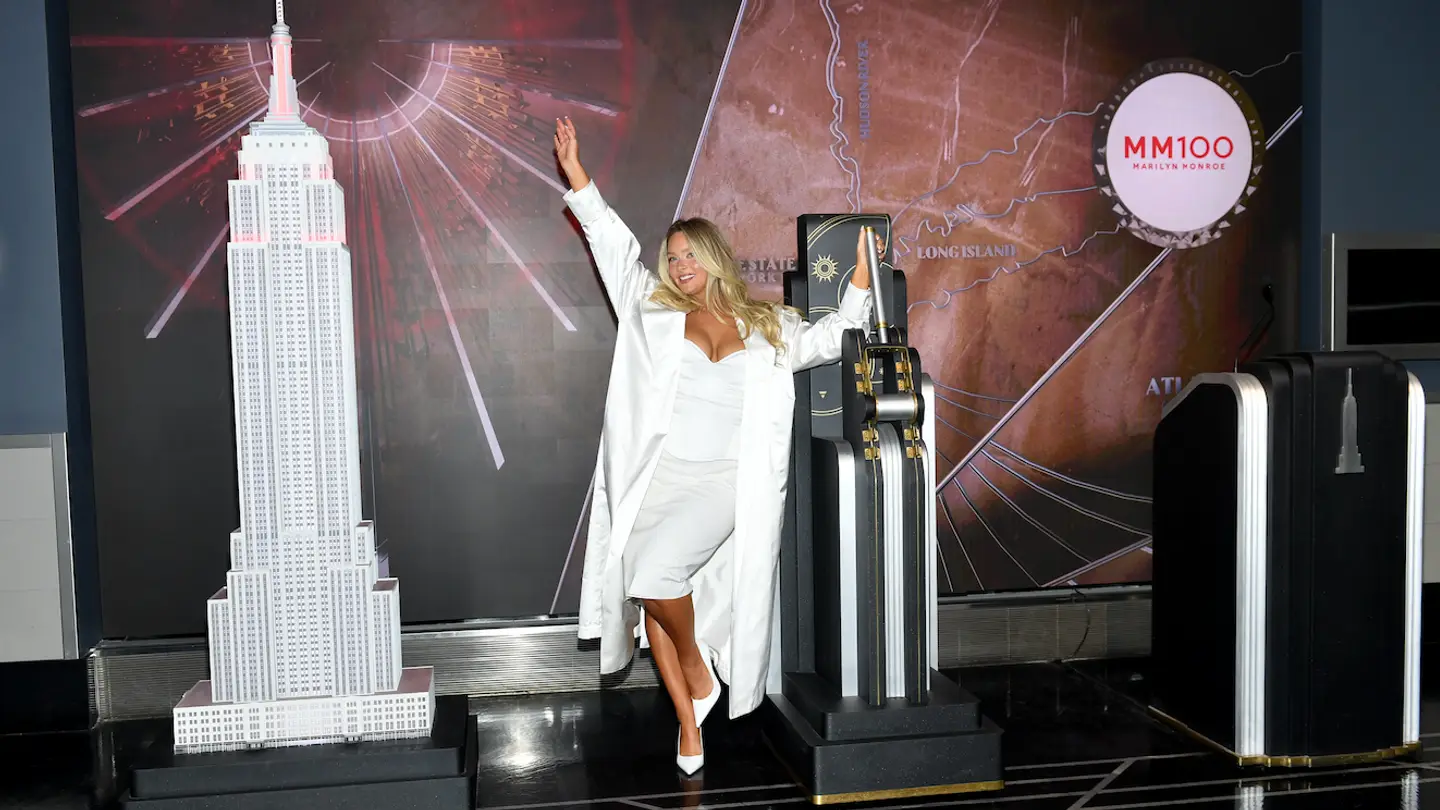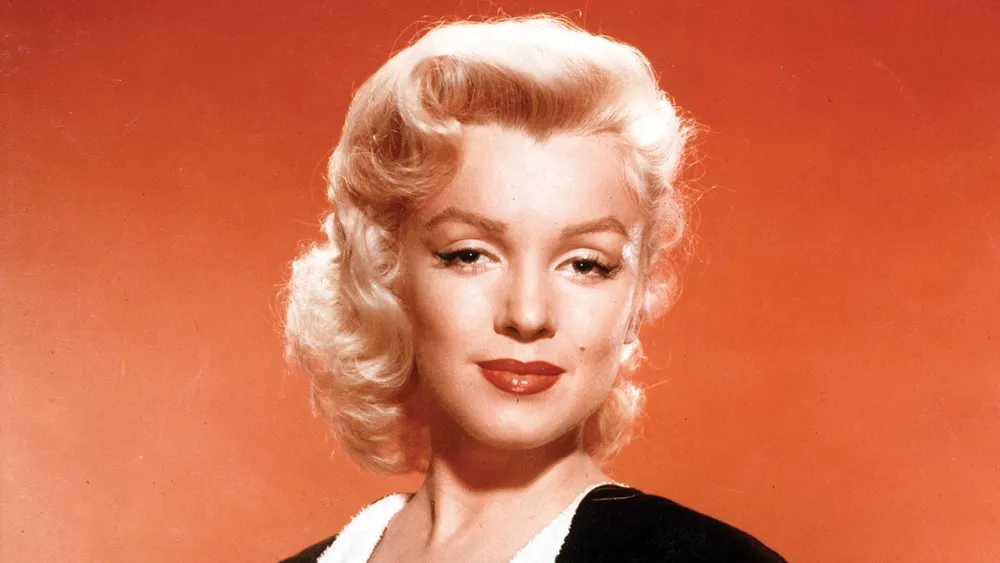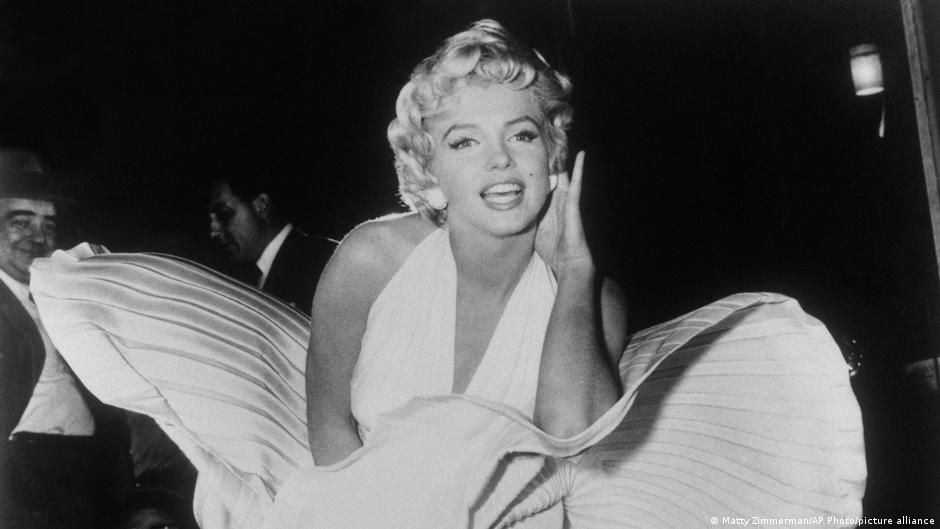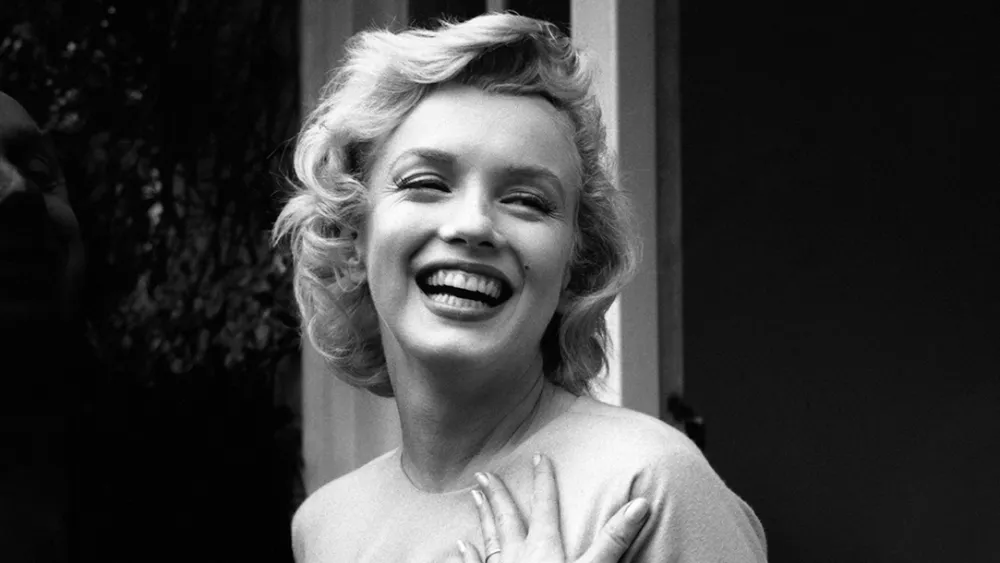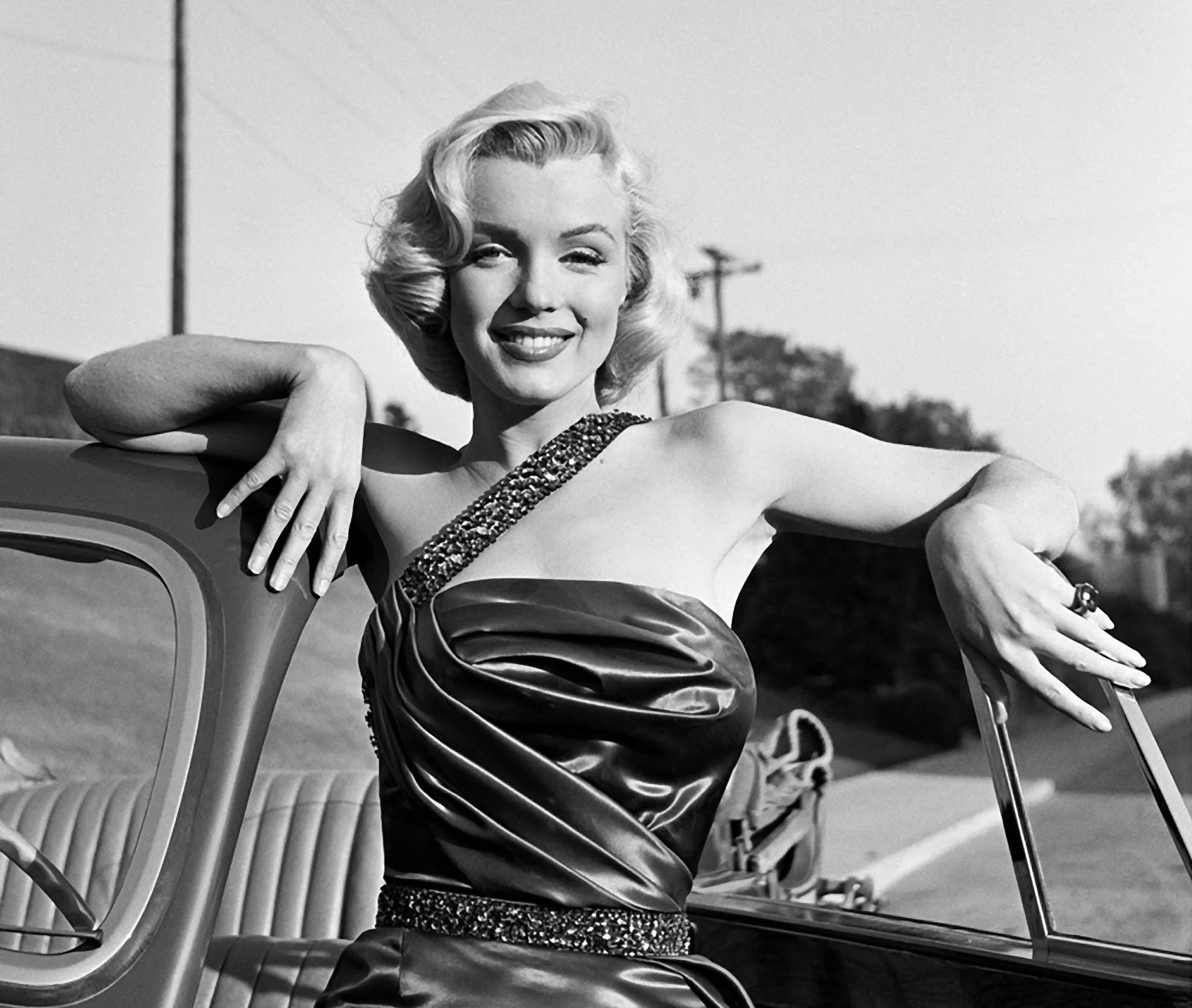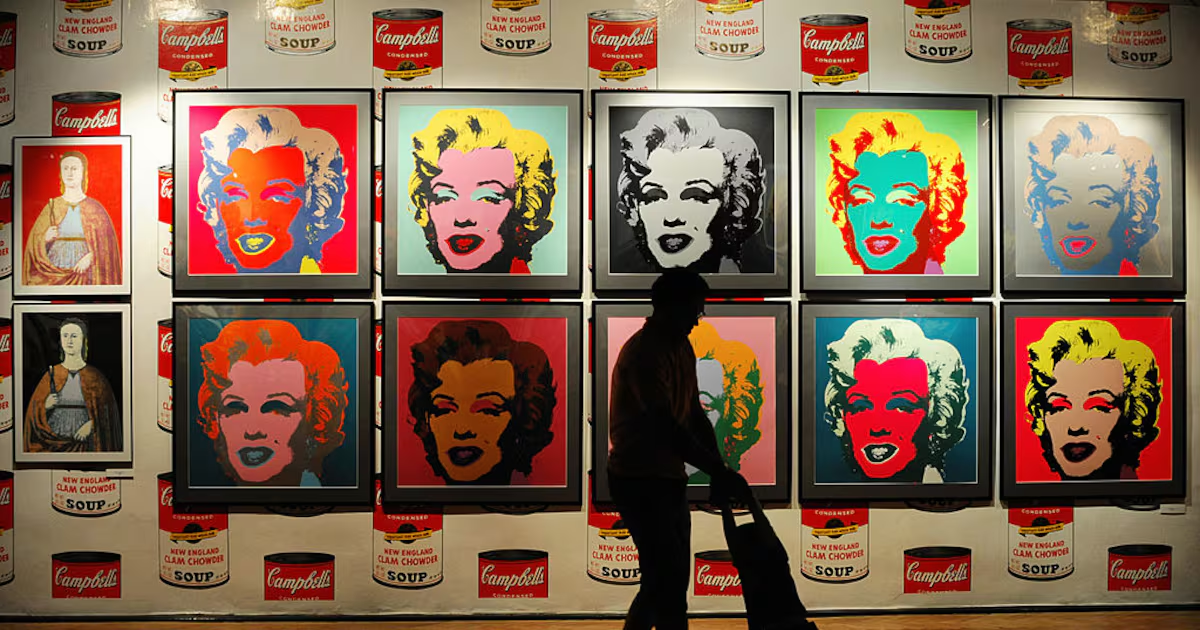
Even though she once joked, “I always thought symbols were the things you clash together!” Marilyn Monroe, who would have turned 100 this year, has been a symbol of practically everything: an object of 1950s male desire, a martyr for second-wave feminism. As a foster kid who became a princess, she’s the embodiment of the rags-to-riches American dream. At her platinum, white on white, boobs-and-butt finest, she’s been a gay and black icon, even while, for others, she represented racist, Cold War-era ideals.She also affirms our personal uniqueness. As Lena Dunham comments in Marilyn Monroe: A Portrait (National Portrait Gallery, 255pp, £40): “Her story was a tilted fairytale I could wear like a locket, believing – as so many have believed – that the ways in which I saw her were different.” But for Monroe, this malleability could be a source of despair: “People had a habit of looking at me as if I were some kind of mirror instead of a person.” Maybe it’s partly narcissism that explains our insatiable appetite for Monroe’s image, for as Catherine Deneuve once commented: “You never get tired, looking at Marilyn.” These days, we prefer to paint Monroe not as a victim, but as someone with agency – she married for love, started her own production company, and read books to improve her mind. However, it is her photographs – today more proliferant than ever – that remain her most enduring testament, not just to her luminous presence, but to her creative control. In her introduction to Monroe’s centenary photo book, Marilyn Monroe 100 (ACC Art Books, 345pp, £75), Rachel Syme observes, “Monroe knew how to be photographed; she had the rare ability to seem, at least in still photos, both completely spontaneous and incredibly deliberate.” What did Monroe’s power mean for her photographers, some of them stars in their own right? What did she dictate, what did they demand, and what did both parties take away?There are some terrifically salty quips. (About how fame is like caviar: ‘It’s good to have caviar, but if you had it every damn day, you know?’)— From Marilyn: The Lost Photographs, The Last InterviewBoth the National Portrait Gallery’s show Marilyn Monroe: A Portrait and Marilyn Monroe 100 reach back to when Monroe was a fresh-faced pin-up called Norma Jeane, who, by 1946, had already commanded the covers of 30 magazines. Early on, Monroe knew about flattering angles and how to construct a compelling visual narrative. She directed the photographer, approved contact sheets, and crossed out rejected negatives. If Monroe never took a bad shot, it’s because she herself made sure she didn’t. In the National Portrait Gallery’s catalogue, Georgia Atienza provides an engagingly crisp, anecdotal context. For instance, Magnum had exclusive rights to the on-set photos of Monroe’s film The Misfits, written by her husband Arthur Miller, which explains why legendary photographers such as Henri Cartier-Besson, Eve Arnold and Inge Moran were in the desert on what was a disastrous shoot. Monroe and Miller were irreconcilable, director John Huston had gambling debts, and Monroe overdosed. Clark Gable died the week after filming finished, and Inge Moran married Miller. The images with Monroe remain among my favourites, as the photographers were each renowned for elegantly framing very human scenes – awash with desperation, but also laughter. [ Marilyn Monroe at 100: What her films reveal about the woman behind the mythOpens in new window ]While Marilyn Monroe: A Portrait is ordered chronologically, Marilyn Monroe 100 organises its portraits by photographer, each of them mega-watt, and some of whom, like André de Dienes and Bruno Bernard, were around for the entirety of Monroe’s 15-year career. The book’s highlight, however, is Rachel Syne’s introduction, which contains one of the most delightful descriptions of Monroe’s charm: “(H)er humour was not a blunt instrument but, rather, something odder and wobblier; her internal metronome alluringly off-tempo… the breathy, cooing voice, the nonchalant matter-of-fact way she made silly pronouncements.” It makes us not just want to look at Monroe but to watch her – her swivel walk, her daffy laugh – for although she was notoriously late and difficult on set, she remains transfixing on-screen. Playwright Arthur Miller with then-wife Marilyn Monroe, July 1956. Photograph: Keystone/Getty “Marilyn,” a press agent once said, “is the greatest little old ad-lib artist you ever saw.” It’s a shame that Monroe, immortalised for her looks, was not as well-known for her conversation, because it was an art at which she excelled. Marilyn: The Lost Photographs, The Last Interview (Weldon Owen, 229 pp, £40), by Allan Grant and Richard Meryman, is based on the archived materials for Richard Meryman’s 1962 Life interview. Meryman’s original piece was published two days before she died, with Allan Grant’s accompanying black-and-white photos showing the actor cavorting in capri pants in her newly purchased, barely furnished home, her wisecracking candour seemingly at odds with her being recently fired from her studio. The Last Interview restores some of what was unpublished, including all of Grant’s images of a casually tousled Monroe. There are some terrifically salty quips. (About how fame is like caviar: “It’s good to have caviar, but if you had it every damn day, you know?” On being bad-mouthed to the press: “(I)f they’re only insulting me to my face… all I have to say is, ‘See you around, like never.’ But if it’s in the newspapers, it’s coast-to-coast and all around the world.”) Previously unpublished segments include Monroe throwing shade at Esther Williams, Billy Wilder and “church people”; speaking tenderly about her stepchildren and exes; joking about her “bare tuchus”. (Although her marriage to Arthur Miller ended, some Jewishness remained.) There are also photographer Grant’s later recollections of their shoot. He asks Monroe about her childhood, and she “sensuously” gyrates in an antique chair; “not,” he observes, “what I had in mind for the Life article.”Given its circumstances, the original 1962 interview is one people have scrutinised; I suspect readers of Last Interview will subject it to the same. It is not, as its promotional materials claim, a “complete transcript”. (For one, Meryman and his questions are absent). It’s more a director’s cut, with material added and reorganised, and while it’s fascinating, it leaves many gaps. The often-quoted ending of the original article has vanished, and certain pull-quotes (such as the Billy Wilder reference) are missing in the main text, all suggestive that there’s more from the archives to be mined. [ Life in Hollywood: Golden-age photographs of Marilyn Monroe, Elizabeth Taylor, Grace Kelly and moreOpens in new window ]Besides, this interview – like most of Monroe’s media – was not as spontaneous as it seemed. As usual, she edited both transcript and photos, and also asked for Meryman’s questions in advance. The article was, in fact, beautifully staged, its artlessness shrewdly calculated to reclaim her narrative. Perhaps other documents – maybe Monroe’s letters to Meryman and Grant? – could have let us see her quietly but firmly taking control.Of all the images of Monroe, Eve Arnold’s remain among the finest and least rehearsed. The daughter of Ukrainian-Jewish refugees, Arnold was the first woman hired by the Magnum agency, and mentored by Robert Capa and Henri Cartier-Besson. A photojournalist, Arnold resisted, for the most part, photographing Monroe in-studio and retouching. She was also Monroe’s only regular female photographer, and over 10 years, there grew a friendship. Lynn Cullen’s novel When We Were Brilliant (Berkley, 400pp. £26.99) speculates on their collaboration as Arnold accompanies Monroe to Illinois, spends two months on The Misfits set, and takes the well-known photo of Monroe reading Ulysses in a Long Island playground. In Cullen’s novel, the women also grieve over miscarriages and disintegrating marriages, and indulge in kittenish flirtation – Arnold feeds Monroe grapes, and when the actress poses in a bikini, feels a “burning behind (her) sternum”.US president John F Kennedy (with back to camera), his brother US attorney general Robert Kennedy (left), and Marilyn Monroe, on the occasion of the president's 45th birthday celebrations at Madison Square Garden in New York City, May 1962. Photograph: Cecil W Stoughton/The White House In many ways, Arnold is too interesting to keep us engaged with Monroe, whose hard-nosed ambition Cullen pulls off but whose charm she less successfully conveys. The novel is liveliest when Monroe is absent: late-night steak dinners with Arnold’s Magnum colleagues, and her other assignments, which include civil-rights sit-ins, Malcolm X and prostitutes in Cuba.Cullen’s style can be overwrought, her version of Arnold lacking the poise and wit of her real-life counterpart, with a moony devotion to Monroe’s “goddess”. “Oh, my friend, my friend,” she muses, “I didn’t have to tell you to ‘give me’ anything… We didn’t think about what couldn’t or shouldn’t be done; we just did it, two women sparking off each other’s creativity.” As soon as I finished, I went hunting for Arnold’s memoirs, and for that, I am glad. [ Marilyn Monroe — topless, bloodied and killed by her lovers — just got exploited againOpens in new window ]The 1950s was a time when “capital-A American culture” was shaped by immigrants – directors such as Wilder, photographers such as Arnold. Bruno Bernard, otherwise known as Bernard of Hollywood, was one of the fathers of the American pin-up, and a German-Jewish immigrant. He first discovered Monroe in 1946, when she was 19. “Remember Bernie,” she once told him, “everything started with you!” In the end, perhaps what matters most is that in her endless mystery and metamorphosis, Monroe remains relevant – as a woman with multiple names and facets, curious, wisecracking, intelligent, sometimes dangerousIn The Marilyn Monroe Century (Abrams, 272pp, £44), filmmakers Mark Fortin and Bernard’s grandson Joshua Miller use Bernard’s diaries and photographs to explore the relationship between a photographer and a model as our subject transformed from Norma Jeane to Monroe. But it’s more than that: it’s an exploration of wartime trauma and the clash of egos and artistic ambitions, of family, celebrity and the male gaze. Profoundly moving and emotionally and technically intricate, it’s also about the tension between what is remembered and recorded, created and deliberately forgotten.Bernard was pathologically meticulous in his preservation, with “a habit of recording Marilyn both visually and on the page”. As Miller explains, “My grandfather documented everything – every conversation they had. He was obsessive about it, likely because he [had] lost everything in the Holocaust.” Certain pieces are proffered here that fit into the puzzle that is Monroe’s backstory: Monroe studying Lili St Cyr’s walk while in Vegas getting her first divorce; her nose and chin jobs. Bernard introduces Monroe to Rainer Maria Rilke (Monroe carried Letters to a Young Poet on the set of All About Eve.) He also introduces Monroe to the agent Johnny Hyde, who launched her career, and whom Bernard describes as a “Hollywood flesh peddler” with “a shark’s mentality”.Bernard is flawed and controlling, caustic and witty, an imperfect husband and clueless father who gives The Diary of Anne Frank to his four-year-old daughter. Although he continues to photograph and be in touch with Monroe in her lifetime, he feels like she discarded him – and, crucially, his patriarchal vision of her – to become Marilyn. ”(T)he changeover,” he complains, “from the natural, nice girl-next-door to the synthetic Hollywood siren M was complete.” [ ‘Marilyn Monroe was never respected. Not in her lifetime. She was consumed’Opens in new window ]Obsessed with Monroe’s many faces, Bernard was convinced that he alone knew the “real” one. In Century, there are three unpublished 1953 photographs that perhaps show “the switch on the Marilyn Monroe ‘setting’... briefly turned off”. “She drops the sex bomb look, one hand pulling her facial expression into rueful normality. It’s the face of a woman coming to terms with her newfound status as receptacle for men’s desire and fear alike.” Is this authentic Monroe, or too much psychoanalysis? Does it matter? In the end, perhaps what matters most is that in her endless mystery and metamorphosis, Monroe remains relevant – as a woman with multiple names and facets, curious, wisecracking, intelligent, and sometimes dangerous; as a reminder of the perils of sexism, media and bigotry. She’s a mirror that we use to analyse ourselves; she’s also an artwork and American symbol elevated by refugee-immigrants in a world ripped asunder. But perhaps she’s most crucial as a radiant, peroxide vision who resonates differently with each individual, and whose endurance ensures that the legacies of photographers Eve Arnold and Bruno Bernard, directors John Huston and Billy Wilder, and all the people she has ever affected, will never die. Mei Chin is a writer from New York City living in Dublin
Marilyn Monroe: a life of endless mystery and metamorphosis in books
As a foster kid who became a princess, the screen siren who would now be 100 is the embodiment of the American dream
2,103 words~10 min read