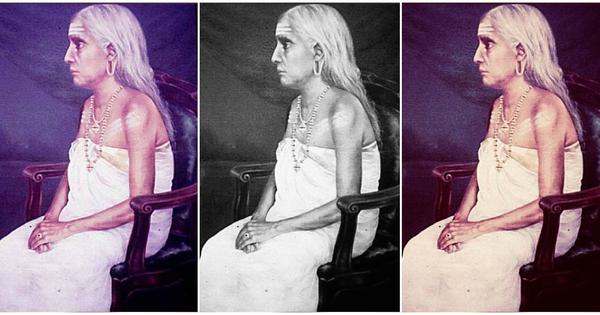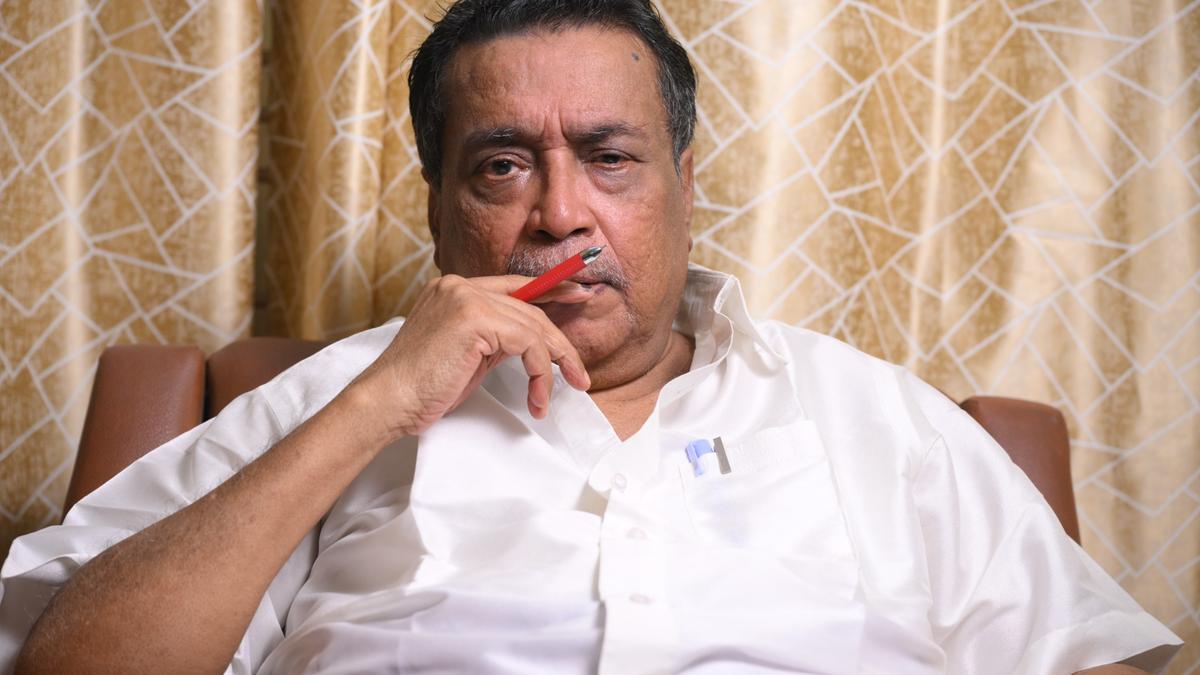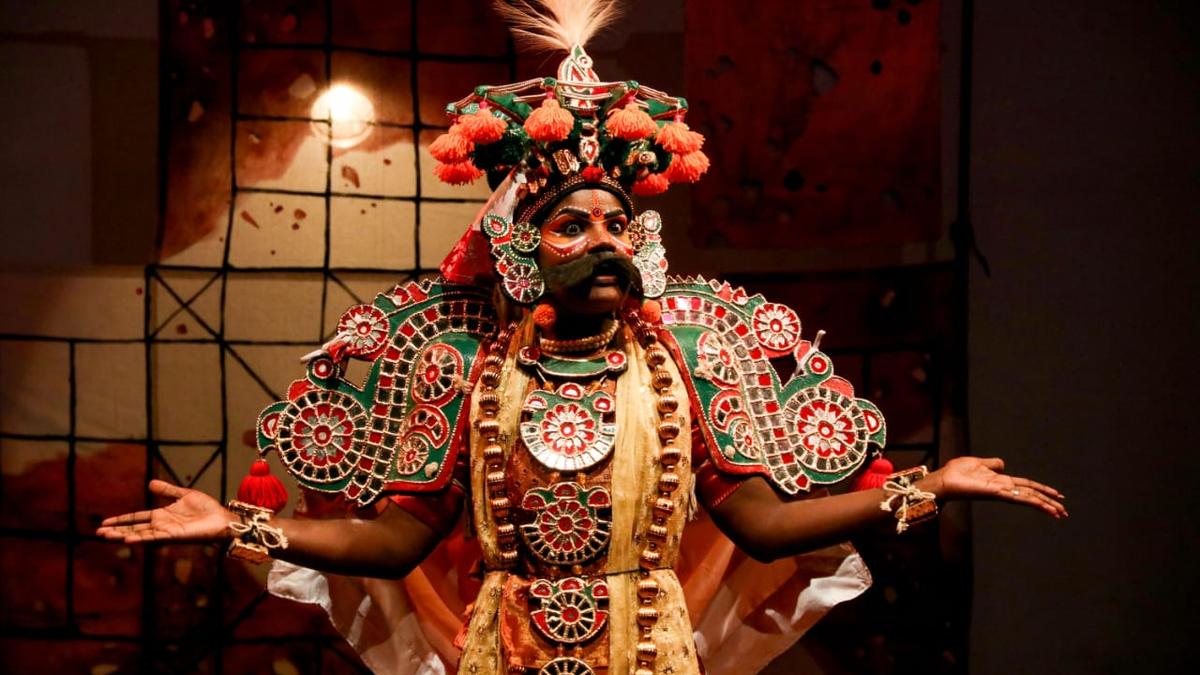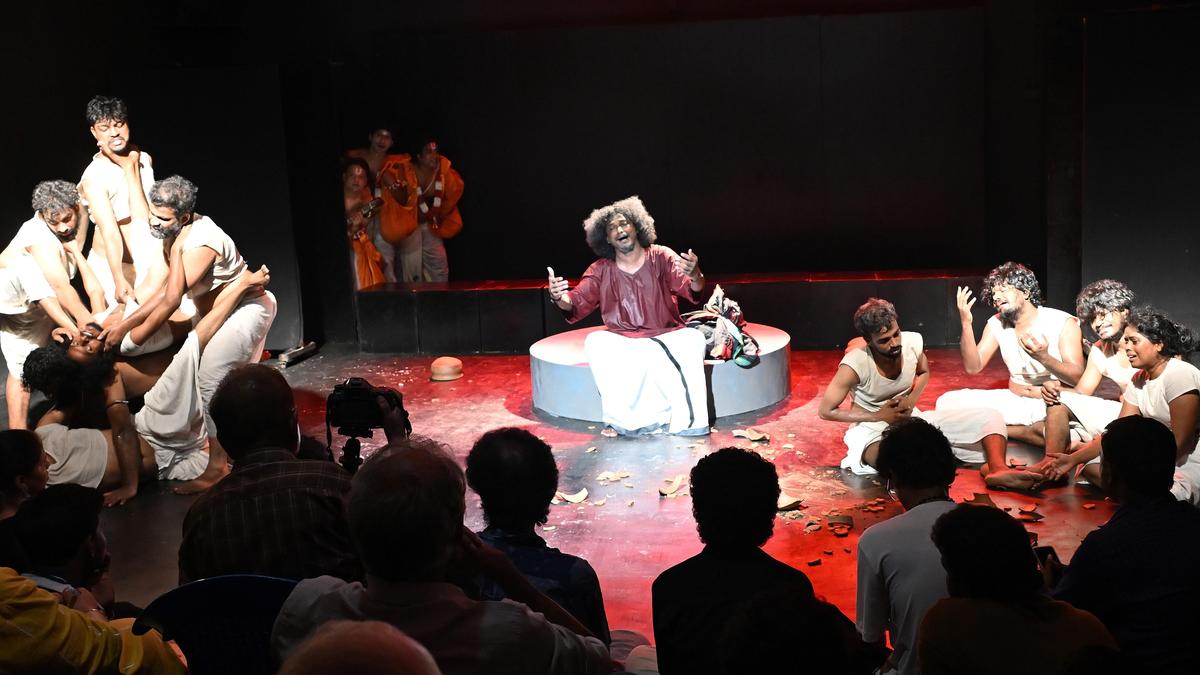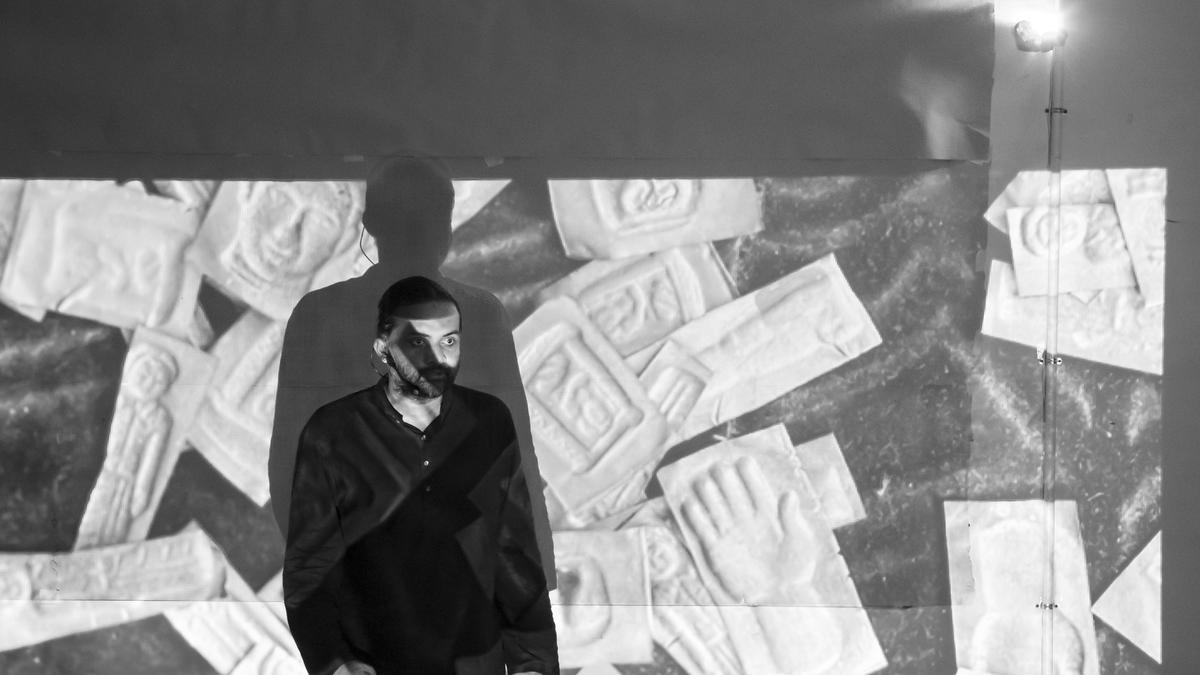
Abheesh Sasidharan sits with his back to the audience — a hooded silhouette against a giant screen, silent, as if in meditation. The intimate performance space is dark and one feels a sense of anticipation building. Abheesh then begins to talk, loudly and clearly, about Meenachilaar, a river which can well be called the lifeline of Kottayam, and his own. He soon creates a world where river, humans and history meet in curious ways.The performance, Meenachil R, begins as an ode to the river, flowing serenely through Abheesh’s childhood. But as he grows, it reveals its turbulent history to him, leading him to stories of generations of people who have lived along its various tributaries. Caste discourseFrom a bitter-sweet story of a childhood spent in the cool, watery embrace of the Meenachilaar, the narrative soon transforms into a powerful caste discourse. It culminates in Manjadikkari, a remote village near Kumarakom in Kottayam, which was believed to have been inhabited by people from subaltern communities who fled caste oppression and slavery in the early 19th century. Abheesh found a deeper anchor for his narrative in author and historian Vinil Paul’s book Manjadikkari: Olichottathinte Vimochana Daivashastram, which is centred around slave trade in the region.
How the Meenachil river tells stories of oppression and resilience
Experience Abheesh Sasidharan's transformative performance, "Meenachil R," exploring the Meenachil river's stories of oppression and resilience.
727 words~3 min read