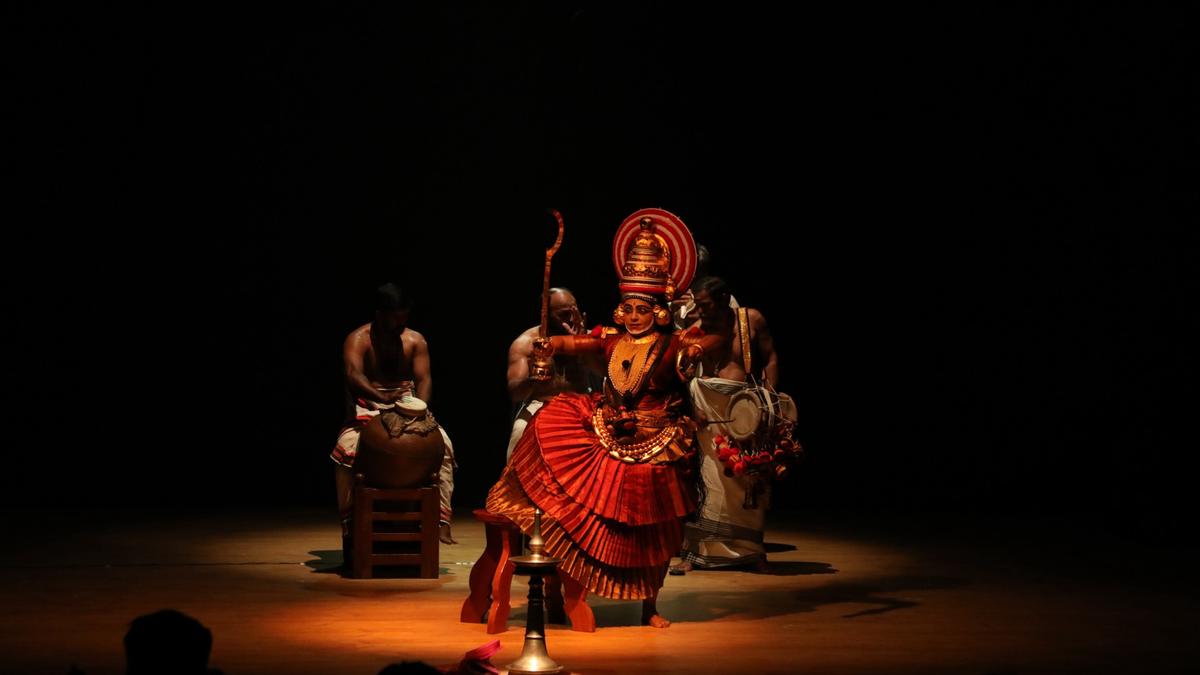
Kapila Venu as Kannagi, who is seen as a representation of Kali holding a sword and a silambu.
| Photo Credit: Special Arrangement
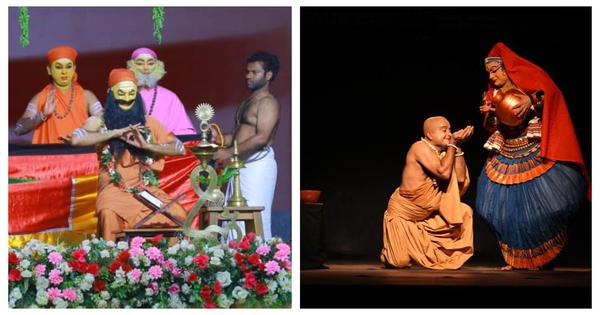
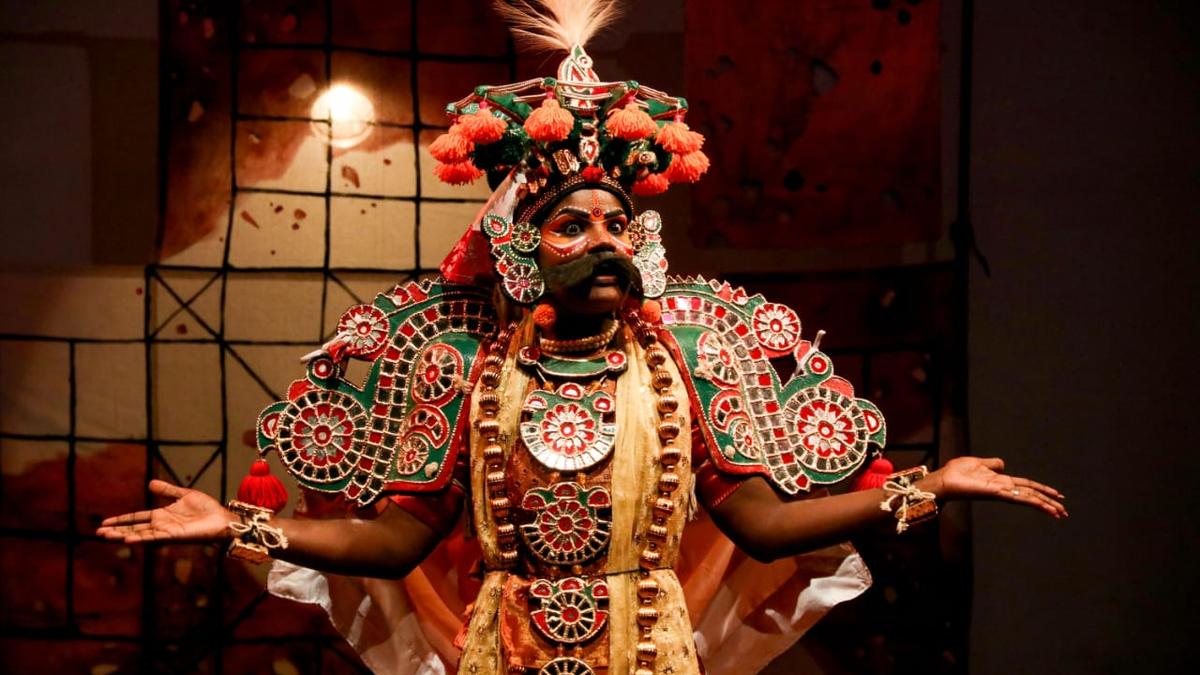
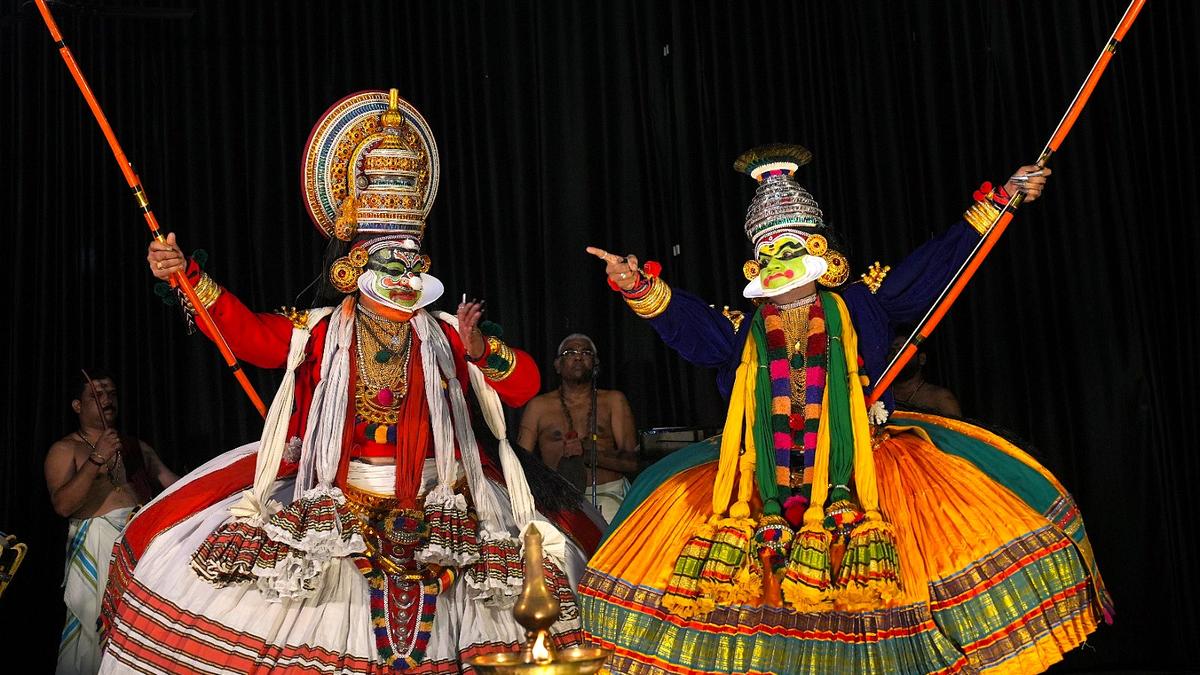
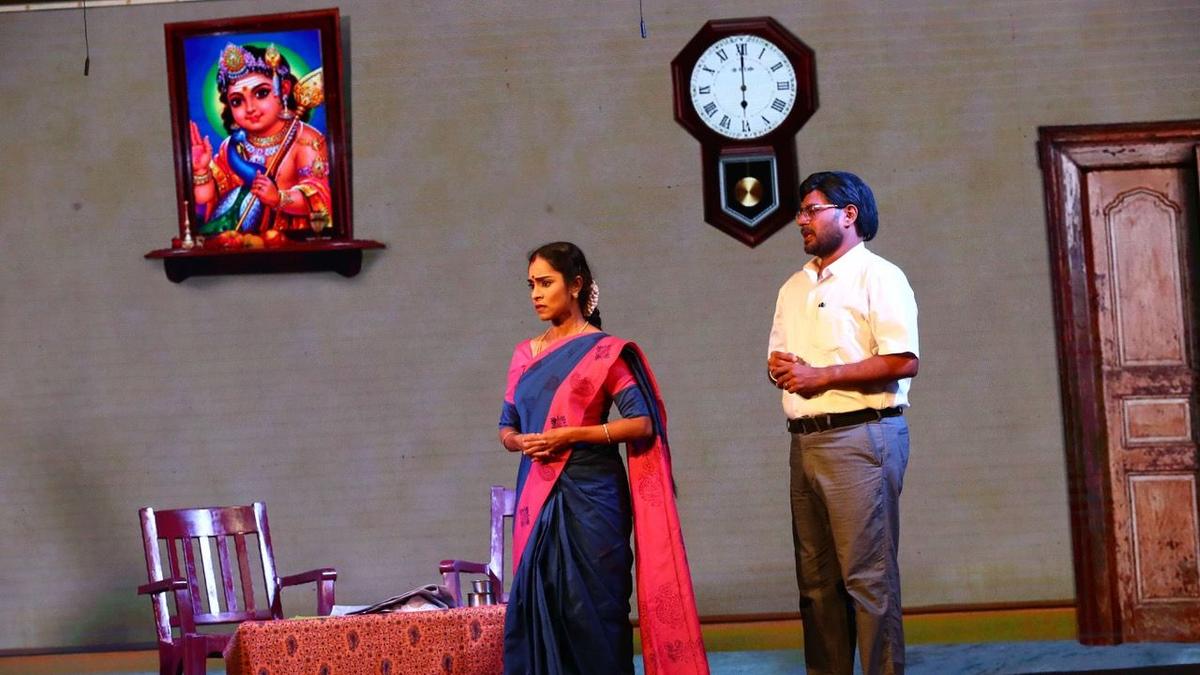
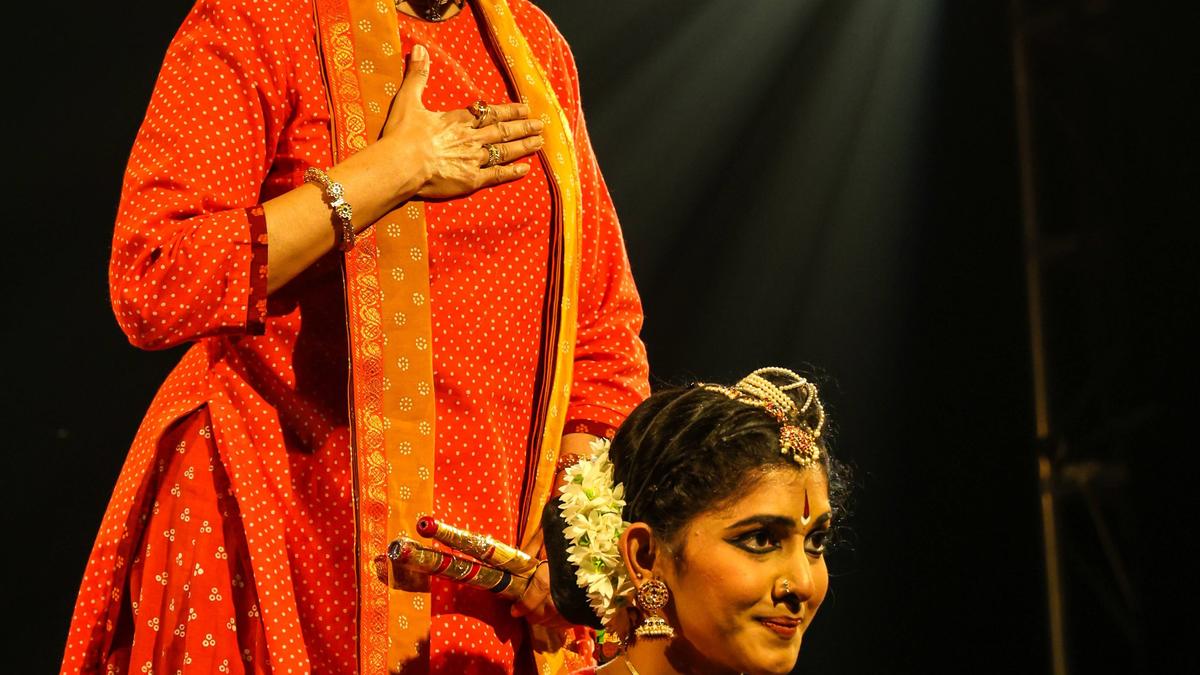
From the embers of anger and agony is reborn a new Kannagi. Her transformation, from a docile-naïve bride to an avenging angel, forms the crux of Silappadikaram — a fifth-century Tamil epic by Ilango Adigal. A Koodiyattam adaptation of the same, titled Cilappatikaram, staged at Ranga Shankara in Bengaluru, showed how the epic, based on the lives of Kovalan and Kannagi, continues to resonate with modern audiences. Directed by Koodiyattam exponent and acting trainer Sooraj Nambiar, it was presented by Irinjalakuda-based Tripudi Ensemble.The play is a significant addition to the Koodiyattam repertoire as it places a woman at the centre stage. In a way, Kannagi embodies women fighting prejudice and injustice through the ages, and that underscores the timeless relevance of the play.Sooraj as Kovalan and Kapila Venu as Kannagi breathed life into the characters with their nuanced expressions and minimalistic movements. The couple, from the ancient port city of Poompuhar, reaches Madurai after Kovalan is financially ruined because of his affair with the courtesan Madhavi. Hoping to begin their life anew, Kannagi gives him one of her anklets to sell. The avaricious goldsmith, whom Kovalan approaches to sell the anklet, falsely accuses him of stealing the queen’s anklet, and the hapless Kovalan is executed without a fair trial. Kapila’s transformation from a grief-stricken to a furious woman, demanding justice for her husband, was powerful. Her self-mutilation, in rage, burns down the city of Madurai, and Kannagi is seen as a representation of Kali holding a sword and a silambu.