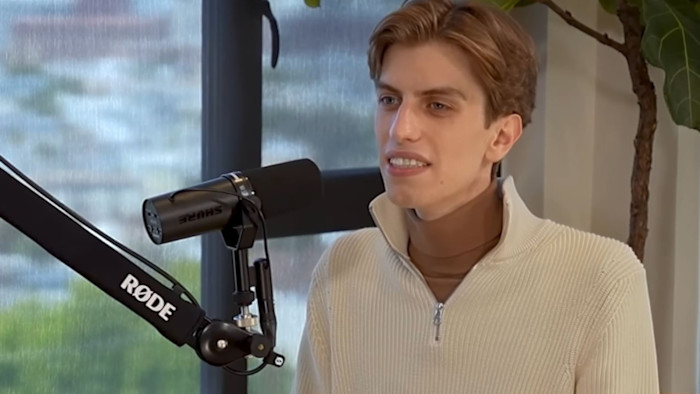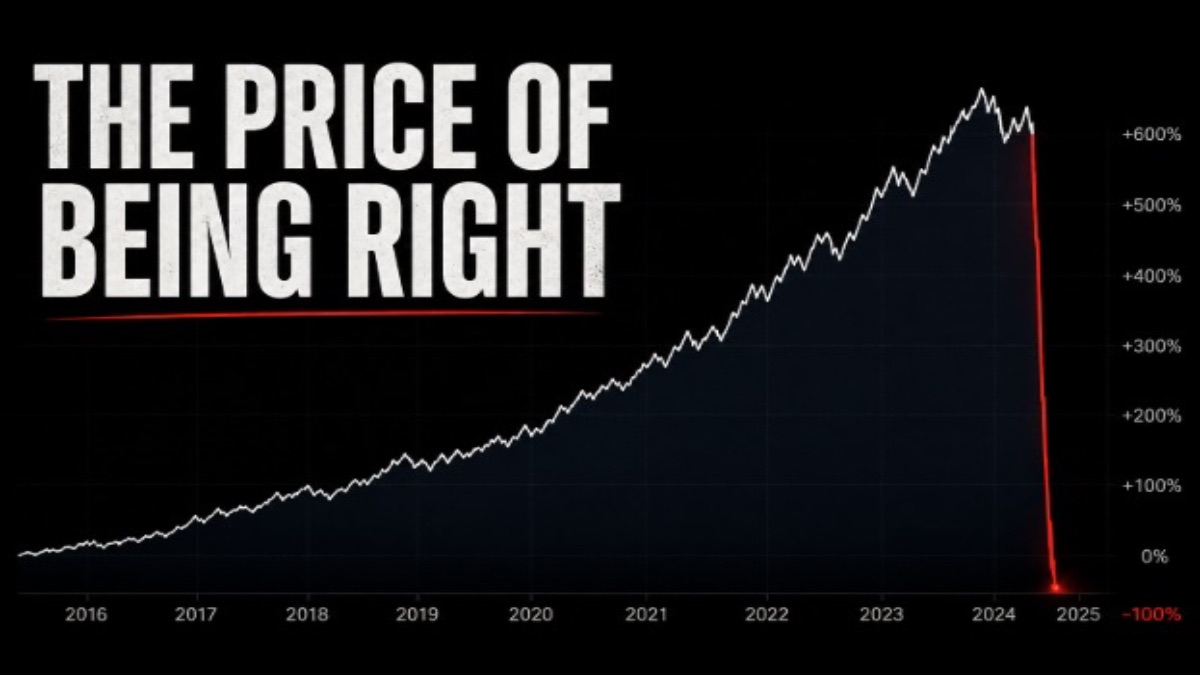
The Price Of Being RightMarkets have a remarkable ability to bankrupt investors who are fundamentally right.Leopold Aschenbrenner's AI thesis may ultimately prove to be one of the defining investment calls of this decade. He may have been right all along.Yet being right and making money are two very different things. The difference is almost always risk management.Markets don't care how right you are. They only care how long you stay in the game.Over the years, one lesson has become clear: the best risk management systems are often the simplest.The smartest investors often focus on being right. The best investors focus on surviving.Losing money teaches humility.Nearly blowing up teaches risk management.Paul Tudor Jones famously said:"Nothing good happens below the 200-day moving average."The same principle applies to your own P&L, except you don't wait for the 200-day moving average.Cut risk early. Stay alive. Let your edge compound.The Biggest Edge Isn't Finding Better TradesMost traders spend years searching for better entries, faster news or more sophisticated indicators. Very few spend the same amount of time thinking about how risk should evolve as their own performance evolves.Most traders use roughly the same risk regardless of whether they're trading exceptionally well or going through a difficult period. That ignores one of the most valuable pieces of information available: their own performance.The market is constantly changing. Sometimes your strategy is perfectly aligned with the environment and almost every trade works. At other times even your highest-conviction ideas fail. Treating those two environments with identical risk makes little sense.The best traders don't simply manage positions, they manage exposure. They increase risk when their equity curve confirms they have an edge and reduce it automatically when performance deteriorates. Their own P&L becomes a dynamic risk indicator, ensuring they trade their biggest when they're trading their best and preserve capital when conditions turn against them.The Goal Is to Protect the Equity CurveMost traders think their job is to make money.In reality, their first job is to avoid giving it back.Building a profitable equity curve takes months or years. Destroying it often takes only a few emotional trading sessions. Once meaningful profits have been accumulated, protecting those gains becomes more important than maximizing the next day's P&L.Think of your equity curve (P/L) as a business. Every large drawdown dramatically increases the amount of work required simply to get back to where you started. Consistent compounding, not spectacular individual trades, is what ultimately creates exceptional long-term performance.Source: TMELet Your P&L Decide Your RiskThe biggest mistake traders make is allowing emotion to determine position size.Most traders believe confidence should determine position size. The opposite is often true. Confidence tends to be highest near equity peaks and lowest near equity troughs. A rules-based framework prevents emotions from dictating exposure at precisely the wrong moments.Confidence after a winning streak often leads to oversized trades just as discipline begins to fade. Fear after a losing streak frequently causes traders to reduce risk precisely when their edge may be returning.The solution is to remove emotion from the process entirely.Instead of asking yourself whether you feel confident, allow your own performance to determine how much capital you allocate. When your equity curve is trending higher and consistently above its short- and long-term averages, gradually increase exposure. When performance deteriorates and the trend breaks, reduce size automatically.The market is already providing feedback. Listen to it.Source: TMETrade Your Equity Curve Like Any Other ChartTechnical traders spend countless hours analysing moving averages, momentum and trend strength in financial markets.Very few apply the same principles to themselves.Your own P&L contains information. A rising equity curve often reflects favourable market conditions, good execution and alignment between your strategy and current market behaviour. A deteriorating equity curve frequently signals the opposite.By applying moving averages to your own performance, risk management becomes systematic instead of emotional. Good periods are allowed to compound. Difficult periods become naturally defensive before large drawdowns develop.The objective isn't to be right on every trade. The objective is to be biggest when you're right and smallest when you're wrong.Source: TMEThe Best Traders Press When They Have The EdgeProfessional traders rarely generate their returns evenly throughout the year.A small number of periods account for the majority of profits.The objective, therefore, is not constant risk. The objective is to have your largest positions during those periods when your strategy is working exceptionally well, while automatically scaling back during unfavourable conditions.In other words:Don't maximize risk.Maximize the amount of capital deployed when your edge is actually present.Source: TME
The Price Of Being Right
Leopold Aschenbrenner's recent struggles are a reminder of a lesson every trader eventually learns: being right and making money are two very different things.
744 words~3 min read