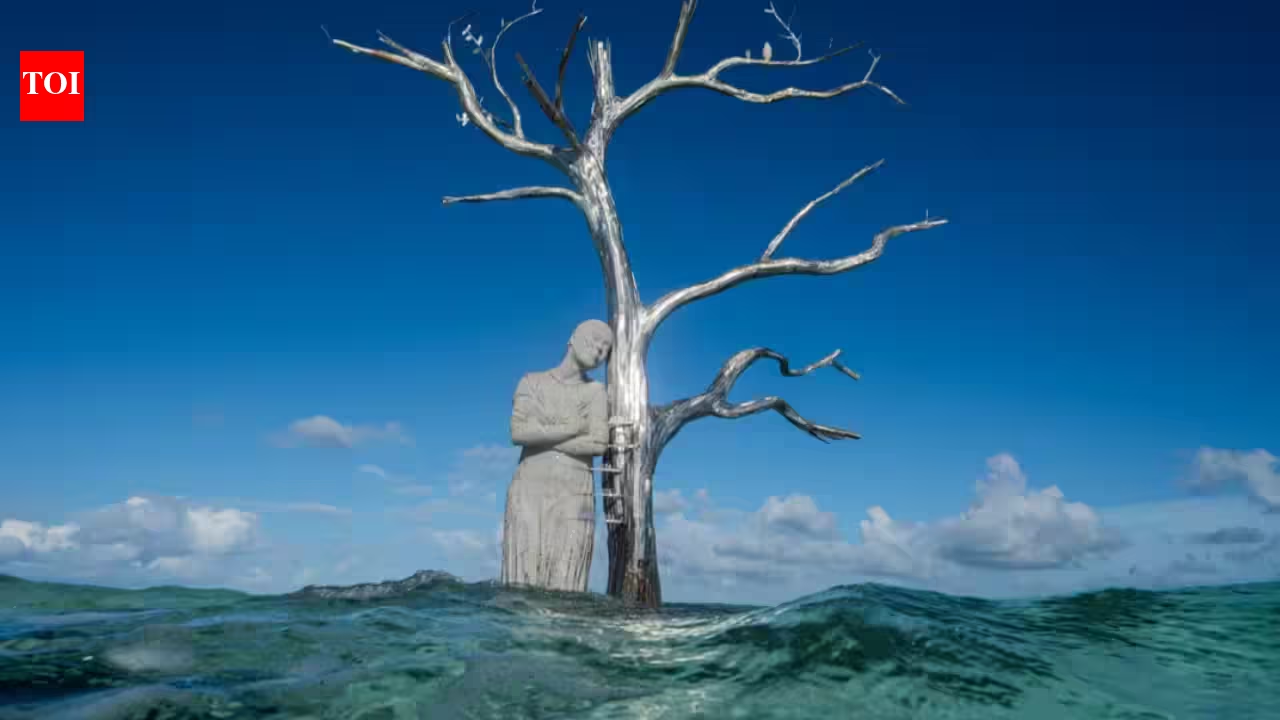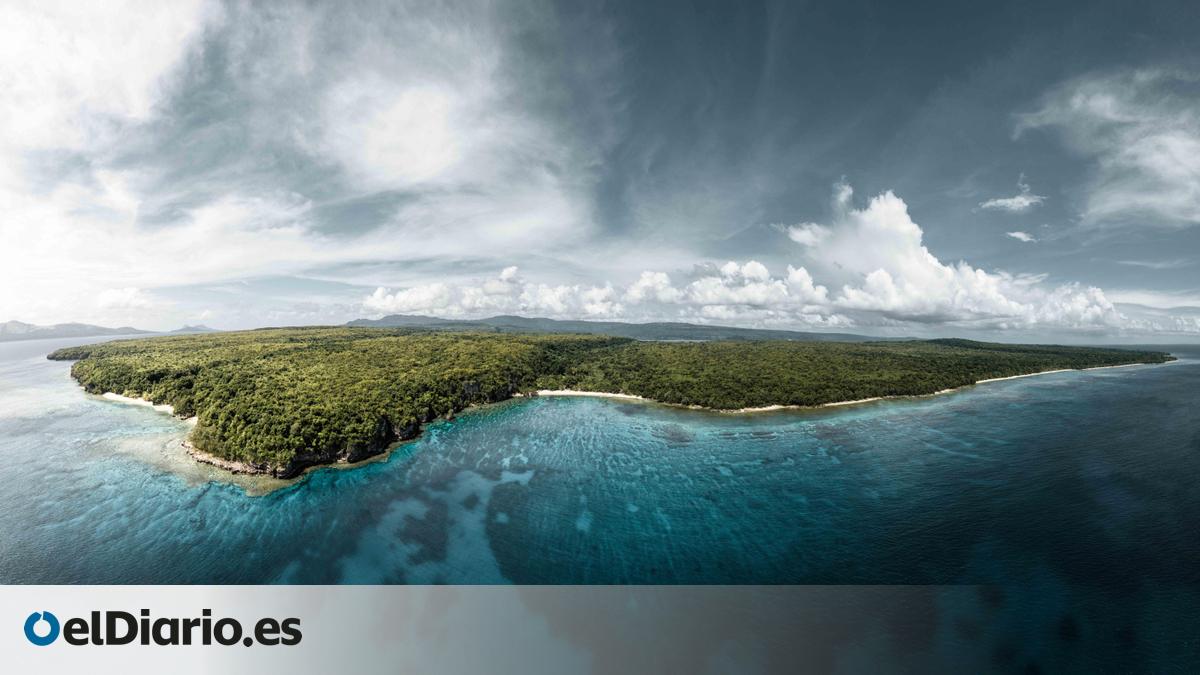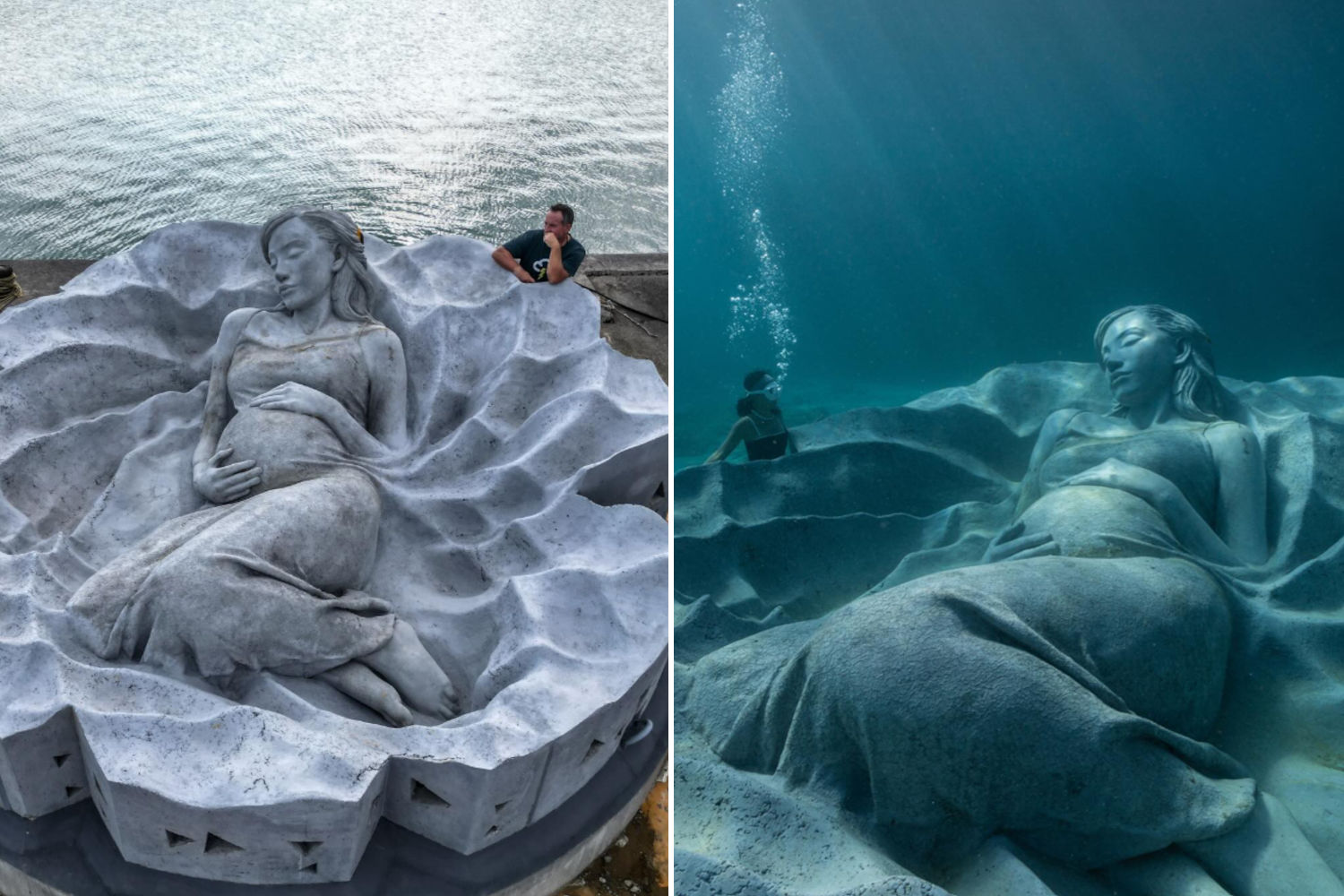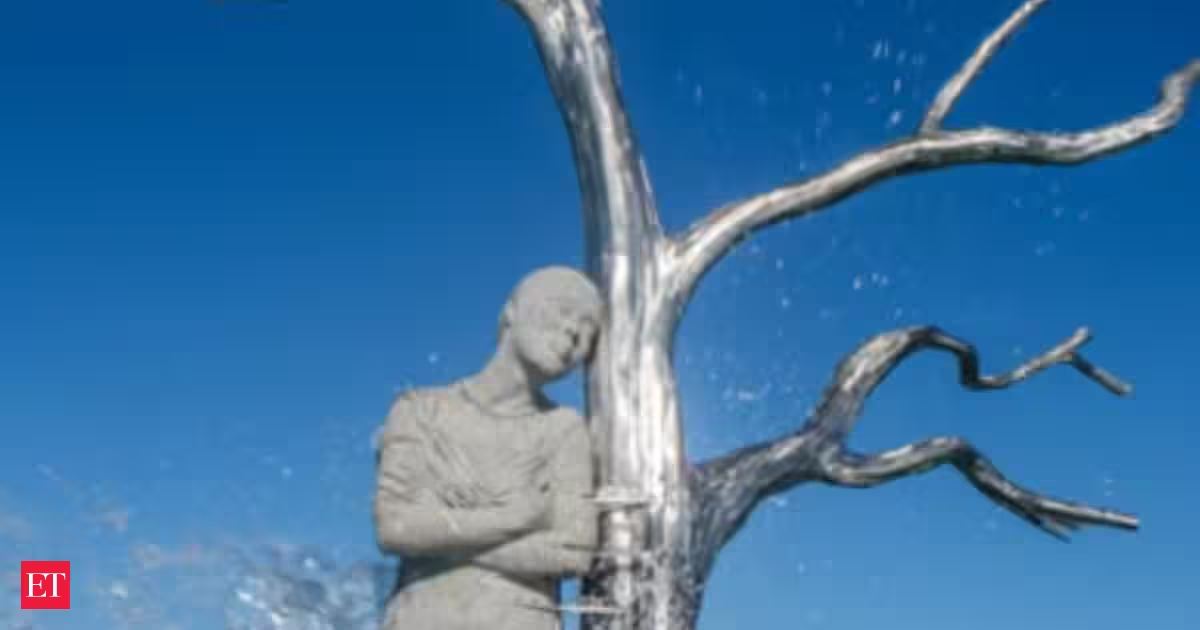
A decade after rising sea levels submerged Kale Island in the Solomon Islands, a striking new sculpture has been installed at the site where the island once stood. The artwork not only commemorates a community displaced by climate change but is also designed to become a living habitat for corals, seabirds and other marine life.Created by renowned British marine sculptor Jason deCaires Taylor, the installation, titled The Solomon Siren, marks ten years since Kale officially disappeared beneath the Pacific Ocean due to rising sea levels. Why Kale Island disappeared beneath the seaKale, a 50,000-square-metre island in the Solomon Islands archipelago, was once known for its white sandy beaches, forests and clear waters. However, rising tides gradually engulfed the island, making it one of the first documented islands in the world to be completely lost because of sea-level rise.The Solomon Islands remain among the regions most vulnerable to climate change. According to reporting by The Telegraph in 2023, more than 26,000 people across the island chain have been forced to relocate since 2008 due to coastal erosion, rising seas and increasingly severe weather.Climate activist Gladys Habu Bartlett, who grew up in the Solomon Islands, previously described Kale in a 2020 guest blog for the International Institute for Environment and Development (IIED) as a treasured part of the country's cultural heritage."With its white sandy beaches, clear waters and lush forests, Kale was a jewel between the ocean and the sky," Bartlett wrote.The Solomon Siren honours both a lost island and a climate campaignerInstalled in the intertidal zone where remnants of the island occasionally emerge during low tide, The Solomon Siren has been modelled on climate activist Gladys Habu Bartlett.In an Instagram post announcing the installation, Jason deCaires Taylor said the sculpture serves as: "A memorial to a lost landscape and a powerful reminder of the communities already living with the impacts of climate change."The life-sized sculpture depicts Bartlett leaning against a tree representing Kale's once-rich vegetation and natural resources.A sculpture designed to become a marine habitatUnlike traditional monuments, The Solomon Siren has been intentionally built to support marine biodiversity.According to My Modern Met, the sculpture is made using pH-neutral cement combined with biochar, creating a porous surface suitable for colonisation by:CoralsAlgaeMarine invertebratesOther reef organismsThe tree branches incorporated into the artwork are also designed to provide resting places for seabirds, allowing the installation to evolve into a functioning ecosystem over time.Climate change message carved into the artworkOne of the sculpture's most distinctive features is a series of engraved sea-level markers.These indicate recorded sea levels for:200620162026The artwork also includes projected sea-level marks for:20362046These projections are based on climate models and visually illustrate how rising oceans are expected to continue reshaping vulnerable coastlines.The installation comes as a recent United Nations report warned that global sea levels are now rising at twice the rate recorded a decade ago.Gladys Bartlett says Kale's story is a warning to the worldIn a video released alongside the sculpture's unveiling, Bartlett reflected on losing her homeland. "Year after year, we watched the sea rise. We watched our homeland disappear."She added: "I chose to share our story, and this sculpture is a deeply meaningful part of it. What happened is a warning, not only for us, but for the world."Part of Jason deCaires Taylor's global 'Siren' seriesThe Solomon Siren is the latest installation in Jason deCaires Taylor's ongoing Siren series, which uses public art to highlight environmental challenges affecting oceans.His previous works include:Sirens of Sewage in Whitstable, England, highlighting sewage pollution along Britain's coastline.Ocean Siren near Australia's Great Barrier Reef, which changes colour in real time according to ocean temperatures to draw attention to coral bleaching.According to the artist's official statement, the sculpture serves as both a memorial and a warning."Like the mythic sirens that warned sailors of hidden dangers, Taylor's sculpture issues a quiet but urgent call: a reminder of a place that once existed and of the coastlines around the world that may follow."Inputs from agencies
In 2016, a Pacific island disappeared beneath the sea; now a breathtaking sculpture marks exact spot and is slowly transforming
A new sculpture commemorates Kale Island, which disappeared beneath rising seas a decade ago in the Solomon Islands. Created by British marine artist Jason deCaires Taylor, the artwork is designed to become a living habitat for corals, seabirds and other marine life while drawing attention to the impacts of climate change. Engraved markers on the sculpture show both past and projected sea-level rise, highlighting the growing threat facing vulnerable coastlines.
656 words~3 min read