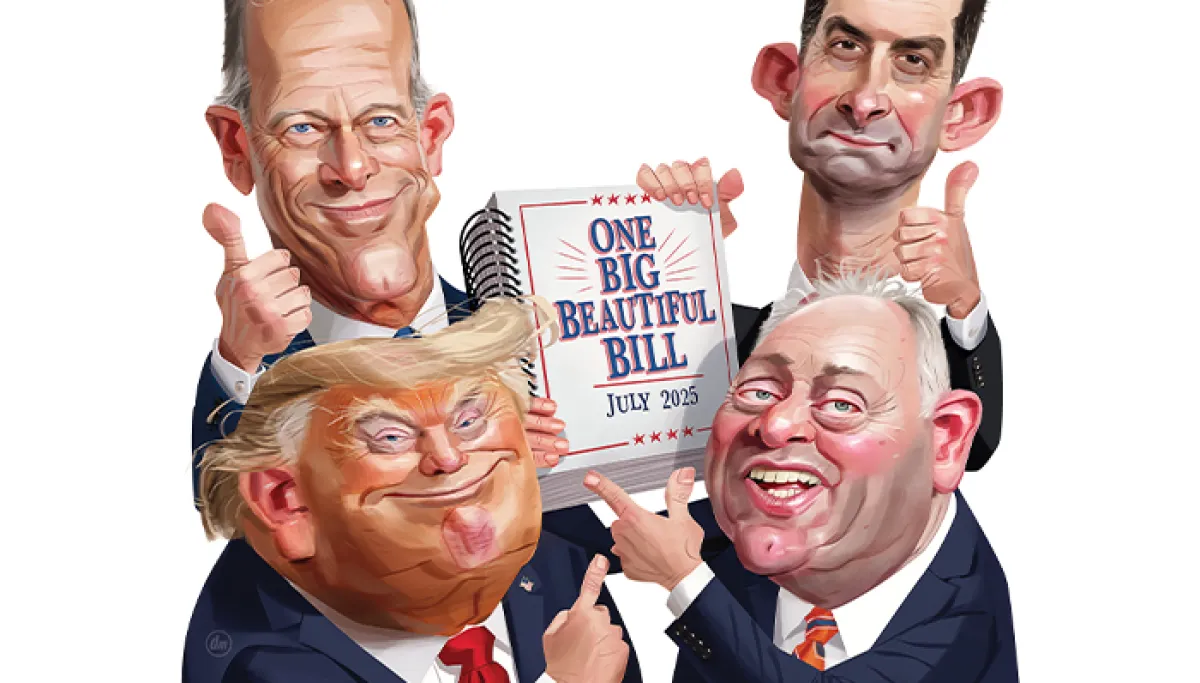
Republicans knew they had a messaging problem on their hands months before the tax bill reached President Donald Trump’s desk.At the president’s request, the legislation was going to be formally named the One Big Beautiful Bill Act, a nod to Republicans getting behind what leaders were hailing as a decade’s worth of legislating.The problem was that their homage to its “beauty” didn’t tell voters much about what the legislation actually accomplished for everyday people.
There was the extension of Trump’s 2017 tax cuts. The money for immigration enforcement. Tens of billions for national security. That’s to say nothing of smaller provisions that received less coverage at the time, from its newborn savings accounts to its permanent child tax credits.HOW THE BIG BEAUTIFUL BILL BECAME LAW: READ MORE FROM THE WASHINGTON EXAMINER’S 10-PART SERIESAll formed the basis of what would become a midterm election blitz to sell its benefits to voters. Settling on a name that encapsulated it all was the bigger challenge.The tagline that emerged, the Working Families Tax Cuts, was the product of early conversations between the White House and congressional leadership, a brainstorm that left on the cutting room floor several backups that Sen. Tom Cotton (R-AR) had poll-tested in April 2025, months before it became law on July 4.(Illustration by Dean MacAdam for the Washington Examiner)