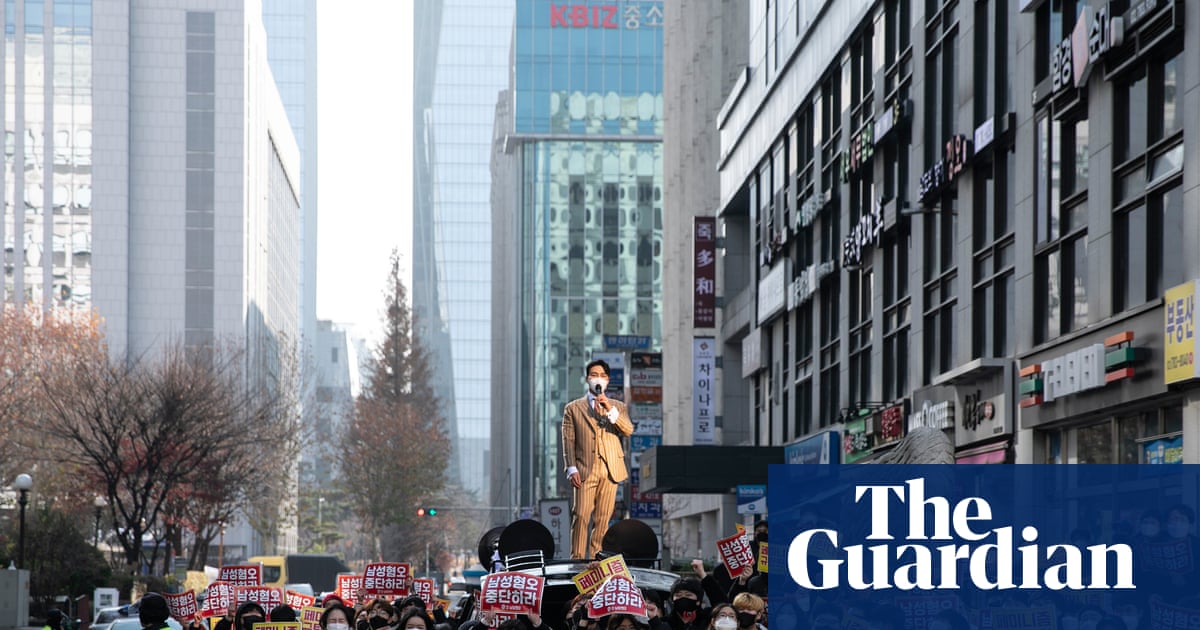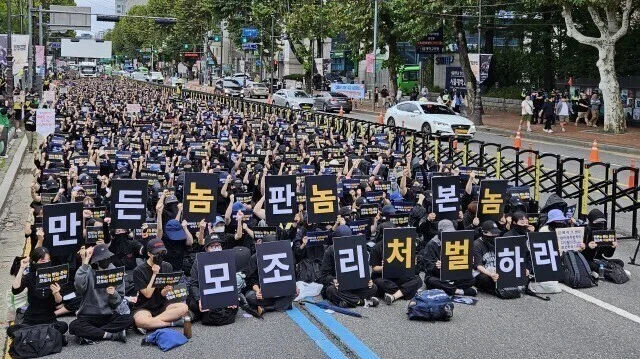
Upon meeting anti-sexual violence activists based in Korea this summer, I received many questions about the incel problem in the United States. “Incel,” a portmanteau of “involuntary celibate,” does not only refer to men who are unsuccessful in their attempts to form intimate relations with women but refers to men who have internalized misogyny due to their belief that they have been rejected by women, with most nurturing animosity toward the world and women while being socially cut off from others. The world that these men dream of is simple: a world in which women cannot reject them. As such, incels are indicators of the crisis that masculinity faces. The US and the EU have characterized incels as social threats, and their swift responses have produced a wealth of research. But is there any other country in the world in a state that trumps the severity of the situation in South Korea? Various statistics have long demonstrated South Korea’s appalling performance in gender perceptions and gender equality indexes. As such, people’s sensitivity to discrimination and violence is on a different level. It has become common knowledge that South Korea is the most prolific producer of pornographic deepfakes and that most of the victims of such material are Korean women. What can we say about South Korean masculinity? Sadly, it is not faring well. Firstly, 80% of those apprehended by police for deepfake sex crimes are in their teens. Among them, 25% are under 14 and therefore not subject to criminal prosecution. Boys in that age group are too young to have been rejected sexually by countless women, so they should not be full of the visceral hate characteristic of incels. This only goes to show that children and teenagers in South Korea are becoming embroiled in misogyny and sexual violence even before they reach a certain age. Contrary to popular belief, those found to be producing and distributing pornographic deepfakes are not socially awkward hermits. They were friends that the victims would see regularly; those who would greet everyone with ready smiles. The producers of sexually explicit deepfakes are not incels who nurture their contempt towards women and society while remaining at the bottom of the male social hierarchy, but men who seem to have no problem with adhering to social norms. Secondly, the women being victimized in such crimes are not random strangers, but good friends, sweethearts, and even family members of perpetrators. The traditional, patriarchal double standard which only allows women to be Madonnas or whores is no longer valid. The objectification of women under the patriarchal ideology treats mothers, sisters and wives as untouchable; even if you bonded with a fellow man over your mutual experience of buying sex, one slightly suggestive stare at your little sister would trigger a fistfight. But the world of South Korean teenage boys, dominated by deepfakes, does not abide by that binary. Every woman can be the subject of pornographic deepfakes — a plaything to be shared. This phenomenon demonstrates that boys are learning to sexually objectify women before grasping conventional masculinity as per the patriarchy. Any and all women in their vicinity can become the main characters of their pornographic fantasies. Thirdly, sexual violence is becoming commonplace and almost natural due to the combination of widespread misogyny and digital technology. The ease at which objectification, fragmentation and sexualization of women’s bodies happen at a mass scale has led to the belief that anyone can be objectified to satisfy one’s sexual cravings. The fact that so many people have jumped into producing pornography rather than being satisfied with watching it shows a new level of proactivity. While getting their hands on as many pictures of the women they know as possible, as if they were collecting coupons, these men remain unaware of the harm they are causing to the dignity of those around them. “Thousands of men in every chat room are doing what I’m doing, so why should I be the only one held morally reprehensible?” they think. If anything, instead of reprimanding such behavior, society is allowing and promoting such exploitation. Despite the severity of the situation, the adults in our society remain indifferent. In this country, it is far too easy to hear the following on influential platforms: lawmakers airily saying that if people were not aware that what they were watching were deepfakes, they should not be punished; parents fretting over how their sons will perform in the College Scholastic Ability Test while remaining oblivious to the anguish felt by victims of deepfake cyber sex crimes; entrepreneurs arguing that as long as Telegram remains unresponsive, domestic content providers will be negatively affected by any restrictions; religious leaders confidently shouting that comprehensive sex education will only lead to early hypersexualization. South Korea is knee-deep in a masculinity crisis and, sadly, the future seems bleak. At a time when it should be going all-out to save these men, the government is instead turning a blind eye. Even if we were to implement education measures to raise young men’s gender sensitivity today, it would take an inordinate amount of time to see real change. Such is the gravity and immediacy of this problem. These men have created a world where women cannot reject them, a world where every woman is a plaything for them to exploit sexually. That world remains easily accessible in the palm of their hands. Do we honestly believe that a world like that will remain locked behind a screen forever?
[Column] Korea’s masculinity crisis
Men have created a world where every woman is a plaything for them to exploit sexually, all at the tips of their fingers
914 words~4 min read