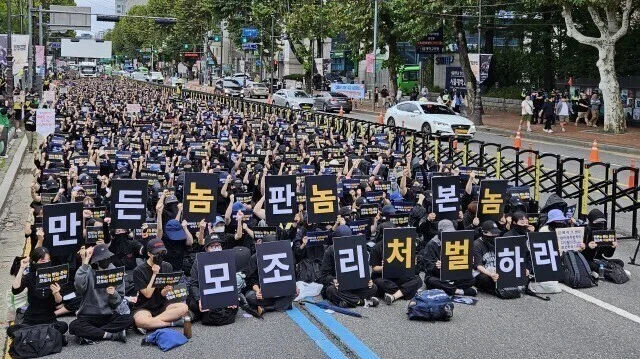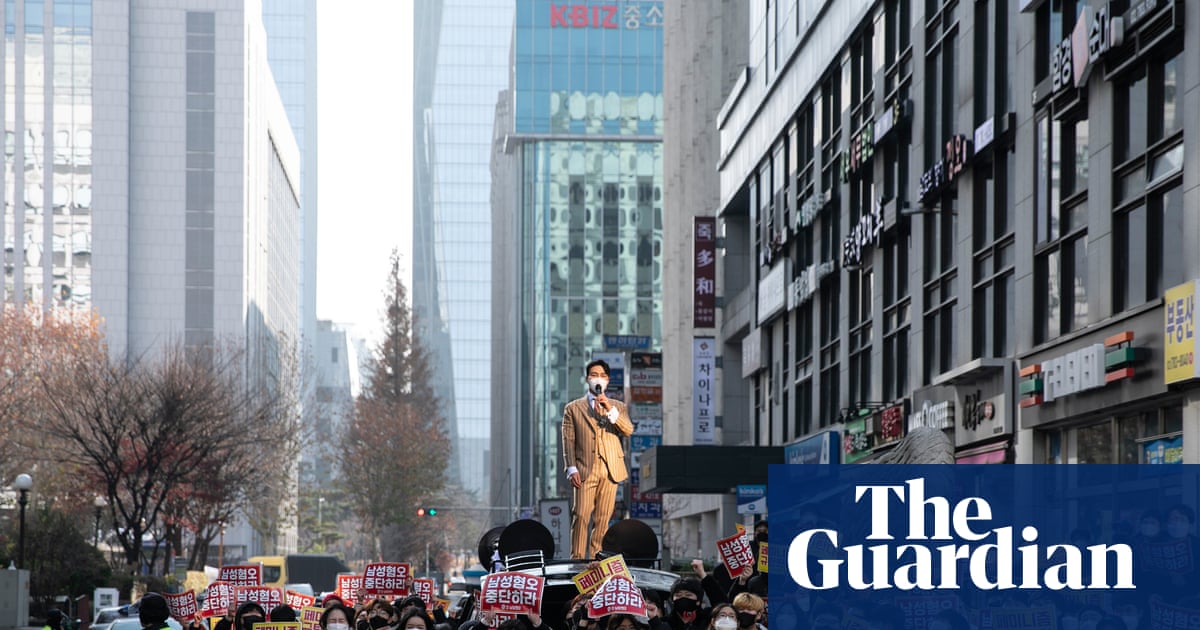
Toxic masculinity is a global phenomenon, but nowhere is it more virulent than in this hypermodern, connected society. What can other countries learn from this ‘ground zero’ of misogyny?
O
n a November evening in 2023, in the South Korean city of Jinju, a woman called On Ji-goo was working the late shift at a convenience store when a young man stormed in, aggressively knocking items off the shelves. When she asked him to be careful, he turned to her, saying, “I’m angry to my bones right now, so don’t touch me.”
The situation escalated. When On tried to call for help, he seized her phone and threw it in the store’s microwave. She tried to stop him and he grabbed her by the collar and arms, dragging her several metres while slamming her into display shelves. It was the start of a brutal assault. Throughout it, he repeatedly said he “never hits women” but feminists “deserve to be beaten”.
When an older male customer tried to intervene, the attacker turned on him, too, demanding, “Why aren’t you supporting a fellow man?” When the police arrived, he announced he was part of a men’s rights group and called for male officers to handcuff him. He later admitted he had singled out On because of her short hair.