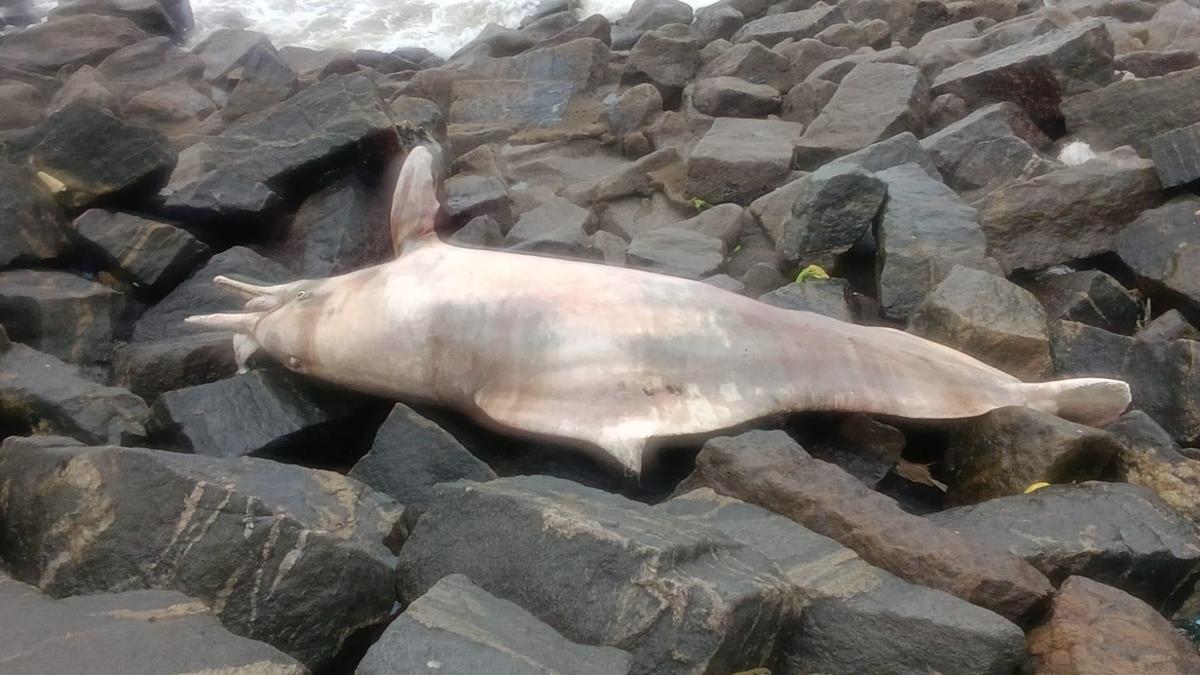
Many Indo-Pacific finless porpoises die each year along Goa’s coast, but without a population baseline, their conservation status remains unknown.A new study found acoustic surveys detect finless porpoises four times more often than visual surveys, suggesting current population estimates based on visual surveys may be unreliable.With no dorsal fin and only fleeting surfacing in shallow coastal waters, the species is easily missed, making acoustic monitoring the best tool to assess its future.
The Arabian Sea was listless as we headed out one morning to spot Indian Ocean humpback dolphins, famously extroverted and known for their acrobatics. A needlefish darted across the surface, pirouetting over the chop as the sun beat down on the deck, turning the railings hot to the touch. When you stare at the ocean long enough, your mind starts to play tricks: every shifting shadow looks like a flipper, every cresting wave, a dorsal fin. Then a shape appeared.
To my untrained eye, it looked like a dolphin. But Imran Samad, a Ph.D. researcher at the Centre for Ecological Sciences at the Indian Institute of Science, whose work focuses on marine megafauna bycatch in India’s multi-gear fisheries, leaned forward over the roar of the outboard engine and said, “It’s a porpoise.”