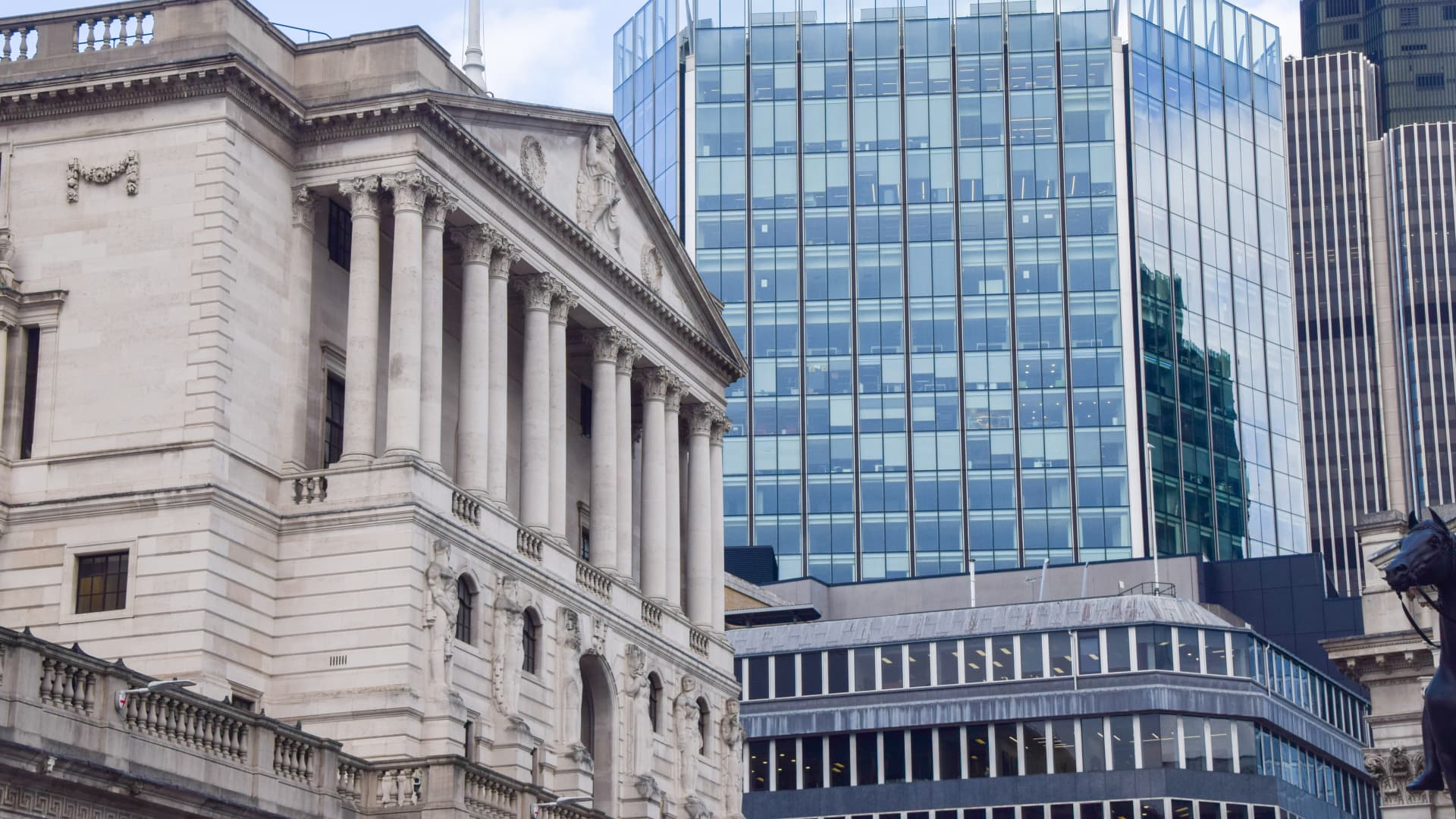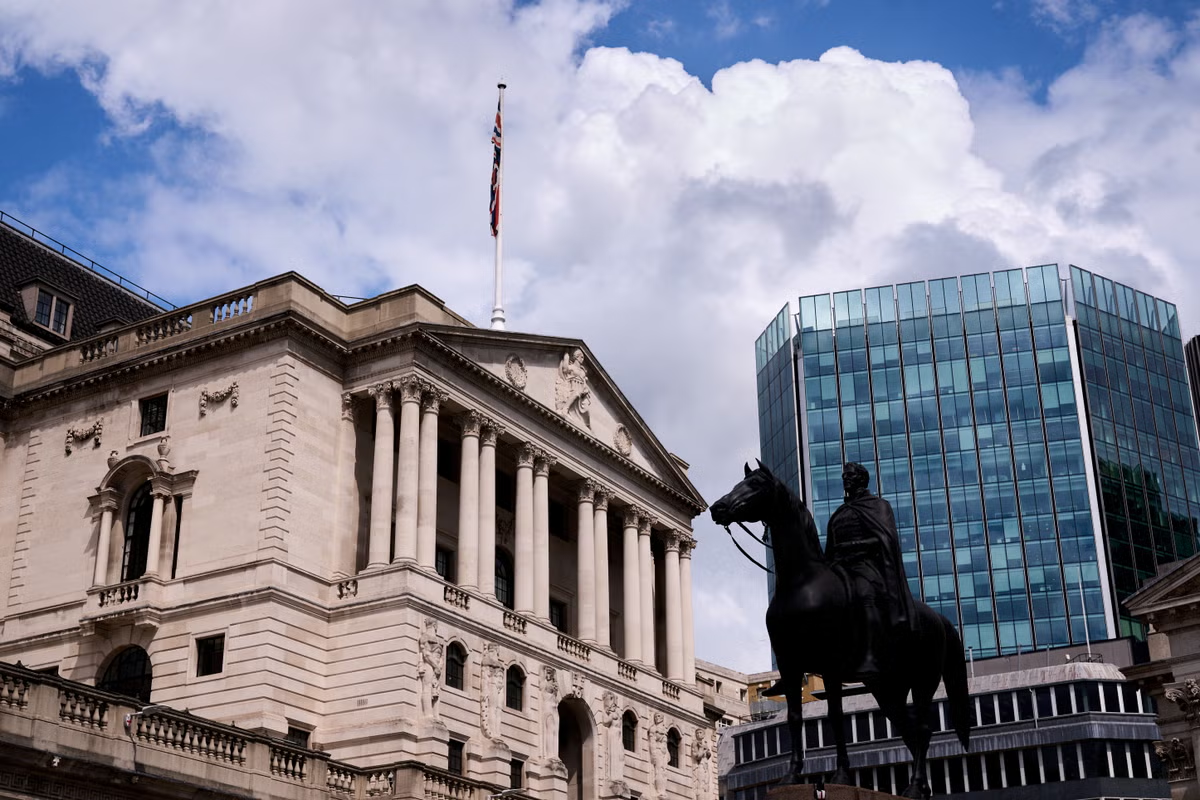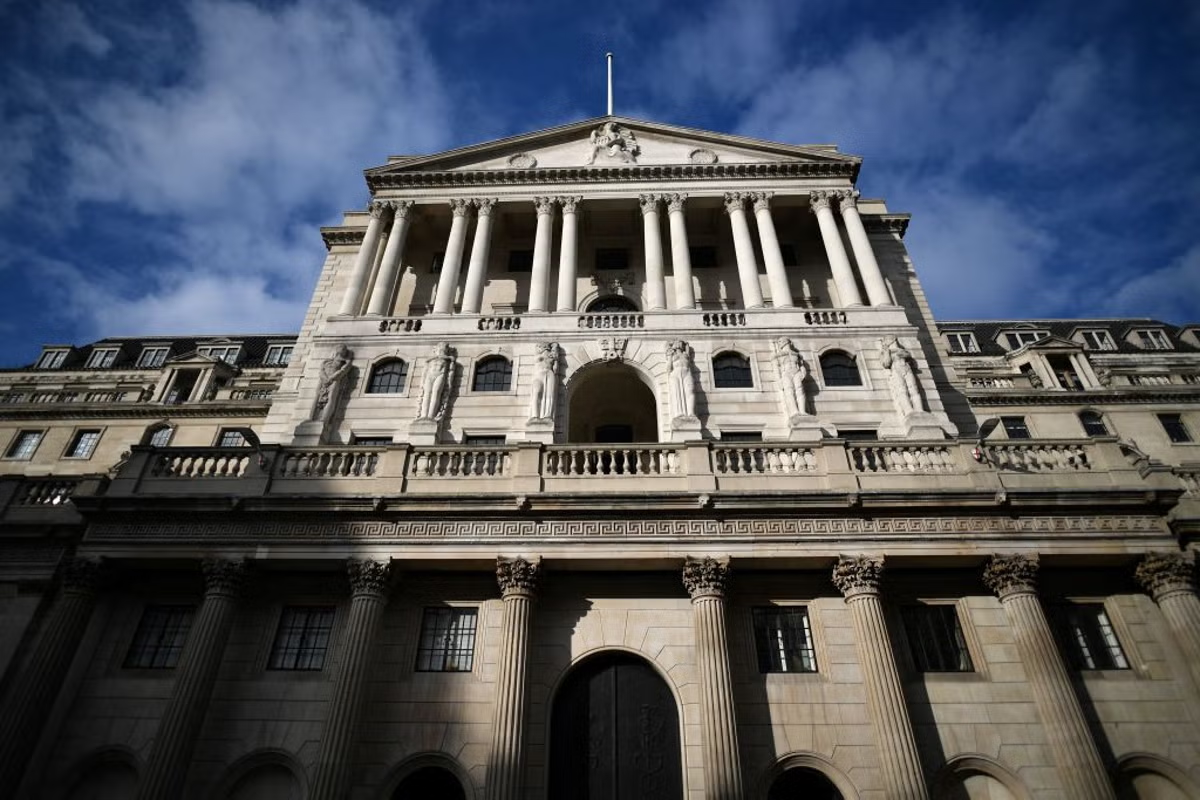
The Bank of England outlined three possible economic scenarios for the UK economy after keeping its benchmark interest rate unchanged at 3.75%. Its central projections point to inflation easing below the 2% target over the medium term while economic growth gradually strengthens, Reuters reported.According to Reuters, the central bank's Monetary Policy Committee voted 6-3 to leave rates on hold on Thursday, while the forecasts incorporate financial market expectations that imply a high probability of two interest rate hikes by the third quarter of 2027.Under its central projection, the Bank of England expects inflation to peak at 3.2% in the fourth quarter of 2026 before slowing below its 2% target to 1.7% in the first quarter of 2028. Inflation is then projected to edge up to 1.9% by the third quarter of 2029.Economic growth is forecast to remain steady at an annual rate of 1.1% in both the third quarter of 2026 and the third quarter of 2027, before accelerating to 1.7% in the third quarter of 2028 and moderating slightly to 1.6% a year later.The central scenario assumes oil prices gradually ease from around $76 per barrel during the third quarter of 2026 to about $71 by the end of the forecast period. Natural gas futures are expected to peak at just over 123 pence per therm in the fourth quarter before falling to just under 60 pence by the end of the forecast horizon.The central bank also expects the energy price shock to generate only moderate second-round effects on inflation.In a milder scenario, inflation is projected to reach 2.7% in the fourth quarter of 2026, ease to 2.4% by the third quarter of 2027, and settle at 1.7% in both the third quarter of 2028 and the third quarter of 2029.Growth in the milder case remains at 1.1% through 2026 before improving to 1.6% in both 2028 and 2029. The scenario assumes oil and gas prices remain around 3% and 6% lower, respectively, than in the central projection, broadly reflecting market conditions following the U.S.-Iran memorandum of understanding. Weak demand and a softer labour market are expected to prevent broader inflationary pressures from taking hold, Reuters said.The adverse scenario presents a more challenging outlook, with inflation climbing to 3.1% in the third quarter of 2026 and rising further to 4.1% in the third quarter of 2027 before easing to 2.8% in 2028 and 2.4% in 2029.Economic growth under the adverse case is projected at 1.1% in the third quarter of 2026, slowing to 0.9% in 2027 before recovering to 1.6% in 2028 and 1.7% in 2029.This scenario assumes oil prices average 30% above the central projection while natural gas prices remain about 60% higher. Although less severe than the Bank of England's April stress scenario, persistently elevated energy prices are expected to lift inflation expectations and trigger stronger and more prolonged second-round inflationary effects.
Global Market: BoE outlines inflation, growth paths under three economic scenarios after holding rates
The Bank of England kept its benchmark interest rate unchanged at 3.75% and outlined three economic scenarios for the UK, with its central forecast projecting inflation to fall below the 2% target over the medium term as economic growth gradually strengthens.
475 words~2 min read