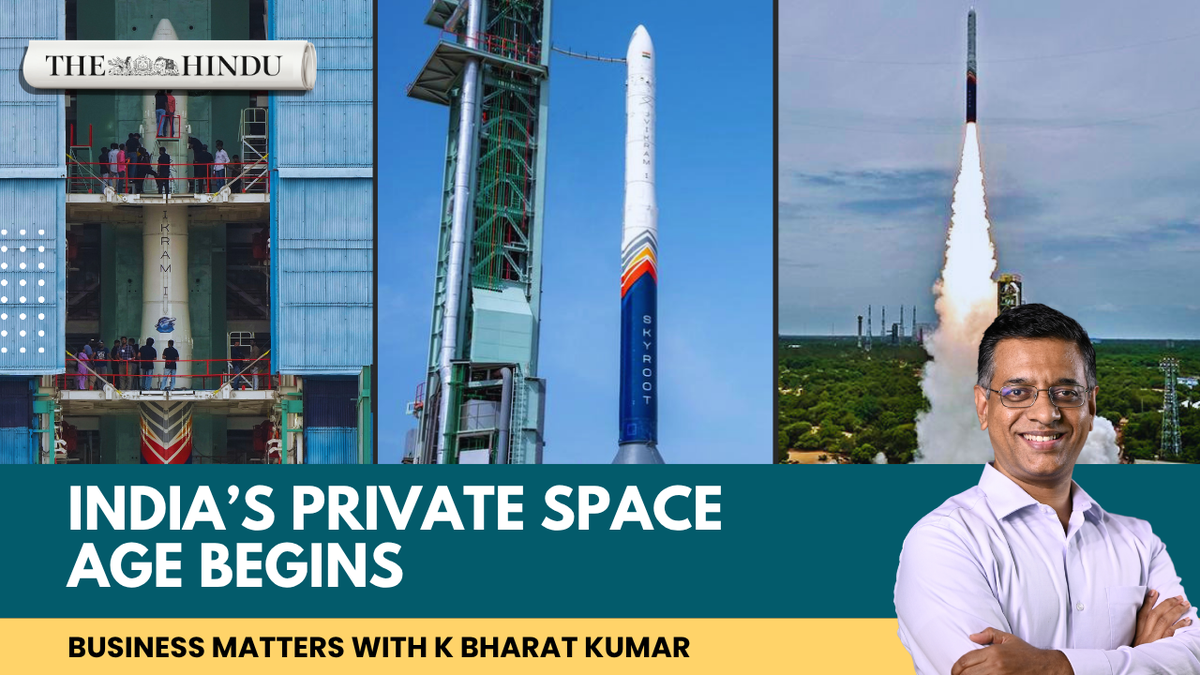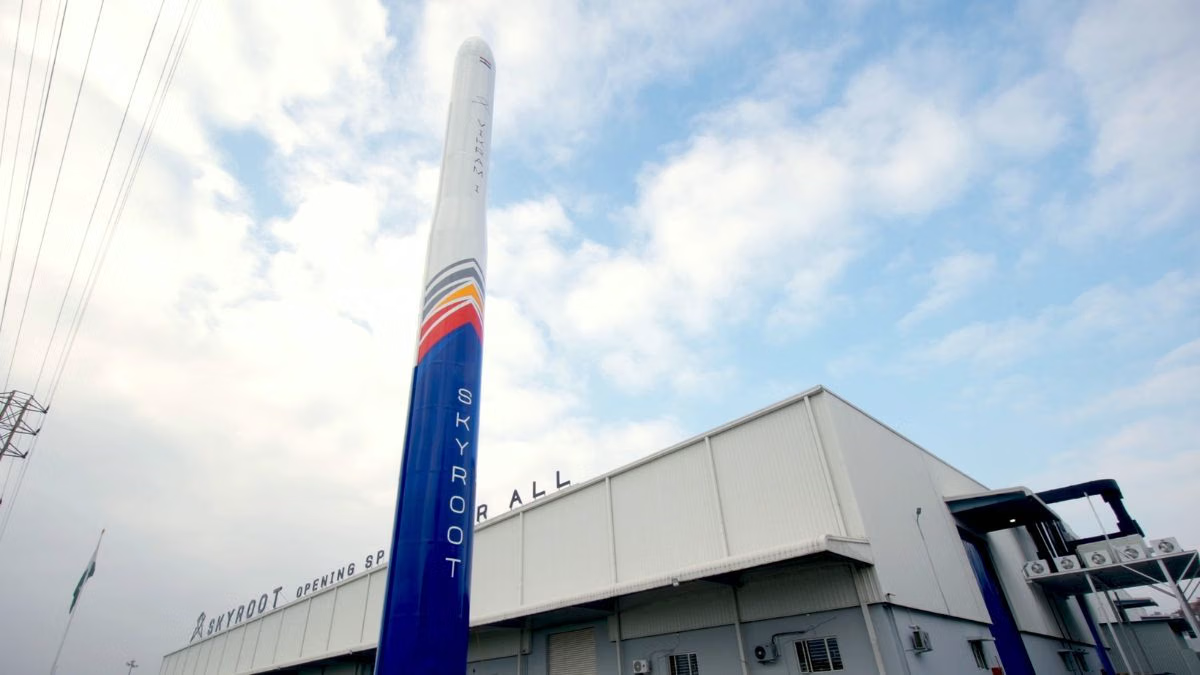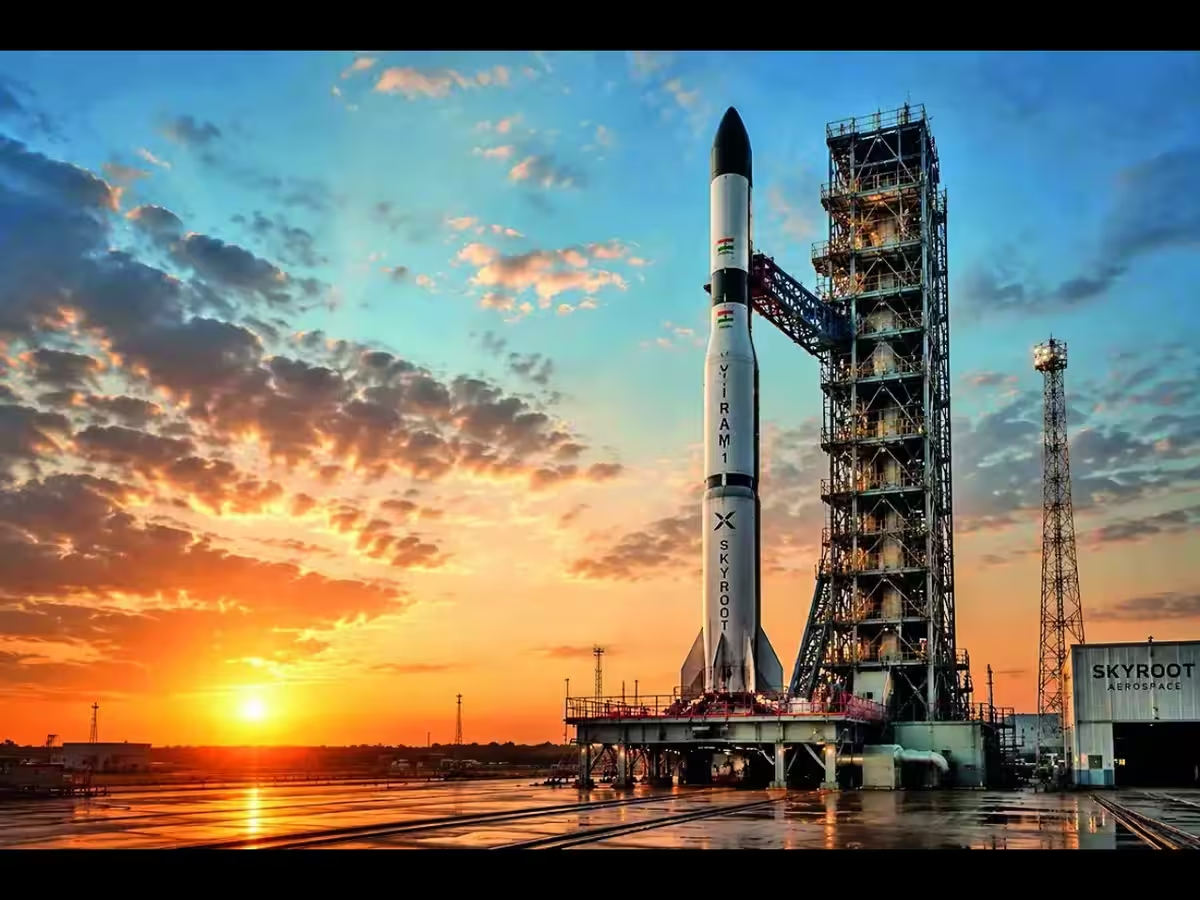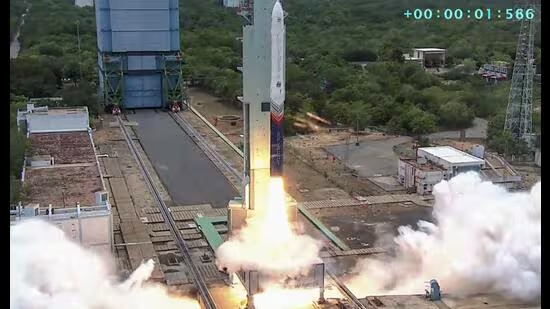
As Prime Minister Narendra Modi said earlier this month, the successful orbital launch of Vikram-1, India’s first privately developed launch vehicle, is “a historic new frontier for India’s space journey”.
This milestone signals a new chapter in India’s space programme, based on the foundation laid by ISRO but with fewer bureaucratic constraints and more room for private enterprise.Before looking at how India can build on this momentum, it is worth revisiting the country’s space journey over the past several decades.
Also Read: Why foreign universities alone won’t fix India’s higher education crisis
ISRO’s pioneering groundwork
What began as the Indian National Committee for Space Research (INCOSPAR), founded by Dr Vikram Sarabhai in 1962, evolved over time into the Indian Space Research Organisation (ISRO) in 1969.India’s first step into outer space was the launch of the Aryabhata satellite in 1975. Three decades later, Chandrayaan-1 added value to lunar exploration by discovering water molecules on the Moon. In 2014, India became the first country to reach Mars on its maiden attempt with the Mars Orbiter Mission, Mangalyaan. ISRO further solidified its scientific prowess with Chandrayaan-3, Aditya-L1 and the SPADEX space docking experiment.Behind many of these recent successes was ISRO’s long effort to develop its own launch capabilities.ISRO began developing the solid-fuelled Satellite Launch Vehicle-3 (SLV-3) in 1973 under its then project director, and later President of India, Dr APJ Abdul Kalam. In 1980, it launched the 40 kg remote sensing satellite Rohini, making India the seventh country to demonstrate the capability to launch a satellite and place it in orbit. The development of the Augmented Satellite Launch Vehicle (ASLV) in the late 1980s and the launch of the Polar Satellite Launch Vehicle (PSLV) in October 1994—which placed the 870 kg Indian Remote Sensing (IRS) P2 satellite into Low Earth Orbit (LEO) at an altitude of 825 km—were ample proof of India’s self-reliance.The Indian space agency also developed the technological capability for outer space exploration through the Geosynchronous Satellite Launch Vehicle (GSLV), designed to place heavier payloads into Geosynchronous Transfer Orbit using cryogenic rocket engines.Desperately in need of this technology, India signed a USD 120 million deal with Glavkosmos of the Soviet Union in January 1991 for the supply of two KVD-1 cryogenic engines and the transfer of technology.As the India-Russia agreement was being put in place, the US, in July 1993, arm-twisted both countries by imposing sanctions on ISRO and Glavkosmos, stalling the engine supply on the grounds that it violated the Missile Technology Control Regime (MTCR). ISRO responded by launching its ambitious indigenous Cryogenic Upper Stage (CUS) project in 1995 and eventually mastered the ultra-low-temperature technology.Giant leaps & systemic setbacks