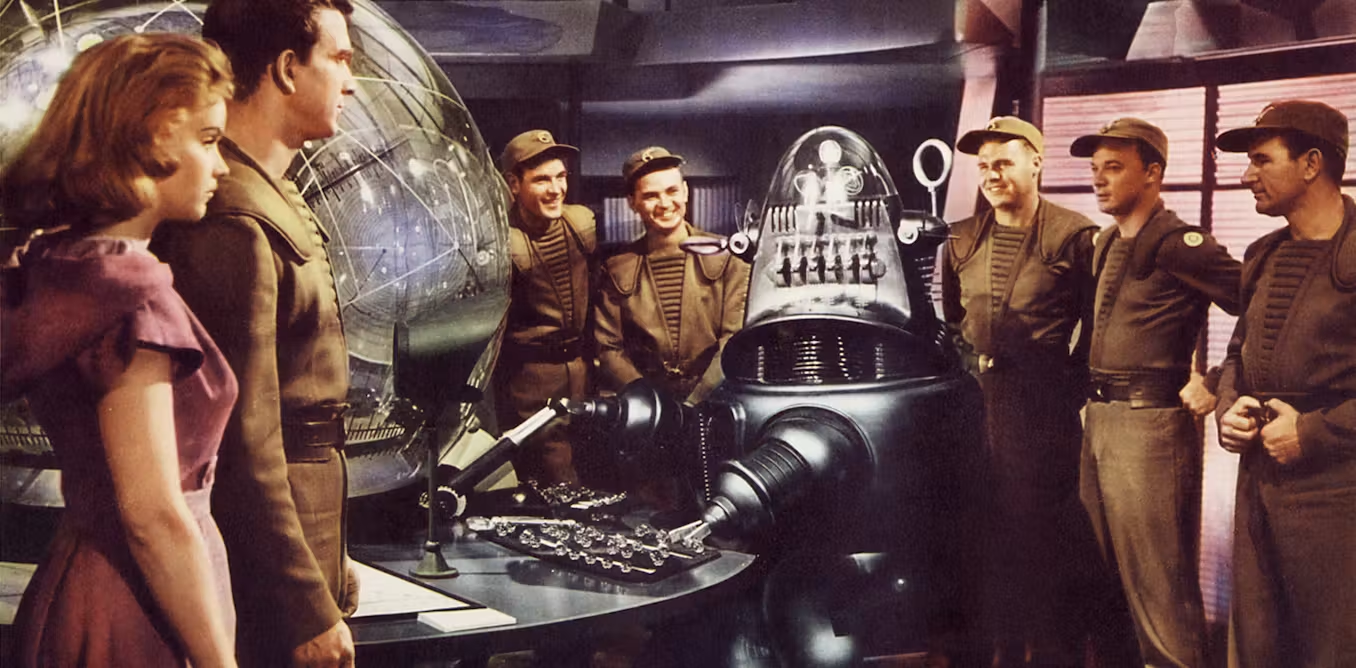
When Forbidden Planet arrived in cinemas in 1956, it was a daring investment in a small genre. At a time when science fiction meant low-budget monster movies and tales of alien invasion, MGM spent big on something far more ambitious: a movie that imagined a world of interplanetary travel, robotics and alien civilisations with real seriousness and scale.
The premise is a familiar sci-fi trope now, but wasn’t then. United Planet Cruiser C-57D crosses the stars using a faster-than-light “hyperdrive” and lands on distant Altair-4. Its mission: find out what happened to the colony there.
The crew, led by Commander Adams (a young Leslie Nielsen), finds Dr Edward Morbius (Walter Pidgeon) living in isolation with his daughter Altaira (Anne Francis) and their mechanical servant, Robby – the screen robot who would go on to be one of sci-fi’s most enduring icons in his own right.
Morbius claims to have unlocked the secrets of the vanished Krell, an ancient civilisation whose technological achievements far outstripped humanity’s. The rest of the colony, he says, were murdered in mysterious circumstances.
The film is interesting to revisit for many reasons, including its interpretation of Shakespeare’s The Tempest, and its legacy in shaping sci-fi cinema. But watching it 70 years after its release, perhaps it is most striking for what it has to say about the rise of artificial intelligence in our own age.