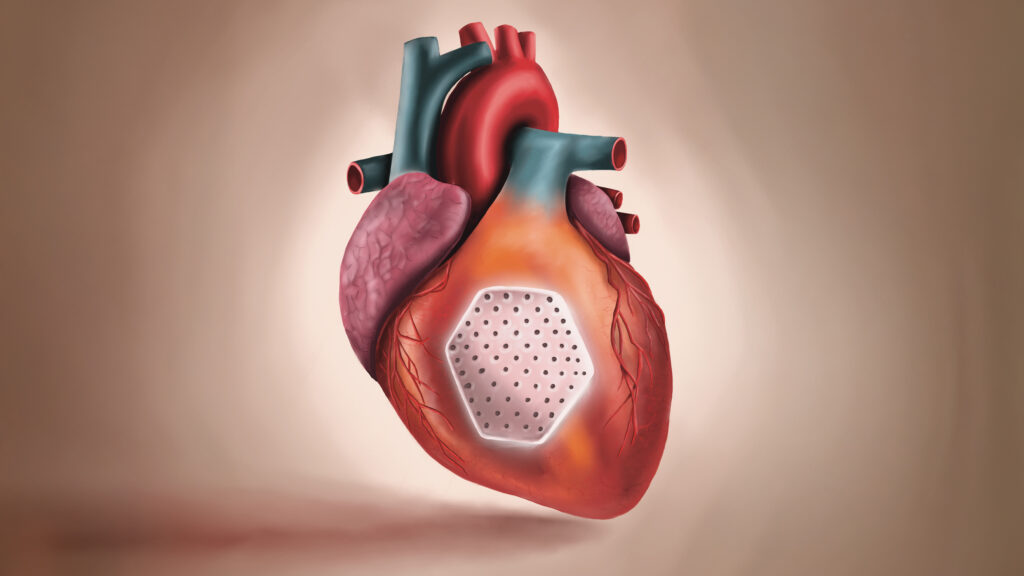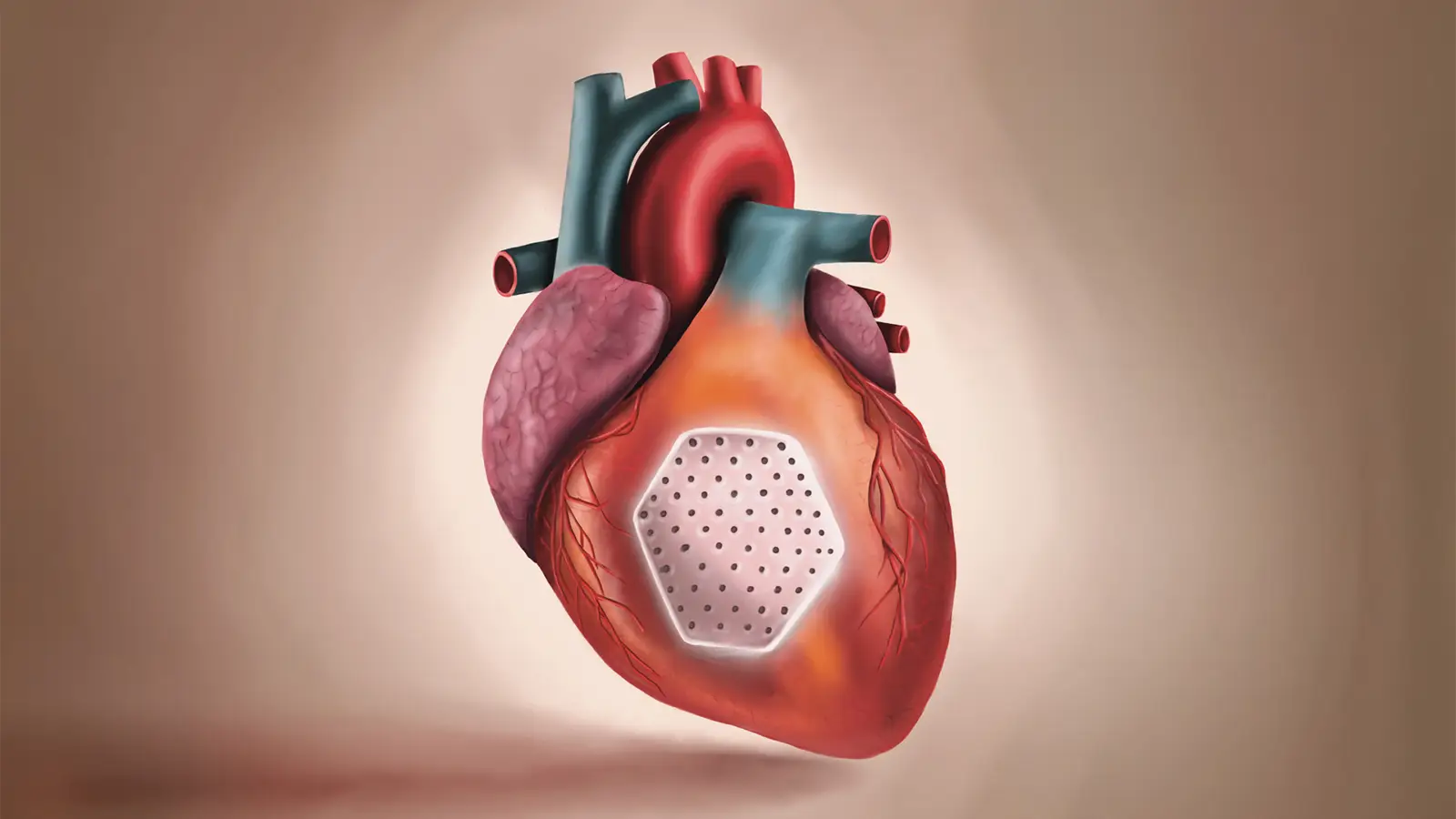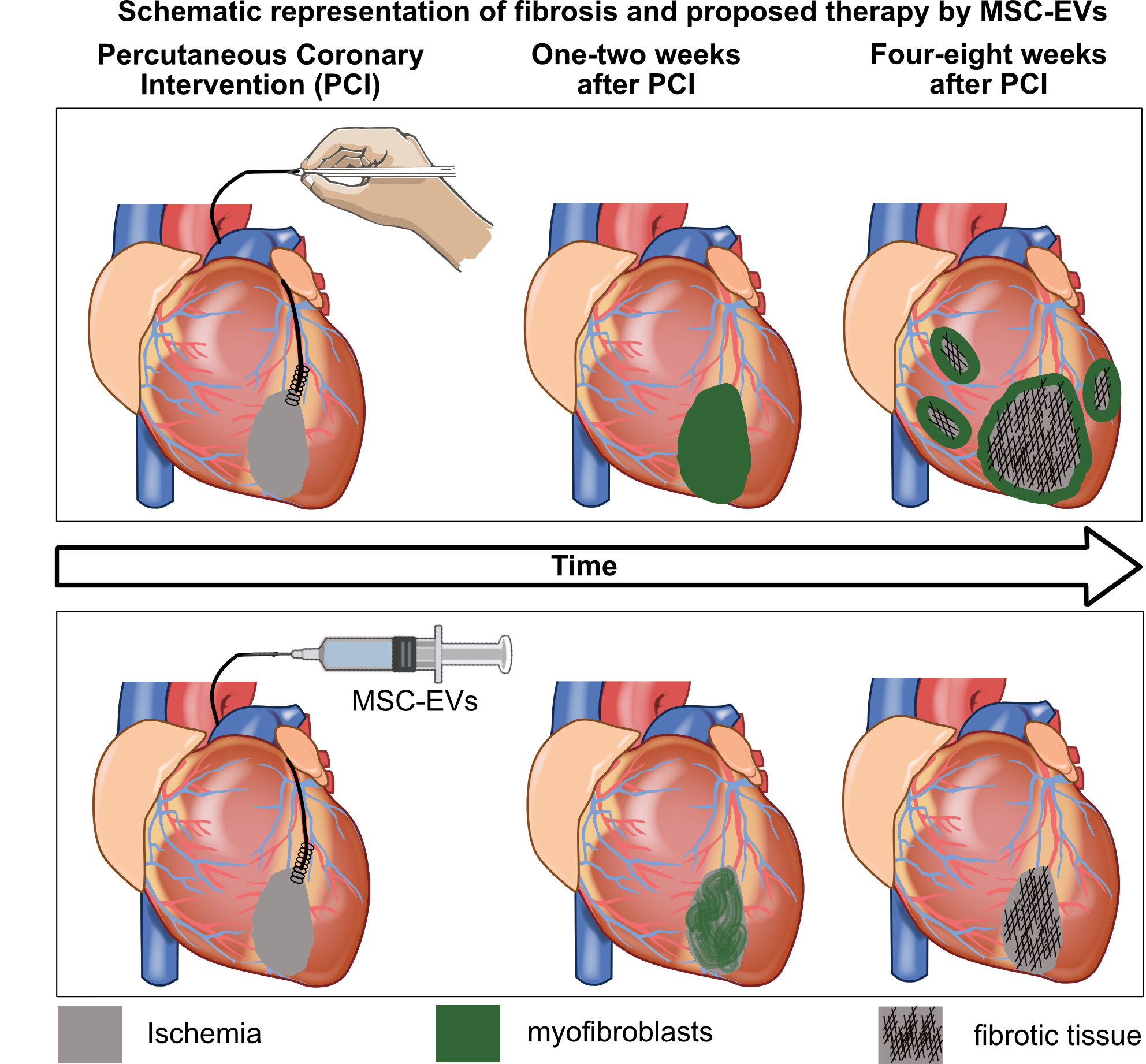
The figure shows how the heart changes after a major heart attack and how the new treatment using exosomes from mesenchymal stromal cells (MSC-EVs) can slow the progression of the disease. Credit: Grinnemo et al. with images from BioArt.
Many people who survive a heart attack will later develop heart failure due to the scarring that occurs as the heart heals. Researchers at Uppsala University are now presenting a new type of biological treatment that is administered directly into the damaged blood vessel and stimulates healing. In the study, they also demonstrate how a new PET (Positron Emission Tomography) method can be used to identify patients with ongoing scarring and, ultimately, enable personalized treatment.
Millions of people around the world suffer a heart attack each year. Although current treatments rapidly restore blood flow to the heart, many patients go on to develop heart failure. A key cause is the inflammation-driven scarring that occurs after the heart attack. There are currently no treatments that specifically target this process.
New biological drug reduces inflammation
In the current study, published in the journal Cell Stem Cell, the researchers present a new therapy that reduces inflammation and subsequent scarring. The treatment has been developed for clinical use in conjunction with balloon angioplasty.