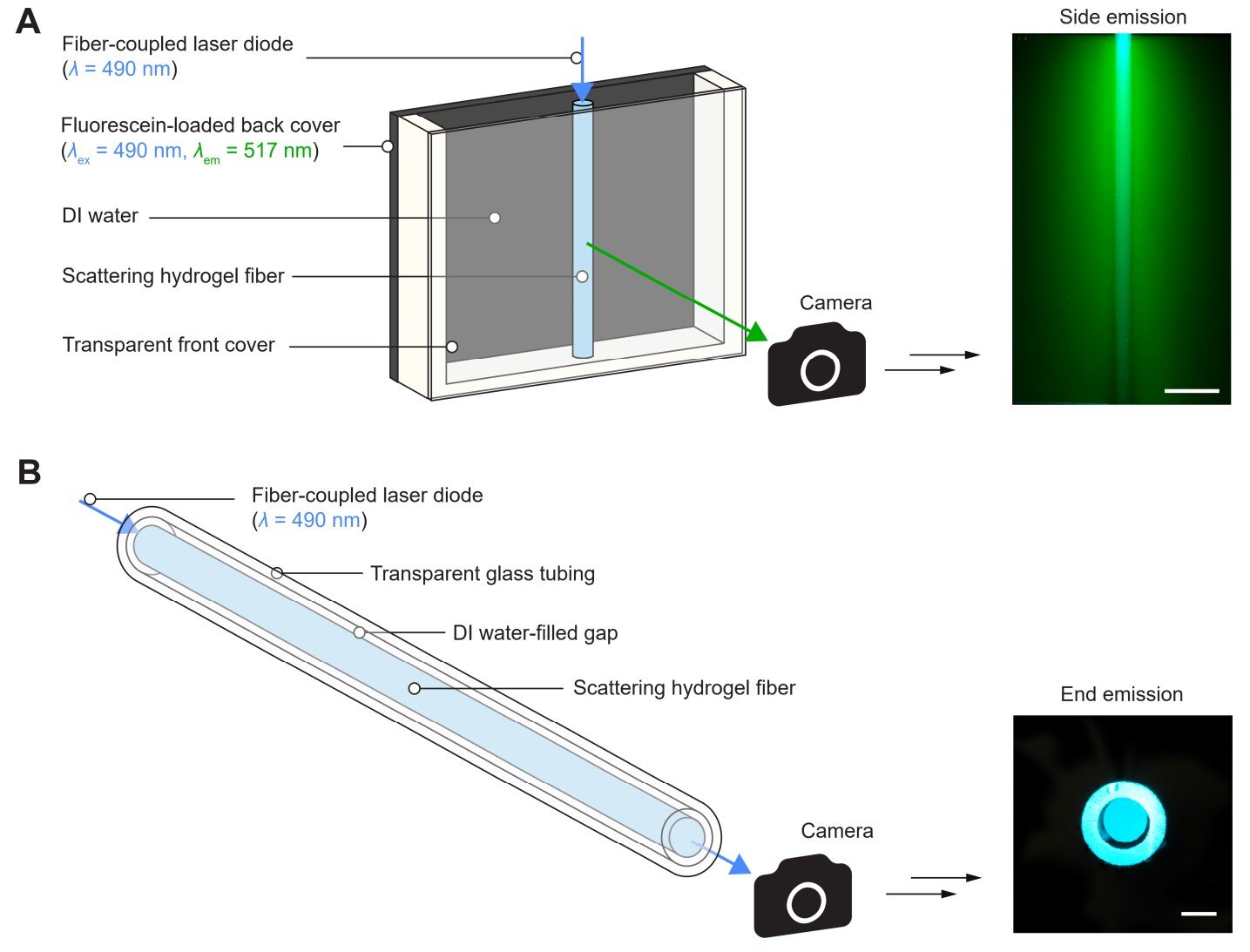
Experimental setup for characterizing the side emission and end emission of hydrogel fibers. Credit: Proceedings of the National Academy of Sciences (2026). DOI: 10.1073/pnas.2536344123
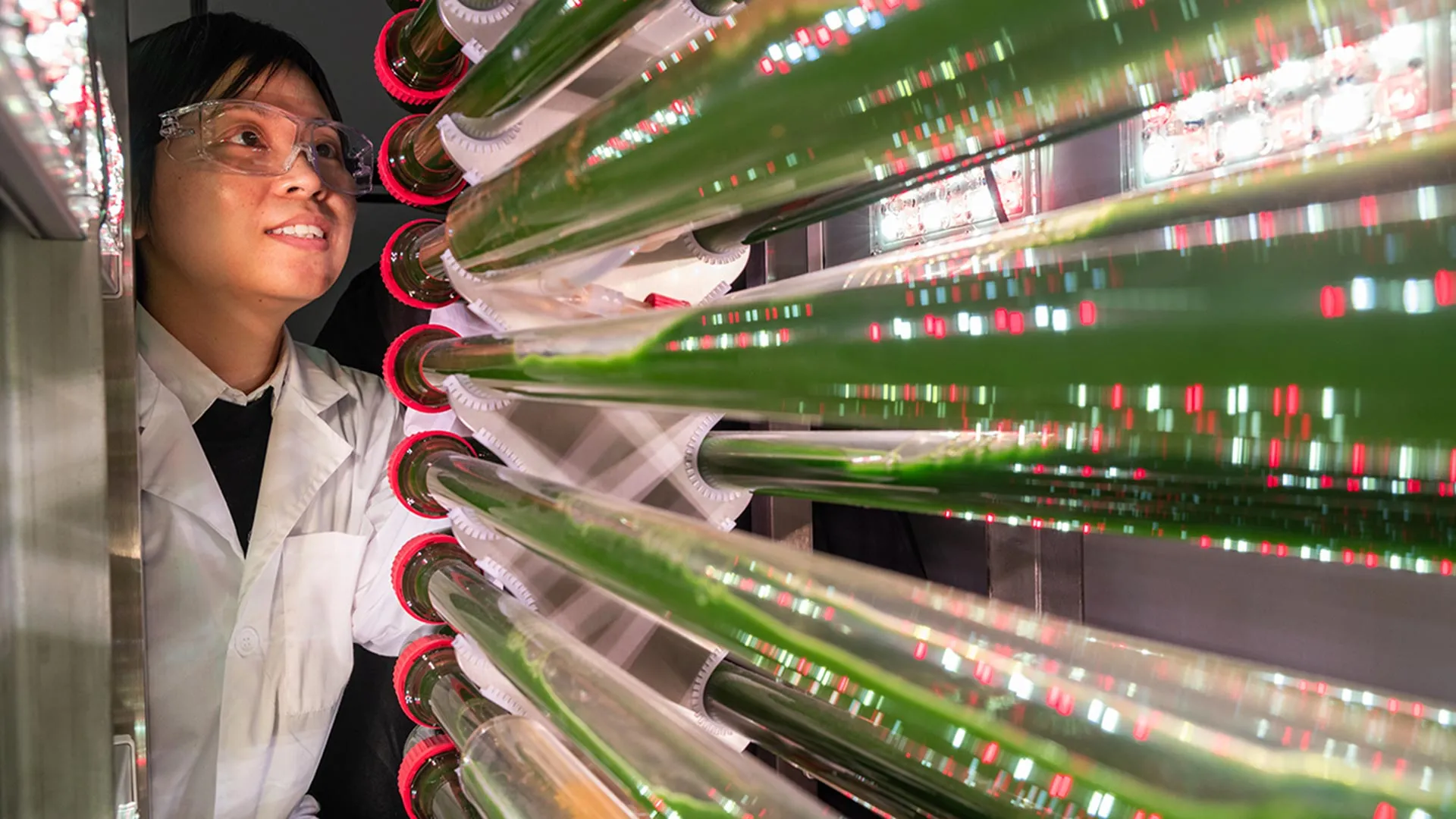
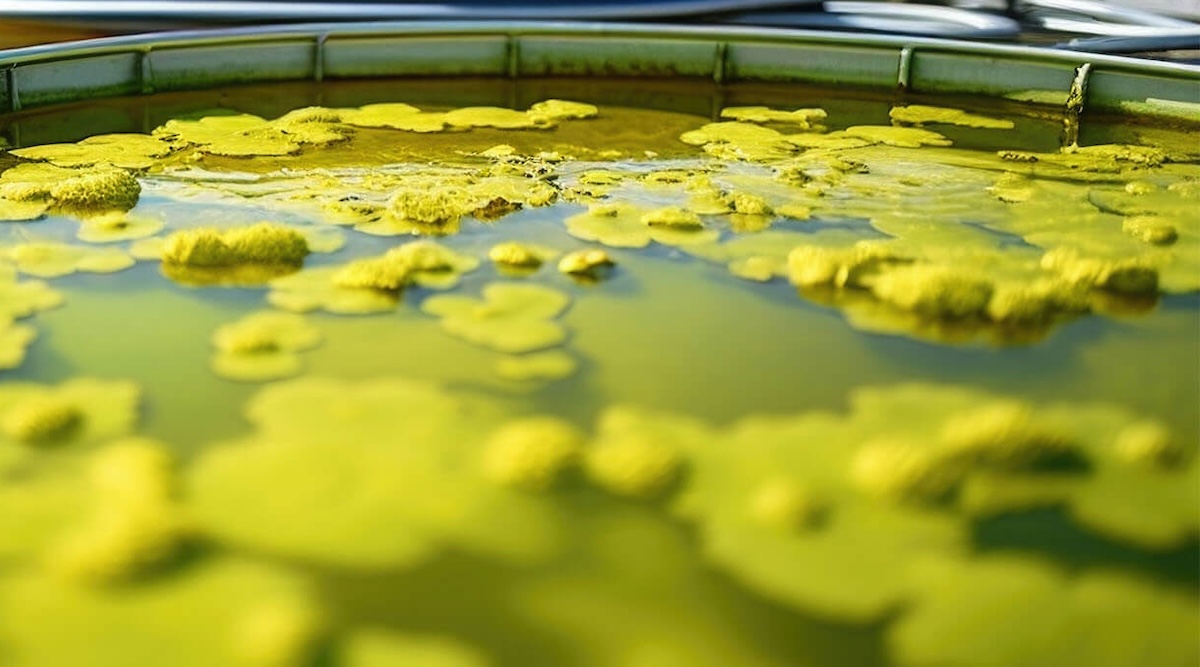
Algae are increasingly being explored as sustainable "living factories" that can convert sunlight and carbon dioxide into renewable fuels, plastics, pharmaceuticals and other valuable products.
Now, researchers at Michigan State University have developed a fiber-optic-inspired technology that distributes sunlight more evenly throughout algae cultivation systems, increasing biomass productivity by as much as six times in outdoor testing. The research was published in the Proceedings of the National Academy of Sciences.
The researchers believe the technology could benefit a wide range of applications that rely on photosynthetic organisms, including biofuel production, carbon capture and sustainable manufacturing.
Light bottlenecks inside algae systems