Scientists suggest algae could be embedded within biosensors that glow when toxins detected in the environment
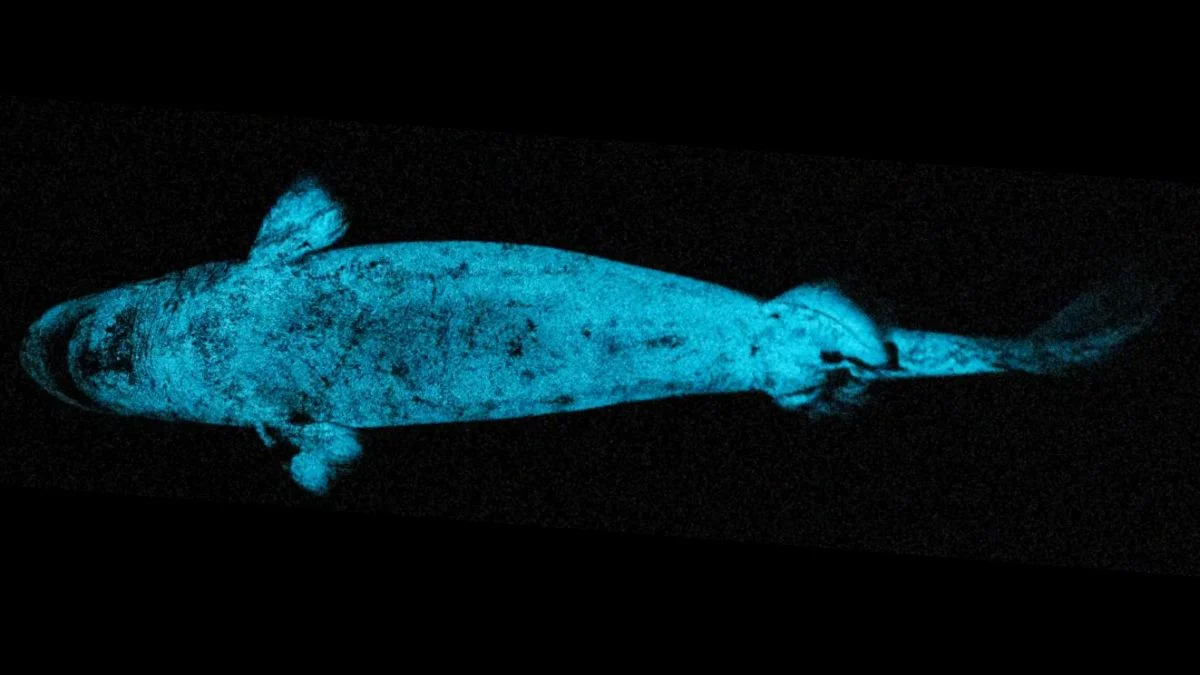
The captivating blue glow emitted by a sea-dwelling species of algae has been harnessed by scientists in the US to make light-emitting structures.
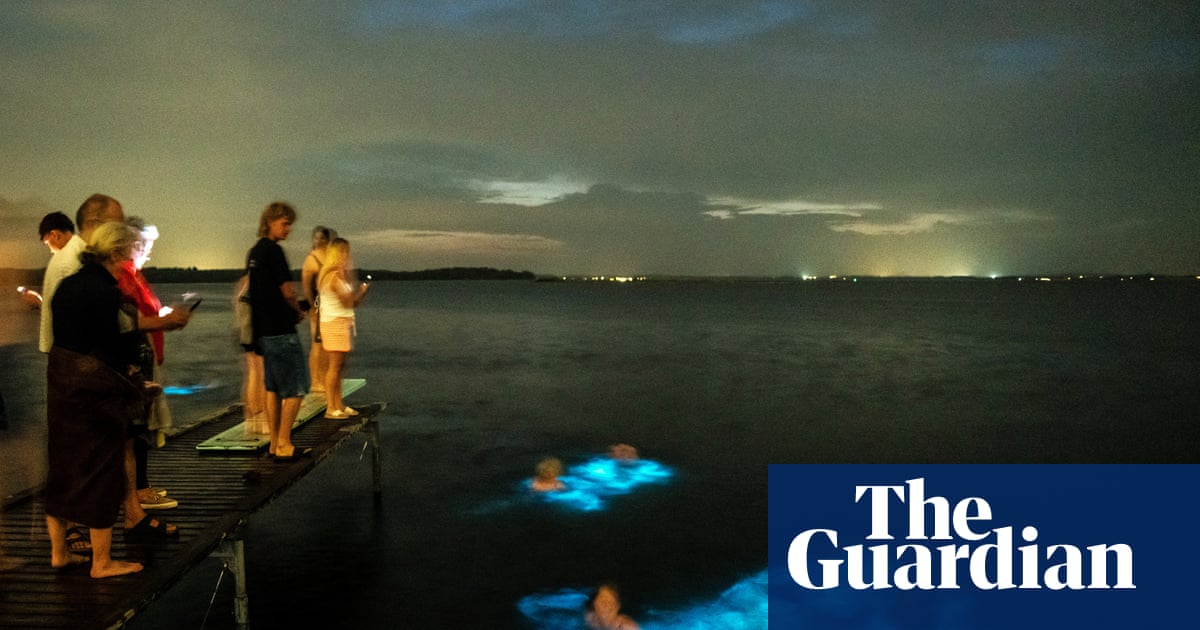
Pyrocystis lunula is a bioluminescent single-celled organism that sometimes produces brief flashes of blue light. Large clumps of the algae are known to emit sparkling displays in waves breaking against beaches.
Giulia Brachi, of the University of Colorado Boulder, had been experimenting in a darkened laboratory, looking for a way to cause the algae to give off a more sustained glow. “We were trying to squish them very slowly,” said Brachi, explaining how she and her colleagues had attempted to replicate the mechanical stress of waves. “They weren’t really responding to that.”
Other researchers have had success with such an approach but one downside is that mechanical stimulation can be difficult to control. So Brachi and her colleagues tried another tactic. Previous studies indicated that when the algae were exposed to acid, the pH level within the light-emitting part of their cells dropped, triggering light production. Brachi added a slightly acidic solution to a glass lab flask containing the algae.