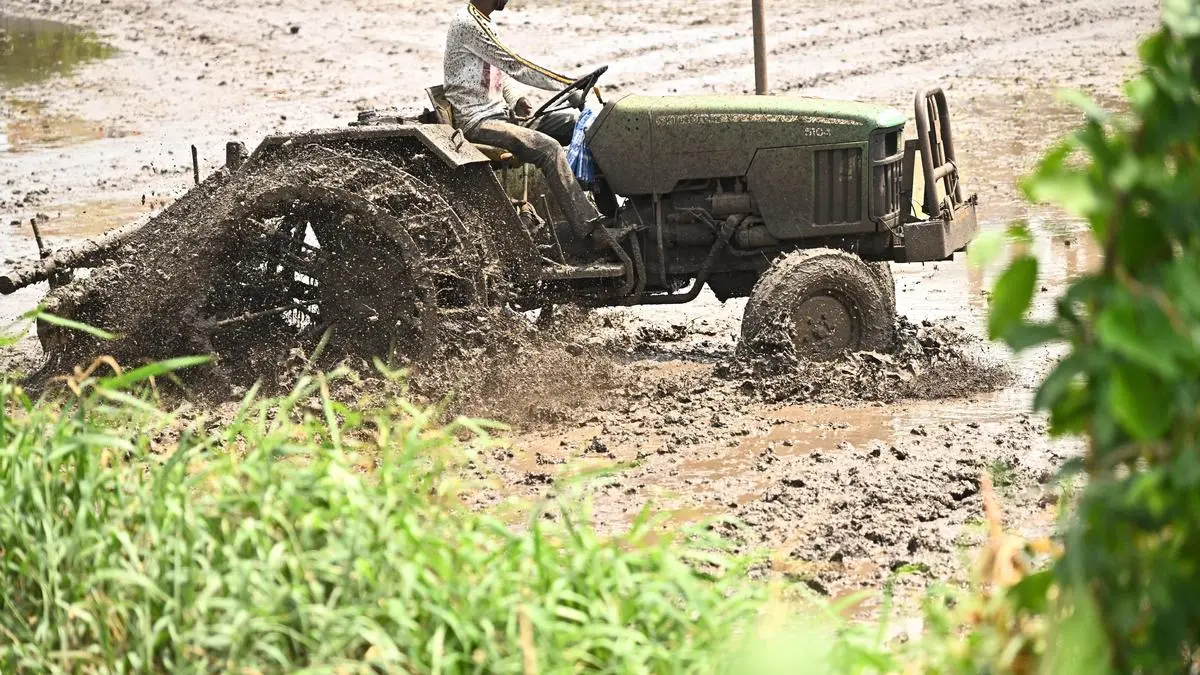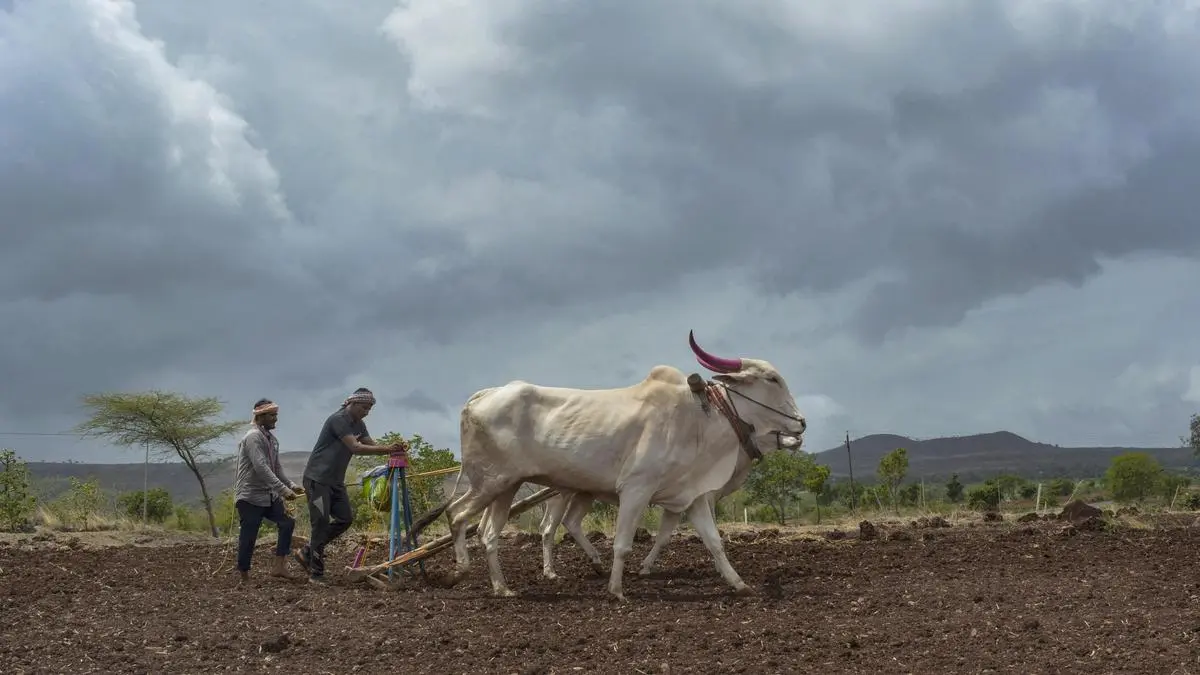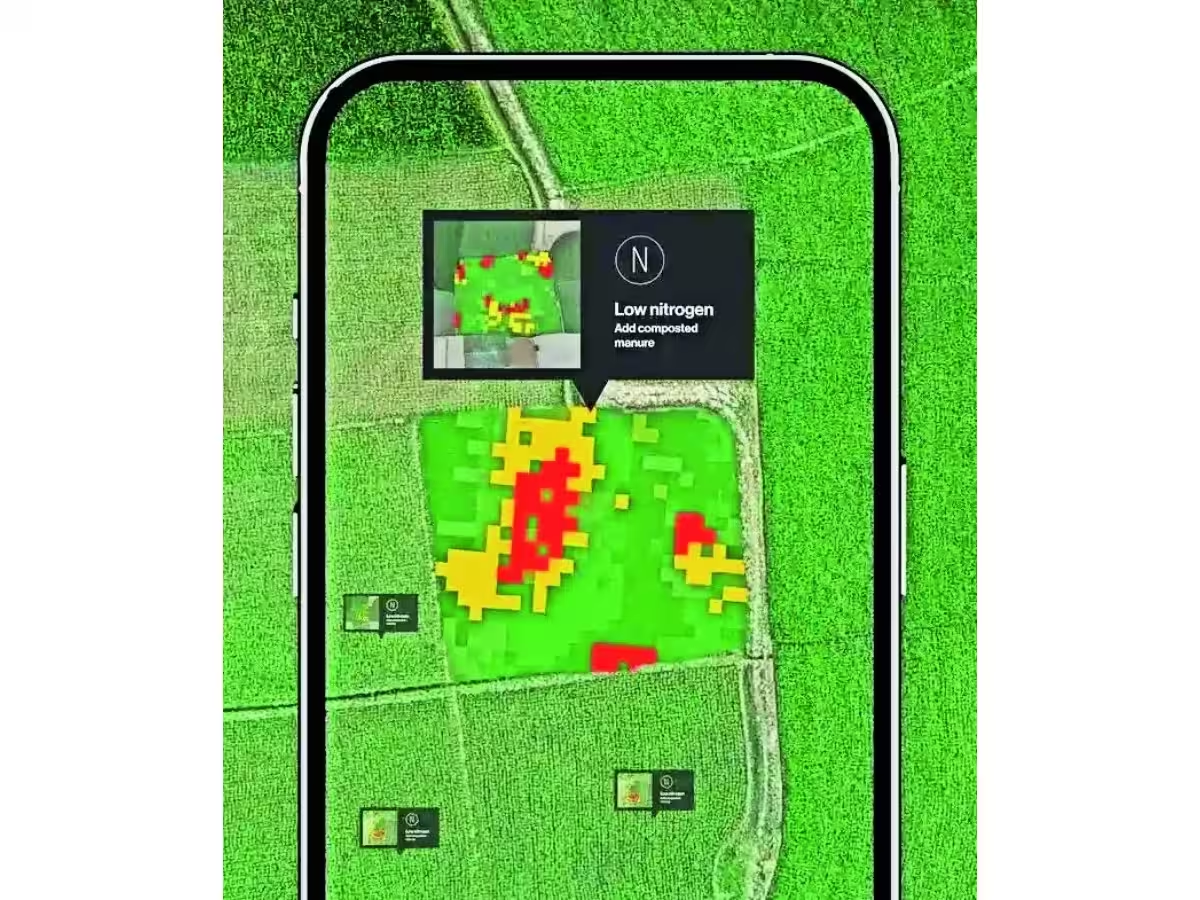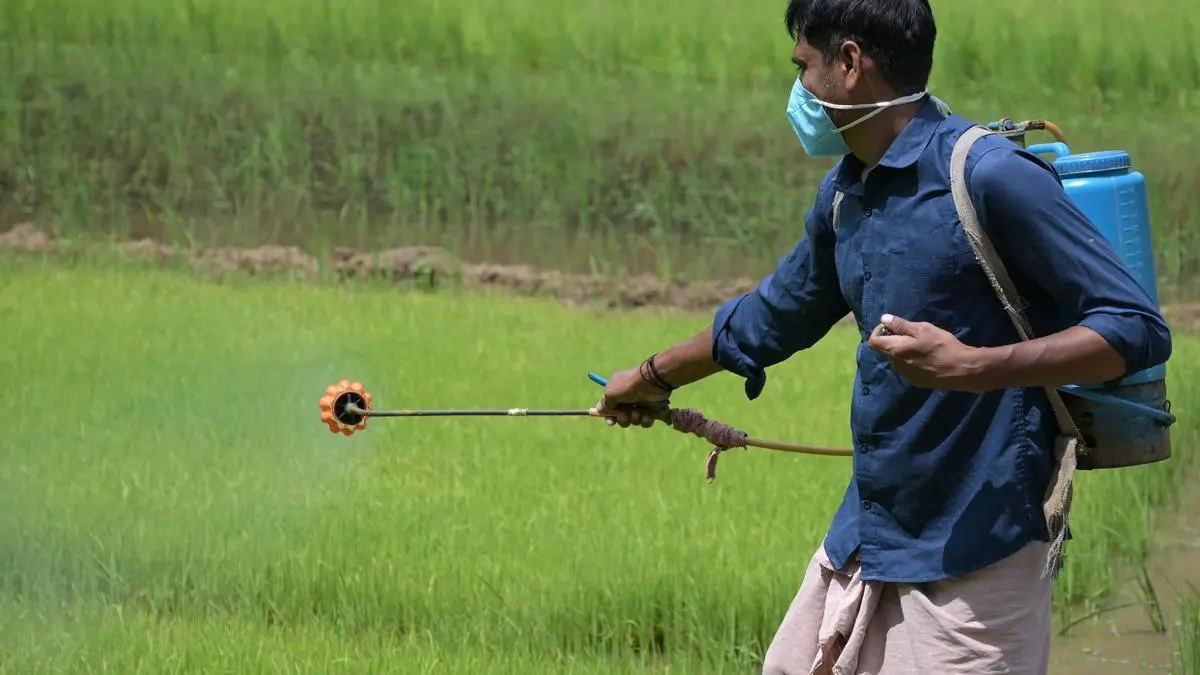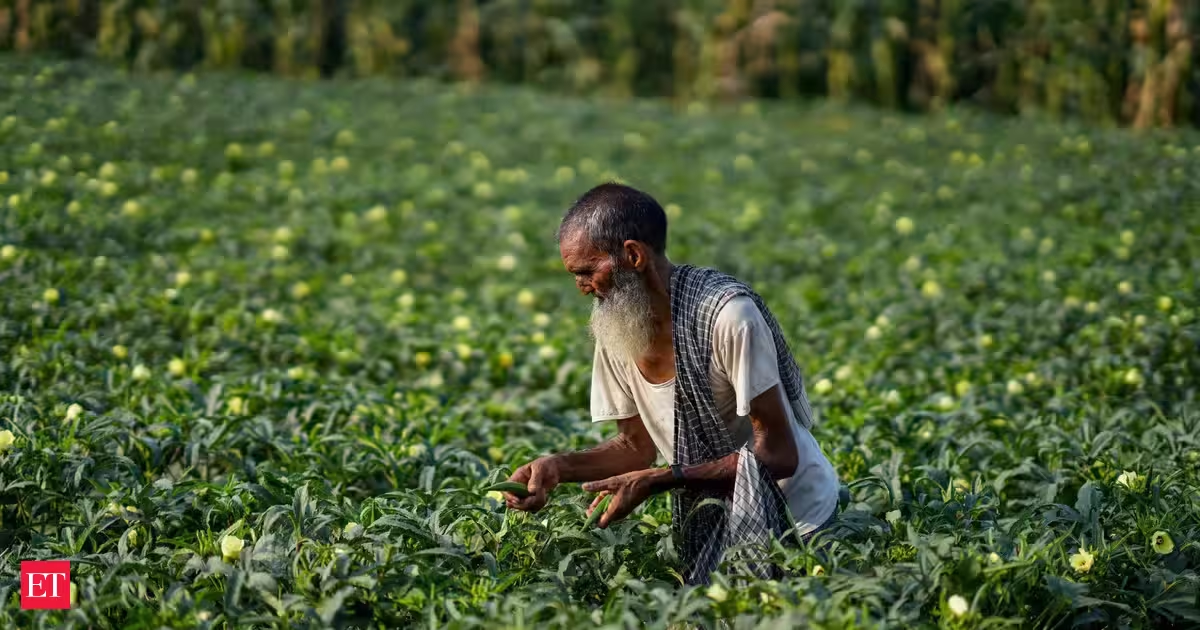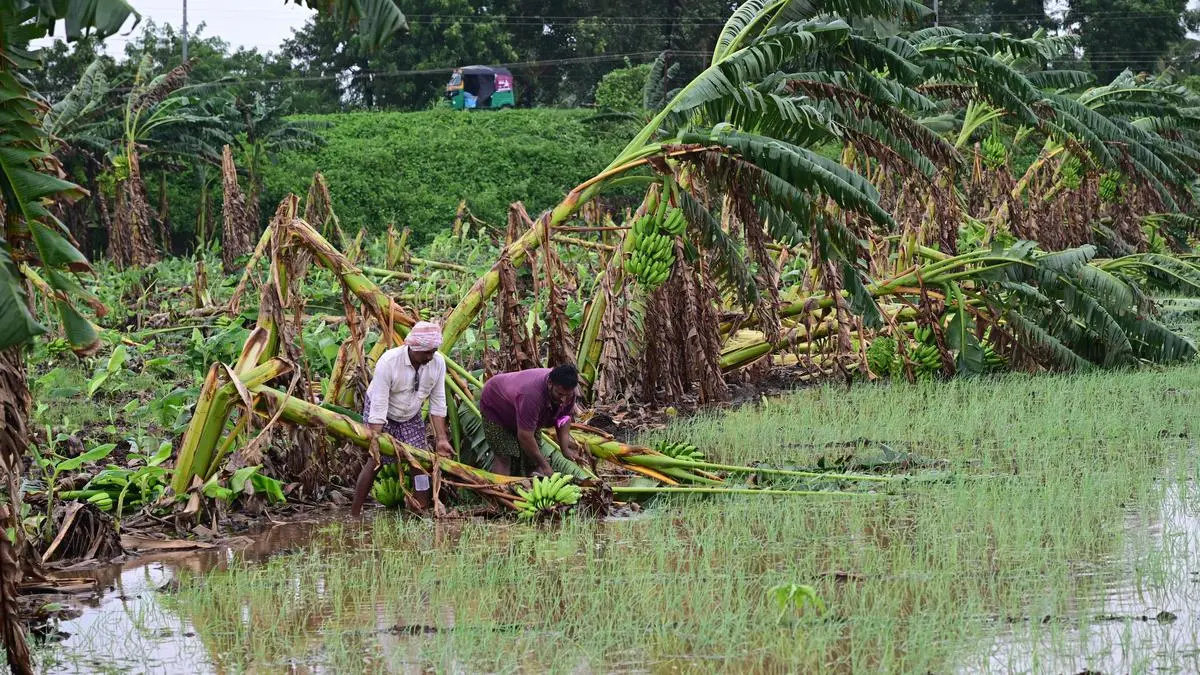
There is a need to promote local level real-time weather forecasting and requisite crop advisory services for ensuring timely help for farmers
| Photo Credit:
India as well as global economies are witnessing changing rainfall pattern with increasing frequency in the recent decades as rains turn less predictable primarily driven by rising ocean temperatures. While the cumulative rainfall across India remains close to normal or long period average, the disaggregated rainfall indicates diverse variations with large deficit and excess rains at district and tehsil levels. Further, temporal distribution of rainfall is also becoming increasingly erratic with short spells of intense rains and prolonged dry spells.In this regard, the current progress of monsoon till July 10, 2026, is a case in point with near normal rainfall at all-India level and significant deficit and excess rainfall at district levels, per the rainfall data released by India Meteorological Department (IMD). Also, the temporal distribution indicates an extended dry spell almost throughout June, a crucial period for kharif sowing, followed by intense and excess rainfall during the first week of July.Such changes in the pattern of spatial and temporal distribution of rains have increased progressively in the last few decades or so, impacting agricultural production. Under such a scenario, an emerging economy like India, with heavy dependence on agriculture for food security and rural livelihoods, needs to devise suitable strategies to enable adaptation of Indian agriculture to changing patterns of rainfall and weather.Spatio-temporal variationsLong period studies of rainfall pattern suggest that there is a significant increase in instances of deviations in rainfall pattern after 1980s. A major reason for this is ocean temperatures increasing at a faster rate than surface air. According to ‘Assessment of Climate Change over the Indian Region’, a report published by the Ministry of Earth Sciences (MoES), Indian Ocean sea surface temperature (SST) increased by 1o C during 1951-2015 due to human induced climate changes. The increase was higher than the global SST increase of 0.7o C, with significant acceleration after 1998. Rising ocean temperature is the major reason for shorter periods of high intensity rains intermittent with dry spells, resulting in floods, run-offs and drought impacting, thereby, the availability of fresh water.Further, study of monsoon rainfall from 1982 to 2022 by the Council on Energy, Environment and Water (CEEW) suggests that 64 per cent of tehsils witnessed increase in frequency of extreme rainfall in the last decade. Contrarily, about 11 per cent of Indian tehsils, largely in Indo-Gangetic plains that account for nearly half of agricultural production, witnessed more than 10 per cent reduction in rainfall in the last decade. Dry spells increased by 27 per cent during 1981-2011 compared to 1951-1980. But the aggregate rainfall of the country recorded deficit only in three years and excess in eight years of the 40-year study period. Thus, the aggregate rainfall pattern at all-India level is not reflecting the extreme variations witnessed across different climatic regions.Research studies predict that the changes in rainfall pattern may accelerate in the coming decades with continued rise in ocean temperatures. Under such a scenario, it is imperative to devise requisite strategies for tackling the changing pattern of rainfall to ensure sustainable agricultural production.Agro-climatic zonesTowards this, there is a need to promote agro-climatic zones and sub-zone specific decentralised planning with districts or tehsils as the units for implementation, to address the localised and diverse rainfall patterns. Further, it is essential to prepare flexible alternate crop production plans with adequate input supplies for quick response in case of extreme weather events. There is a need to maintain adequate amounts of quality seeds of suitable crops and inputs in case of crop damage or loss at the early stage of production. In this regard, there is a need to develop and maintain local seed banks at tehsil or mandal levels.On the farms, there is a need to enable and encourage farmers to manage the rainwater effectively as a community resource, by creating small ponds to harvest rainwater that can be used during dry spells. This can not only help in collecting run-off of excess water but also fertile topsoil. Regular de-silting of village tanks and other surface water storage areas needs to be carried for increasing their storage capacity. Towards this, it is essential to strengthen agricultural extensions services.In addition, there is a need to promote local level real-time weather forecasting and requisite crop advisory services for ensuring timely help for farmers during extreme weather events. Further, it is essential to promote research and development of high yielding varieties with drought resistant and flood tolerant traits. Technological innovations to develop better cultivation practices must also be promoted.Reddy is Joint Director, Policy Support Research, Indian Council of Agricultural Research, and Lingareddy is Senior Economist, Sustainable Finance and Agriculture, Mumbai. Views are personalPublished on July 31, 2026