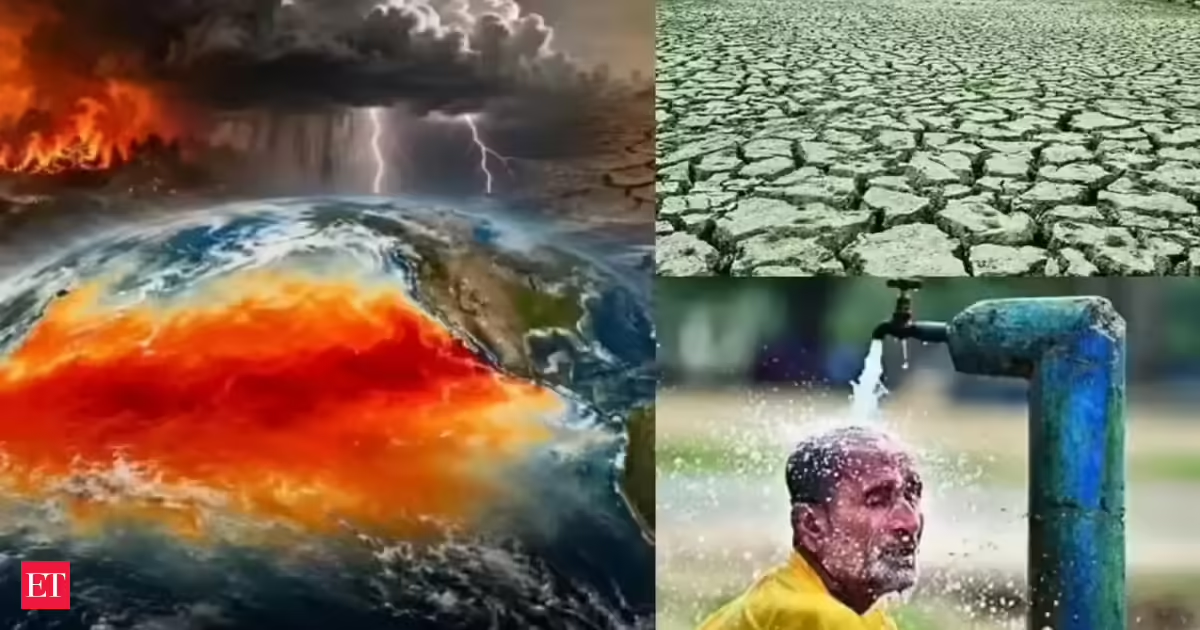
On June 23, the Union agriculture ministry issued a warning regarding a deficient monsoon, flagging 315 districts across the country as at risk. While this was aimed at the farm sector, repercussions of El Nino-induced disruption to the monsoon can ripple out far beyond farmlands.Reduced agricultural yields translate into higher food inflation, reduced rural incomes and increased dependence on irrigation. At the same time, water reservoirs decline, groundwater extraction rises and pressure on energy systems intensifies. But agriculture is only the beginning of a much larger economic chain reaction.Climate volatility affects food processors through disruptions in agricultural supply, weakens rural demand for FMCG companies, increases peak electricity demand for power utilities, slows construction activity in water-stressed regions, and dampens vehicle demand as uncertainty affects farm incomes and economic sentiment. No sector remains entirely insulated from these ripple effects.Energy and water security are becoming equally important business considerations. Lower reservoir levels can limit hydroelectric power generation even as prolonged heatwaves push electricity demand to new highs. Solar generation, too, becomes less efficient under extreme temperatures. Coupled with growing water stress, these conditions can disrupt manufacturing operations, affect product quality, strain cooling infrastructure and increase operational risks for businesses across sectors.Even sectors that appear insulated, like cement, steel, chemicals and tyres, are indirectly affected through changes in infrastructure spending, logistics costs, commodity prices and supply chain disruptions.Take the tyre industry. India imports a significant portion of its natural rubber requirements from Southeast Asia, particularly Thailand, Indonesia and Malaysia. These countries are also highly vulnerable to El Nino-induced droughts. Lower rainfall reduces latex production, tightening global supply and increasing rubber prices.One of El Nino's most far-reaching consequences is consumer inflation. Reduced agricultural production drives higher prices for cereals, sugar, edible oils, fruit, vegetables and dairy products. Food inflation affects household purchasing power, wage expectations, transportation costs and consumer demand. The ripple effects eventually reach sectors ranging from retail and hospitality to manufacturing and financial services. Climate change, therefore, becomes a macroeconomic variable.Historically, sustainability teams monitored environmental performance while enterprise risk teams managed financial and operational risks. That distinction is disappearing. With climate change only set to accelerate, organisations are waking up to the need to build resilience.Businesses have traditionally focused on improving efficiency. But today's challenges demand resilience in equal measure. Resilience, in fact, is increasingly becoming a source of competitive advantage. Forward-looking organisations are, therefore, integrating climate scenarios, including El Nino events, into enterprise risk management frameworks. Business continuity planning now increasingly considers all environmental indicators as business risks.Boards and leadership teams, as a result, must begin asking different questions. No longer, 'How will climate affect our sustainability report?' but, 'How will climate affect our customers, our suppliers, our operations and our long-term profitability?' That shift in thinking will define the next generation of resilient businesses.India's economic aspirations remain among the strongest in the world. But it's one of the countries most exposed to climate variability. El Nino reminds us that climate change is no longer a distant environmental challenge, it is an immediate business reality. Organisations that recognise this early and integrate climate intelligence into strategic decision-making will be better positioned to navigate uncertainty, and protect shareholder value.Companies that will lead tomorrow won't necessarily be those with the largest factories, or strongest balance sheets, but those that build the greatest resilience in an increasingly unpredictable climate.The writer is MD, JK Tyre & Industries(Disclaimer: The opinions expressed in this column are that of the writer. The facts and opinions expressed here do not reflect the views of www.economictimes.com.)
The ripple effect of El Nino runs from village fields to corporate boardrooms - The Economic Times
A deficient monsoon warning flags many districts at risk across India. Reduced agricultural yields will increase food inflation and rural income pressures. Water scarcity and energy demand will intensify for businesses nationwide. Climate volatility impacts supply chains and operational risks for all sectors. Businesses must integrate climate intelligence for future resilience and profitability.
586 words~3 min read