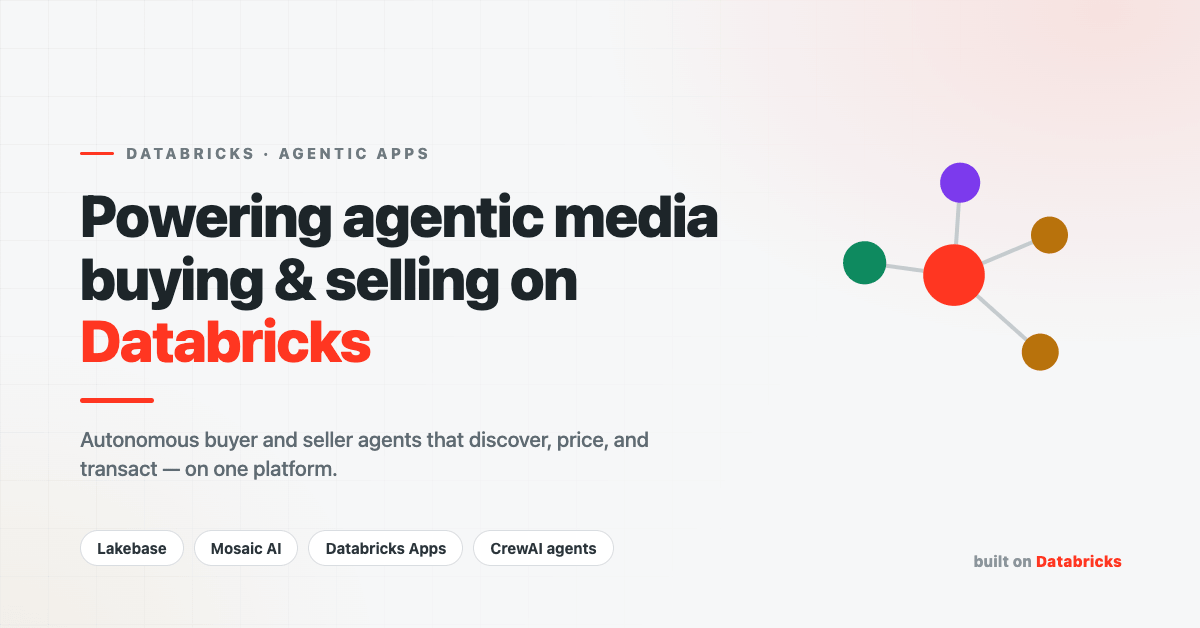
The hardest part of autonomous buyer and seller agents isn't the AI — it's the state, trust, and observability to run in production. Learn how buyers and sellers clear that bar on one platform.
by Joe Hu, Mandy Baker and Luke Barnes
Every day, billions of dollars of advertising change hands through a process that has barely changed in decades: emails, spreadsheets, PDFs, and phone calls. A buyer sets a campaign, then skilled teams reach out to publishers, send RFPs, wait on rate cards, compare media kits, and negotiate price before finally cutting an insertion order. Talented people spend most of their time coordinating the transaction instead of managing the strategic and creative work.
The friction comes from fragmentation. There is no standardized way to discover inventory, evaluate audiences, or establish trusted relationships across partners, so every buyer and seller connection becomes a bespoke integration. Because that coordination takes days, decisions often get made on information that is already hours or days old. Inventory, pricing, and audience signals move continuously, and by the time a campaign is approved the best opportunity may have passed.
The rise of agentic workflows unlocks an opportunity for these teams to remove the manual, repetitive coordination from the equation so they can spend their time where judgment matters most: sharper targeting, better creatives, and campaigns that are not just faster to launch but more effective.