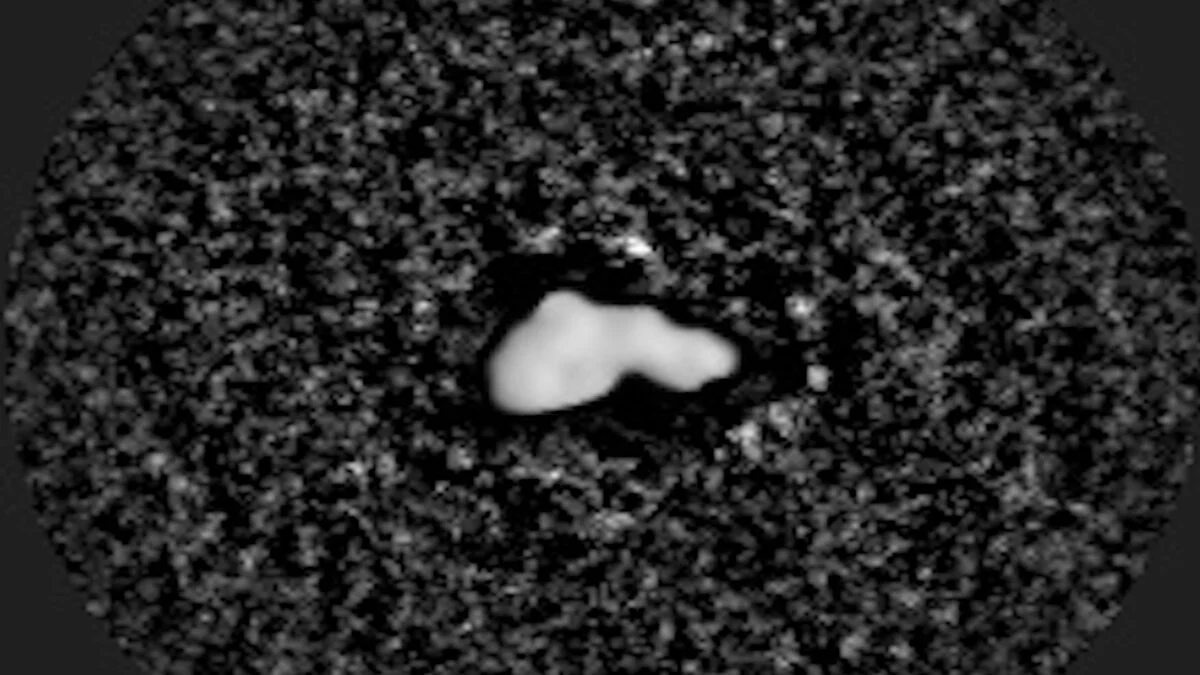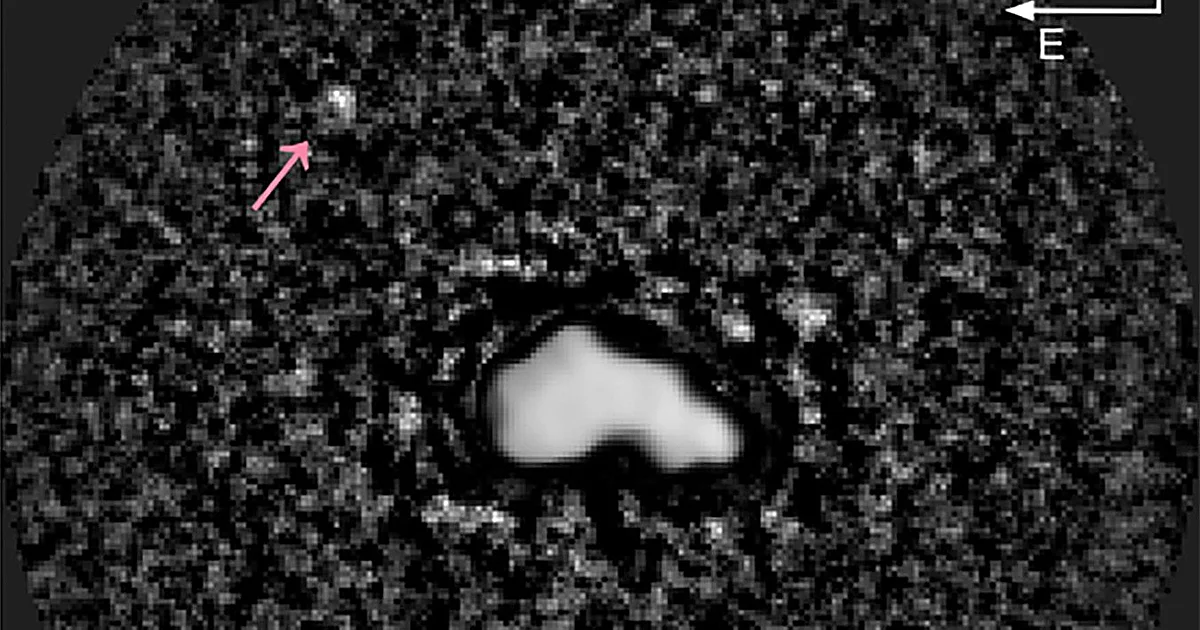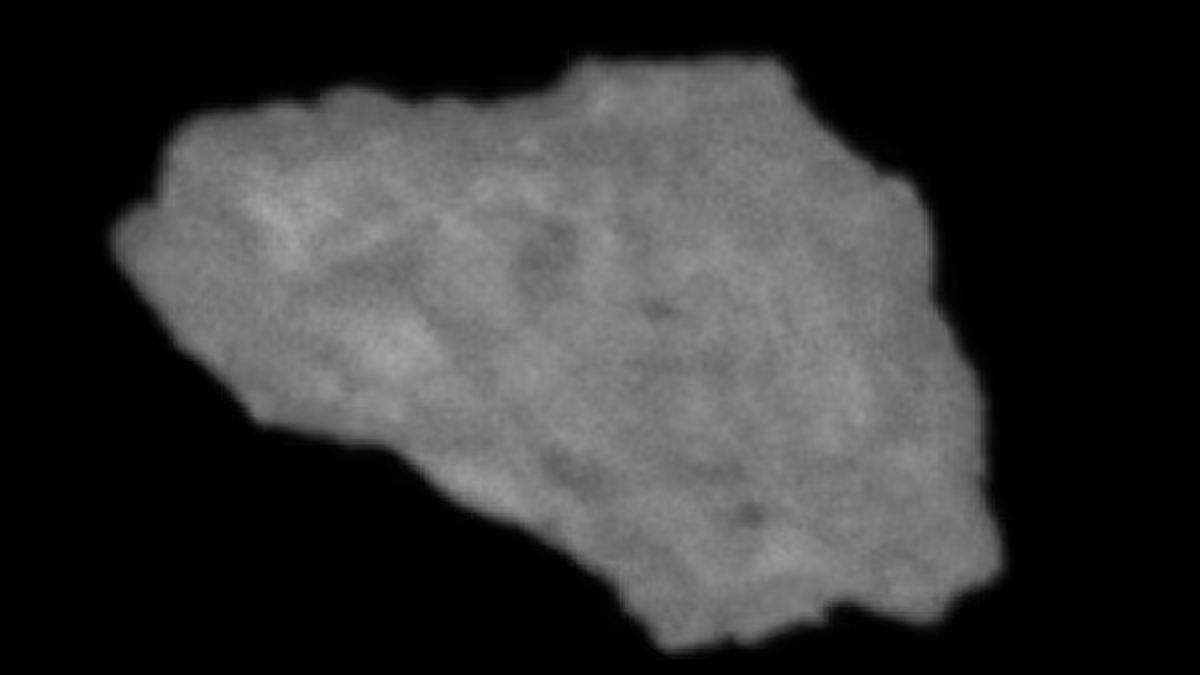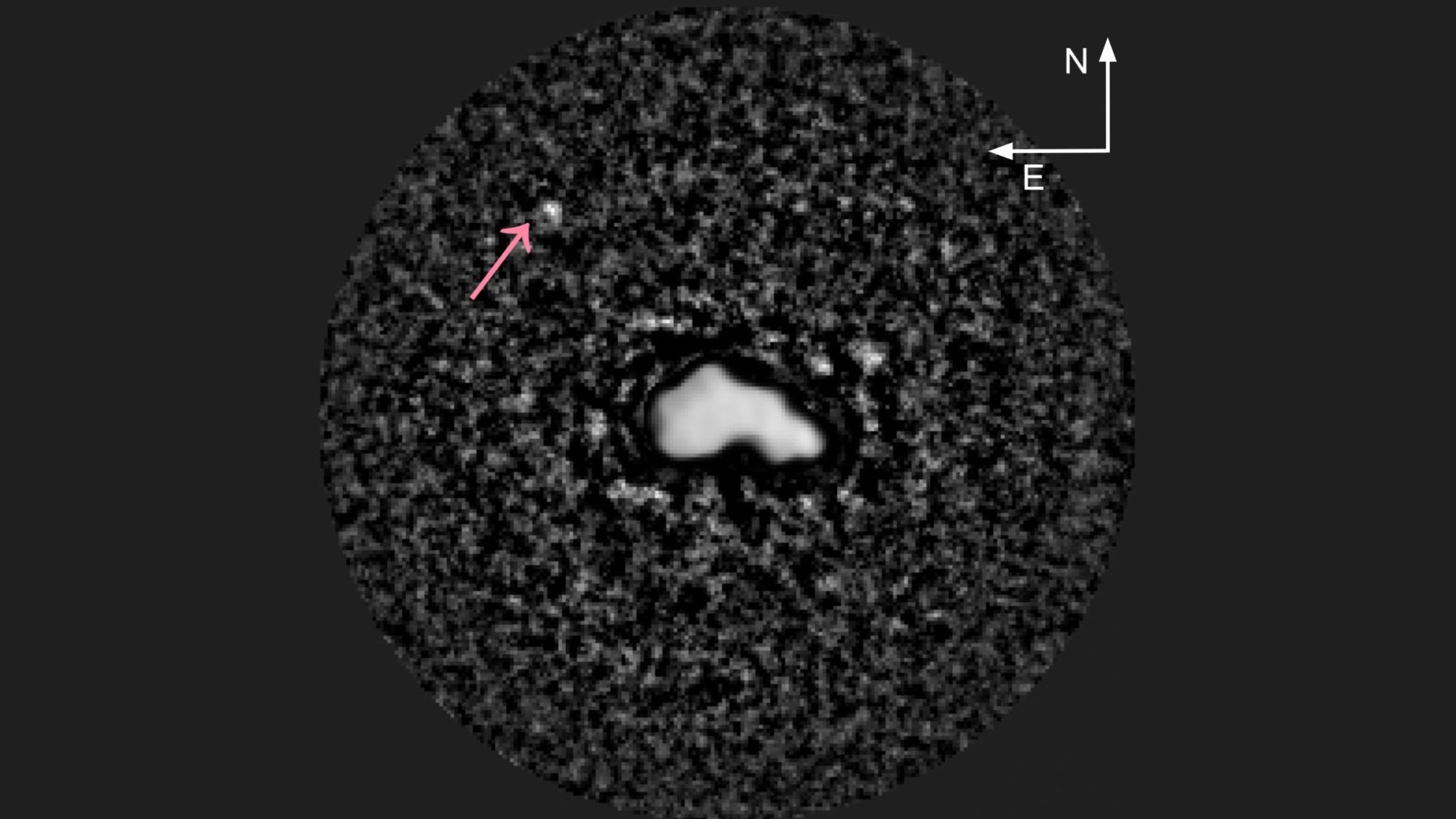
An adaptive optics image of the asteroid 44 Nysa taken with the Large Binocular Telescope. The moon is arrowed.
(Image credit: Kate Minker et al.)
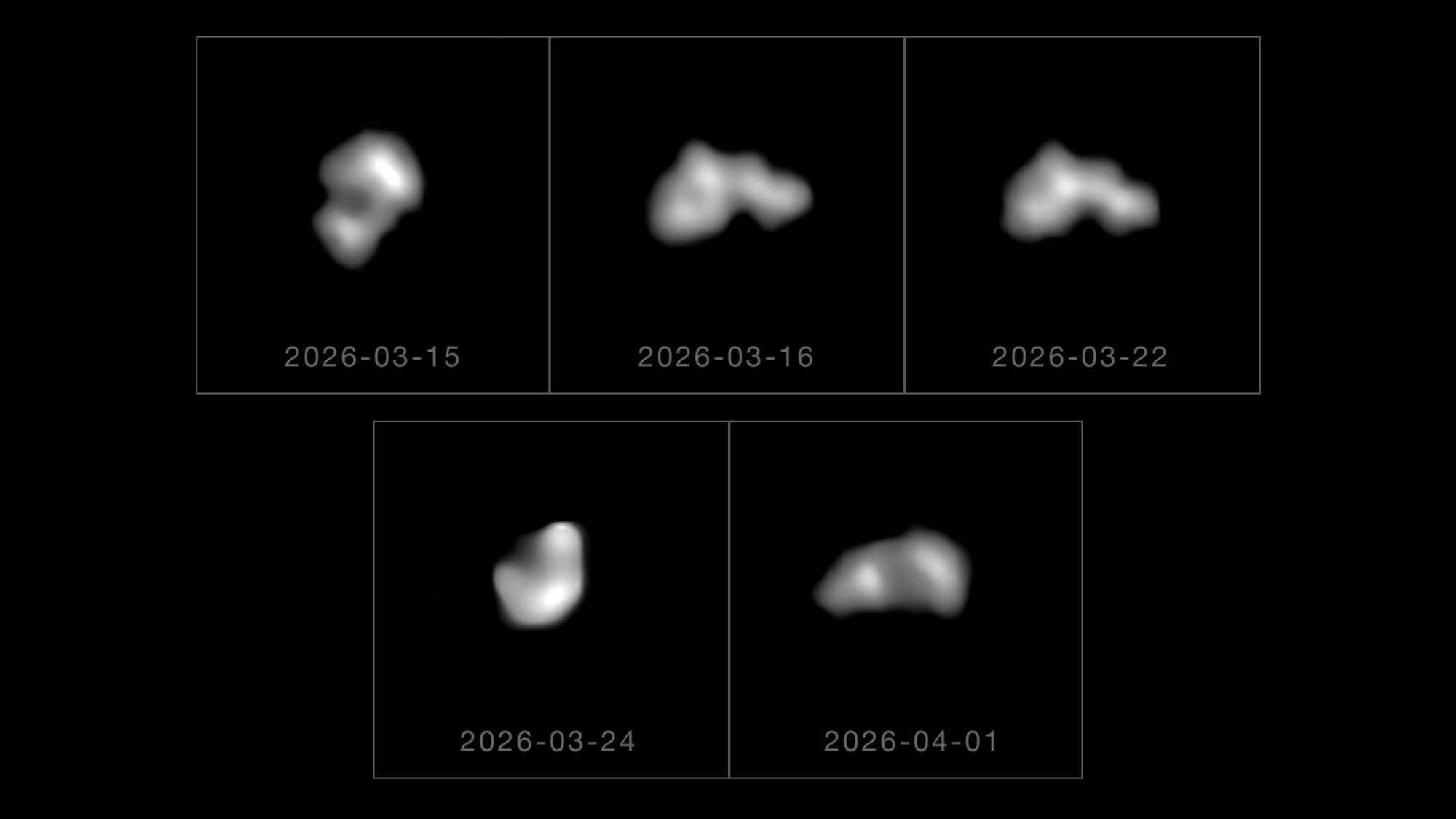
Scientists have found the first triple-lobed asteroid in the asteroid belt between Mars and Jupiter — and it has a small moon to boot.The asteroid in question is 44 Nysa, which was discovered all the way back in 1857. Of course, back then it was just a pinprick of light in the sky, and subsequent observations — including some from the Hubble Space Telescope — had failed to tell us much about Nysa. Those previous observations suggested Nysa might be bi-lobed, like many asteroids and comets such as asteroid 52246 Donaldjohanson, which NASA's Lucy mission flew past in 2025.However, new joint observations by the Large Binocular Telescope (LBT) on Mount Graham in Arizona and the Very Large Telescope (VT) on Paranal mountain in Chile have revealed that this asteroid actually seems to have three lobes, the first such object ever seen."The images reveal a remarkably unusual object," said lead researcher Kate Minker of Arizona's Lowell Observatory in a statement. "The most likely explanation is that Nysa is either a contact trinary, consisting of three connected components, or an extremely irregular coherent body unlike anything we've previously observed."Obtaining the detailed images of Nysa was not easy. Key to the success were two high contrast imaging devices, the Italian-built SHARK-VIS on the LBT and SPHERE and its ZIMPOL polarimeter on the VLT, used in conjunction with adaptive optics that counteract the blurring effect of the atmosphere."These observations had to be combined with specially developed image-processing techniques to further sharpen the images and remove the bright halo surrounding the asteroid, potentially hiding faint companions," said Anthony Berdeu of the European Southern Observatory.The images showed an irregular-shaped body 47 miles (75 kilometers) at its widest point, with two notable valleys or "colli" that wrap around the asteroid's circumference and which Minker's team interprets as being the necks of the different lobes. Furthermore, the images revealed a 0.6-mile-wide (1-km-wide) moon orbiting Nysa at a distance of at least 106 miles (170 km). The moon has been designated S/2026 (44) 1 for now. And, because it was seen independently during two different observing campaigns, it was possible to observe its motion around Nysa.