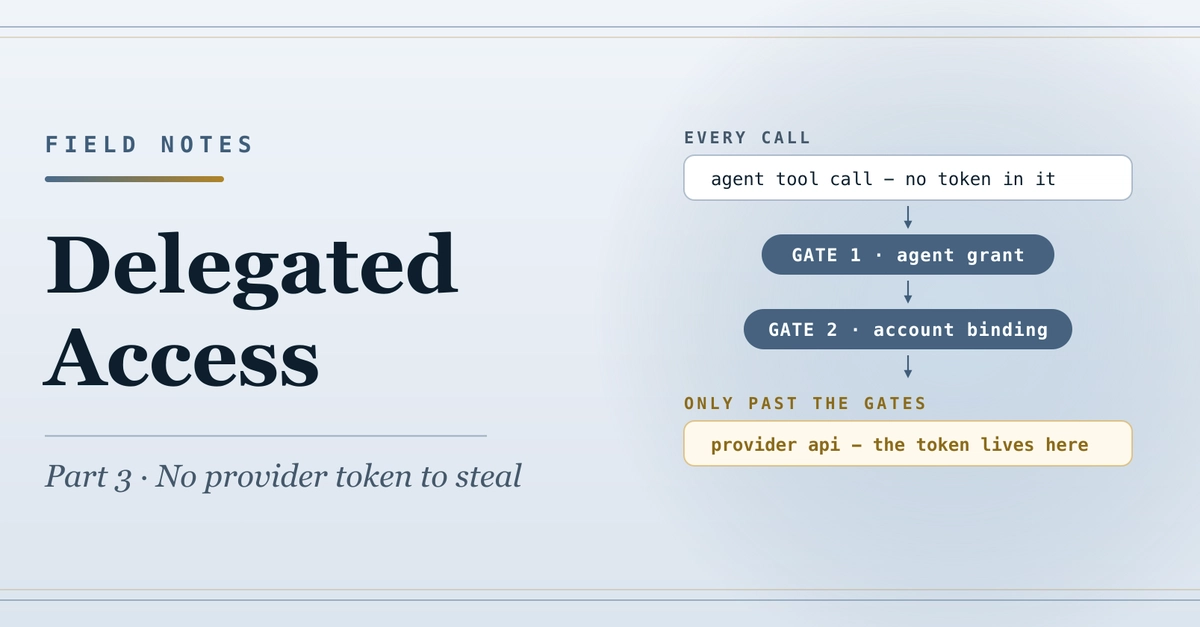
A common MCP setup carries auth the same way: create an API key, paste it into mcp.json or an .env file, restart the client. It works. Now the key sits in plaintext on every machine that runs the agent. It often carries one broad, fixed permission set. Every agent that reads the file gets the same set. And when one agent misbehaves, the fix is rotate the shared key everywhere.
There's a second failure that arrives after you add real auth: the agent calls a tool and gets a bare 403. The user doesn't know what to approve. The agent doesn't know what to ask for. Somebody ends up reading server logs.
I build multiuser AI systems for production. My agents act on users' Gmail and Slack accounts every day - external agents like Claude Code included. None of those agents receives a provider token. This is the auth chain that makes that work, including the part that took the most design: what happens when consent is missing at call time.
A URL instead of a key
An external agent doesn't get the Gmail or Slack credential. It gets a URL - a managed MCP endpoint my platform exposes. I call that endpoint the door, and so does the interface further down.