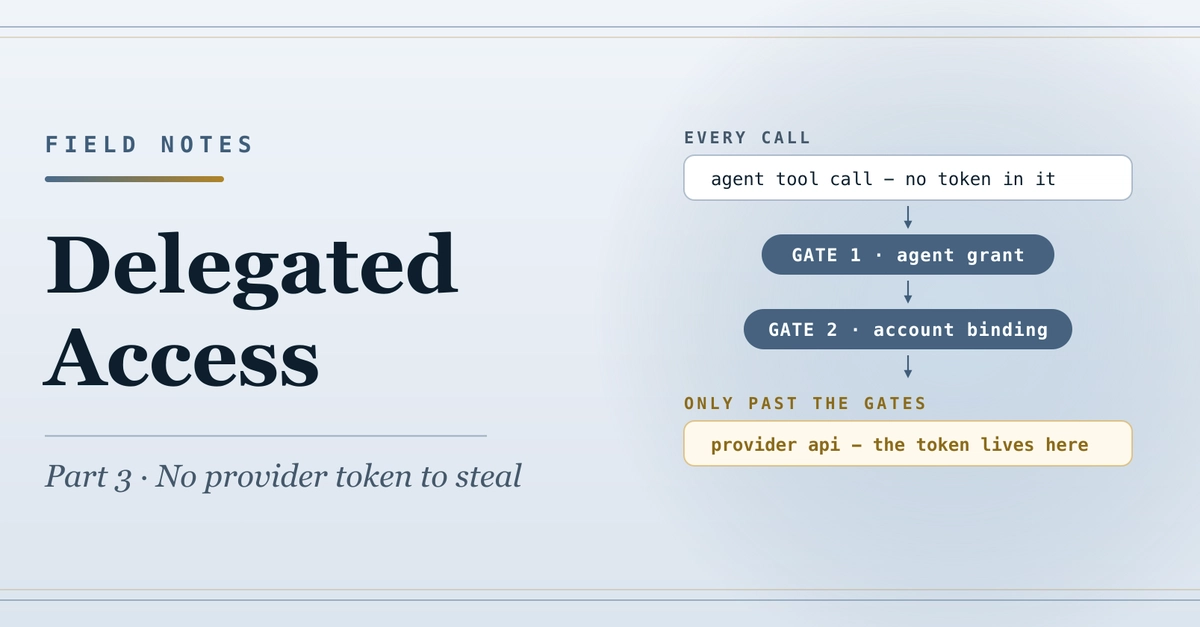
Static API keys in client config are the easy way to authenticate an MCP server and the easy way to leak a credential. The Model Context Protocol's answer is OAuth: let the agent obtain a short-lived, scoped token through a proper authorization flow instead of carrying a long-lived secret around. It is the right direction. It is also where a single agent's clean flow turns into a fleet's token-management problem.
How MCP OAuth works
The MCP authorization spec builds on OAuth 2.1. A remote server advertises that it is protected, and the client runs the authorization code flow to obtain an access token, rather than reading a key from a file.
The sequence, in short:
The client calls the server and gets a 401 with metadata pointing to the authorization server.