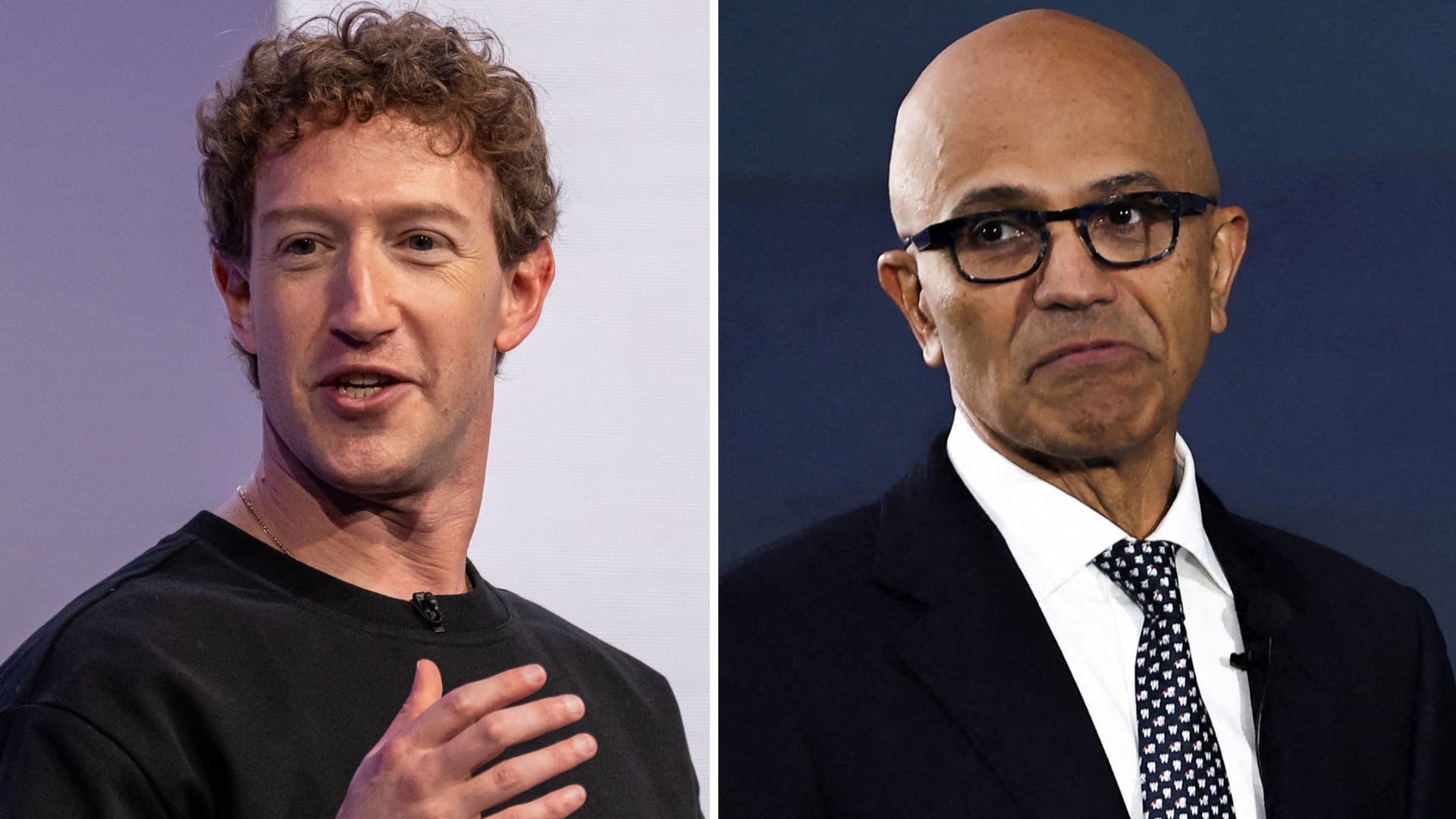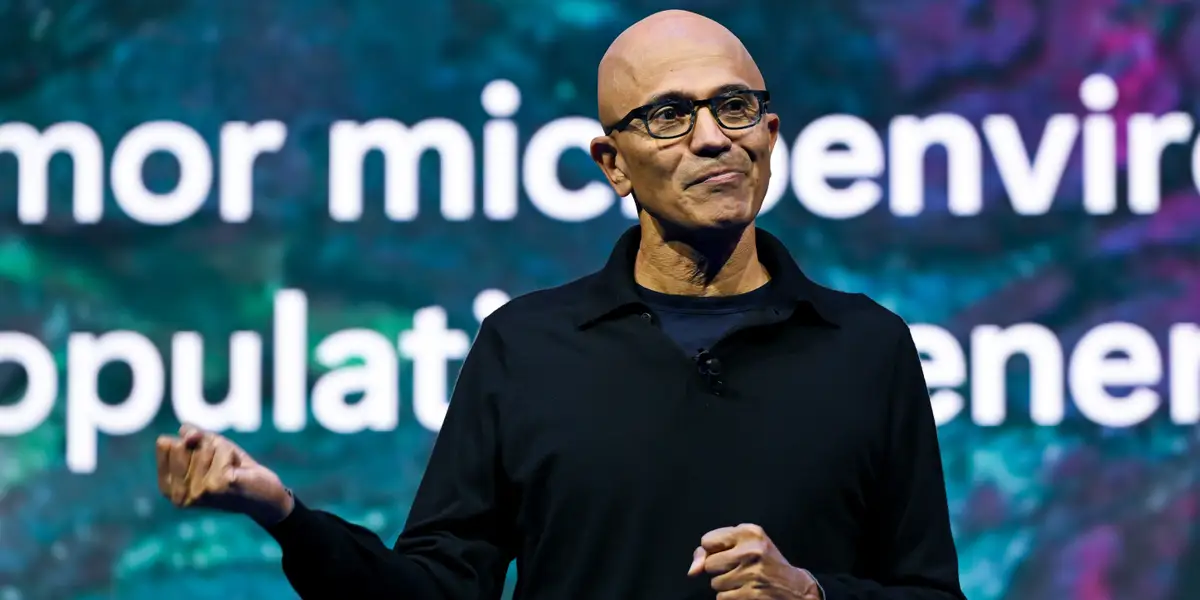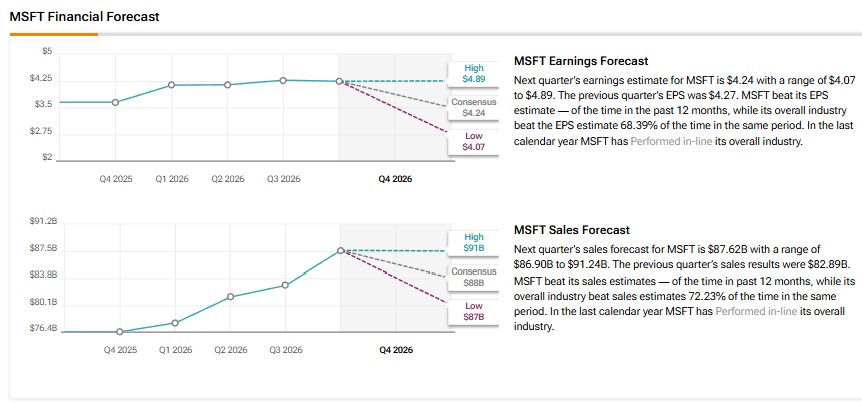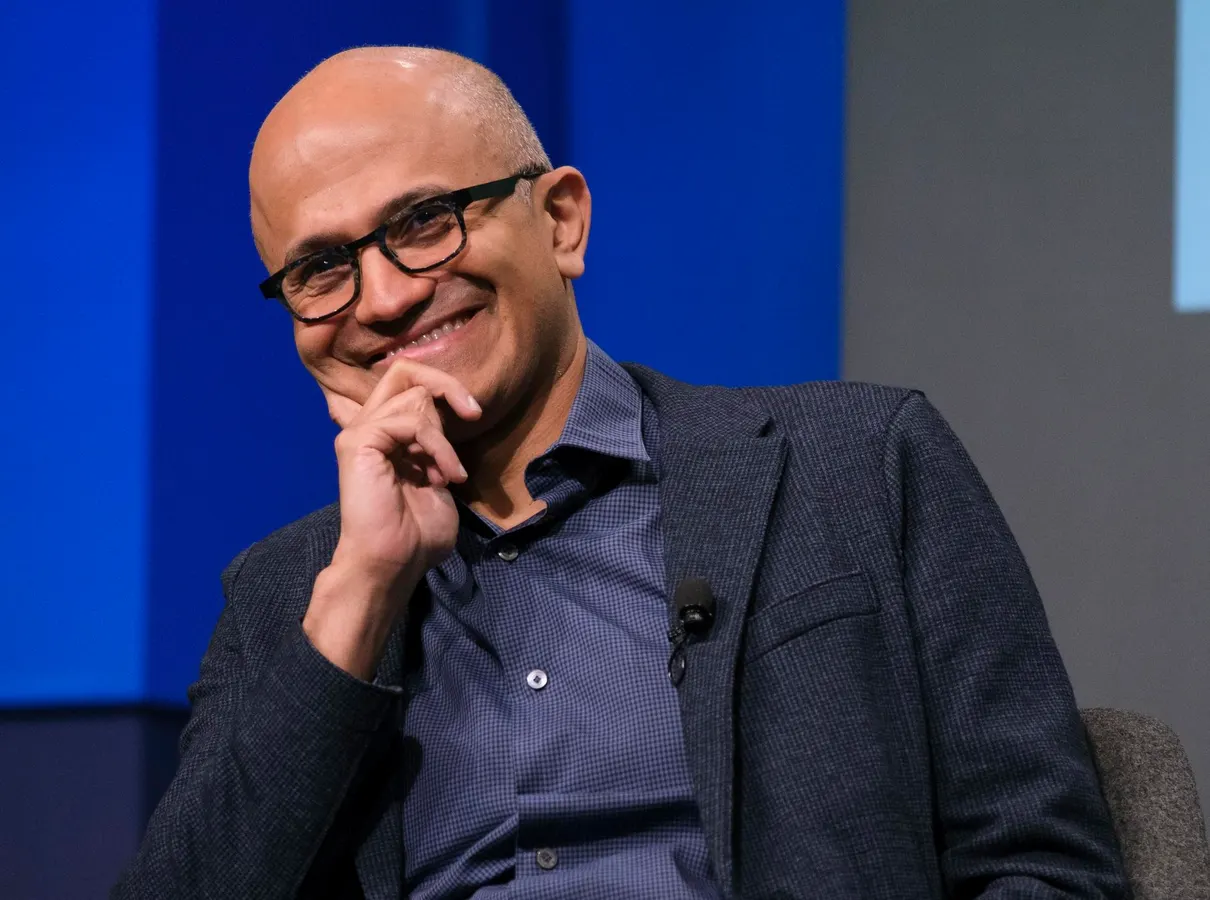
BELLEVUE, WA - NOVEMBER 28: Microsoft CEO Satya Nadella smiles during the question and answer portion of the Microsoft Annual Shareholders Meeting at the Meydenbauer Center on November 28, 2018 in Bellevue, Washington. Microsoft recently surpassed Apple, Inc. to become the world's most valuable publicly traded company. (Photo by Stephen Brashear/Getty Images)Getty ImagesMicrosoft and Meta both poured billions into AI this quarter, but only one turned that spending into paying customers. Reporting earnings minutes apart on July 29, Microsoft’s stock jumped 9.8% while Meta’s fell 10% — a split driven by Microsoft’s ability to show external demand for its AI infrastructure and Meta’s reliance on still‑theoretical plans.Their earnings reports both featured rising revenue. But Microsoft outperformed Meta on earnings, free cash flow, outlook and — most importantly – the business model behind their AI spending. Microsoft has a rapidly growing AI cloud business; whereas Meta aspires to create one and operates a virtual reality business that posted “$4.6 billion in second-quarter operating losses while bringing in $431 million in sales,” according to CNBC.Analysts estimate Microsoft stock has more upside — 42% based on the consensus 12-month price target compared with Meta’s 35%. Wednesday’s reports suggest Microsoft has the edge due to its rapidly growing Azure business, which grew 43% and is forecast to expand faster.Meta has plans for an AI cloud business and declined to offer 2027 capital expenditure guidance — which could spook investors.MORE FOR YOUMicrosoft’s Results Show Real AI DemandMicrosoft outperformed Meta in the latest quarter.The software giant grew revenue, beat earnings expectations and forecast better-than-anticipated growth and cash flow. Specifically, Microsoft ended June 2026 with revenue up 18% to $90 billion; adjusted earnings per share of $4.74 — 50 cents above consensus; 43% Azure growth that crossed $100 billion in annual revenue; an 84% rise in backlog to $678 billion; and $19.6 billion in free cash flow (though that was down 23%), noted a company release.Guidance for the current quarter exceeded expectations. Microsoft CFO Amy Hood guided fiscal Q1 revenue to a midpoint of $90.4 billion — $740 million above the Street estimate — while the Q1 Azure growth target of 45% was four percentage points faster than consensus, reported CNBC. By changing accounting assumptions, Microsoft lowered its 2026 capital expenditures 8% to $175 billion. Capex stays above $50 billion next quarter, and Hood said Microsoft expects to remain free-cash-flow positive in fiscal 2027, noted CNBC.Meta’s Growth Comes With Margin PressureMeta beat revenue expectations while falling short in other areas. Specifically, Meta’s revenue rose 28% to $60.8 billion; its earnings per share of $6.18 was $1.02 below consensus; operating margin declined 12 percentage points to 31%; and free cash flow dropped 81% to $784 million, noted CNBC.Meta’s guidance came in below expectations. The Facebook parent lowered revenue guidance for Q3 to $62.5 billion — the midpoint of a range — missing consensus by $700 million; raised the low end of its 2026 expense guidance by $4 billion to $169 billion; and cut its capex forecast for the year by 10% to $145 billion. CFO Susan Li declined to quantify 2027 capital spending at all, according to a company release.Why Their Stocks Moved In Opposite DirectionsDigging into Meta’s margin miss reveals why the stock plunged. Meta’s lower margins stemmed from a 55% increase in expenses on 28% revenue growth — by contrast, Microsoft’s operating income grew 18%, exactly in line with its revenue.Since Microsoft rents its AI capacity to third parties, its AI-related spending shows up as Azure growth of 43% and a $678 billion backlog. Meta consumes its own capacity, so the same spend appears only as depreciation — up 46% to $6.4 billion — charged against advertising, with no external revenue to offset it.Zuckerberg — who famously changed the name of his company from Facebook to Meta Platforms on hopes for the virtual reality business, which has lost more than $80 billion since inception — confirmed cloud plans without specifics.This strategy drew skepticism from analysts. Although Meta expects “significantly higher margin on selling intelligence rather than selling compute directly,” JPMorgan’s Douglas Anmuth pressed Meta management to explain the contradiction of Meta becoming both buyer and seller of AI computing.In a nutshell, Microsoft stock rose because companies pay for its AI computing service. Meta’s dropped because the company aspires to build and operate one with contracted external payers. Where Microsoft And Meta Could Be In A YearMicrosoft stock is expected to rise more than Meta’s.The bull case for Microsoft is abetted by Azure growth; a large backlog; 30 million Copilot seats worth $9 billion; a stock trading 29% below its 52-week high; a 23-times trailing earnings stock value; and capex that is largely presold to customers.Bears point to Microsoft’s $50 billion in quarterly capex, which exceeds free cash flow; the disconnect between unchanged spending and lower depreciation due to changed assumptions; shrinking Windows and Xbox businesses; and a contentious relationship with OpenAI — 27% of whose for-profit arm the software giant owns, according to the Journal.While Meta bulls rejoice in 28% revenue growth, 3.6 billion daily users and a 12% increase in ad pricing, bears see cash flow near zero; capex funded by bonds; buybacks stopped; depreciation compounding; no 2027 capex forecast; and youth-harm litigation that the company warns could produce further material losses, per the company statement.As an investor, do you require AI buildout to have a paying external customer before you fund it? If the answer is yes, Microsoft now has evidence while Meta may deliver it in the future — or not.
Microsoft Surges And Meta Sinks As Wall Street Rewards Proven AI Demand
Microsoft’s earnings jumped on strong Azure and AI demand while Meta’s stock fell as rising costs, weaker margins and unclear AI revenue plans worried Wall Street investors.
918 words~4 min read