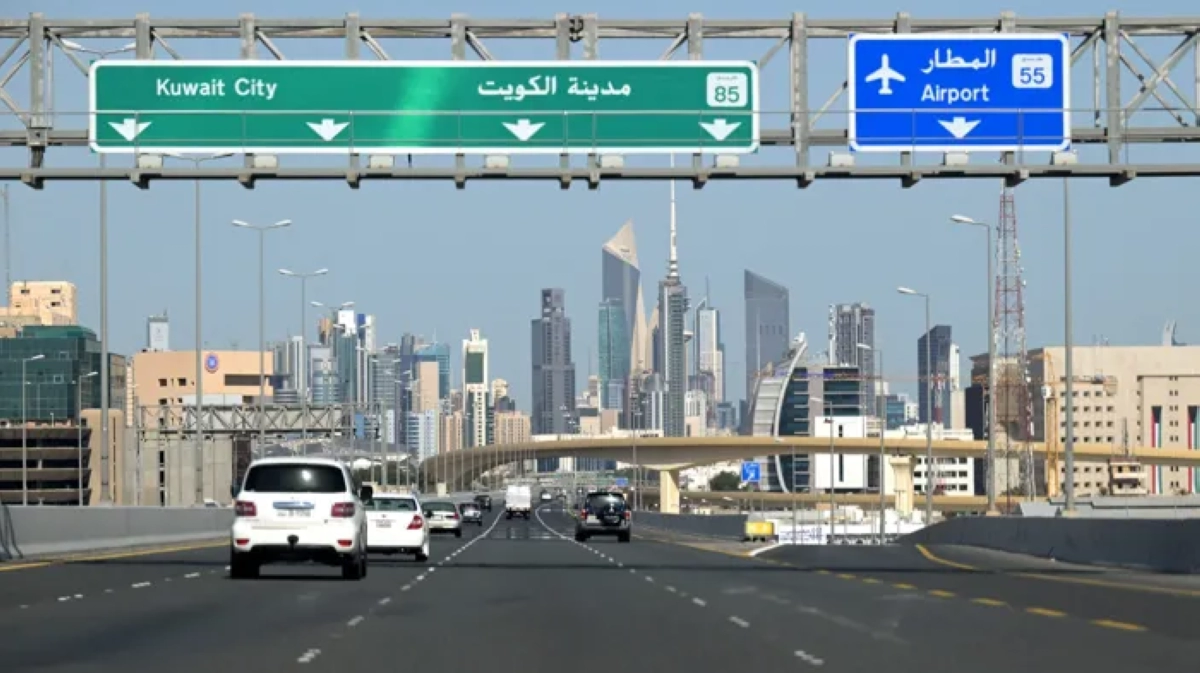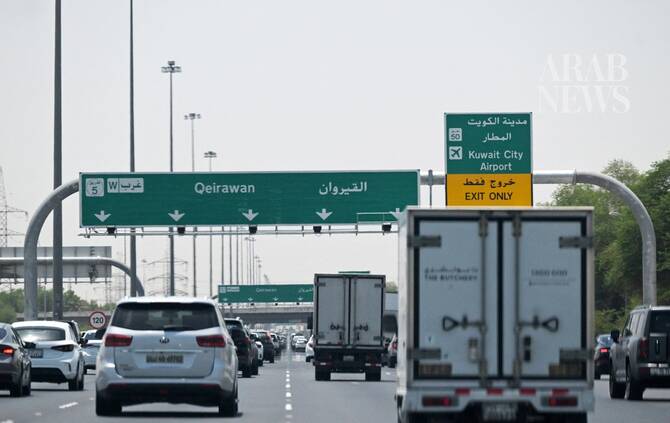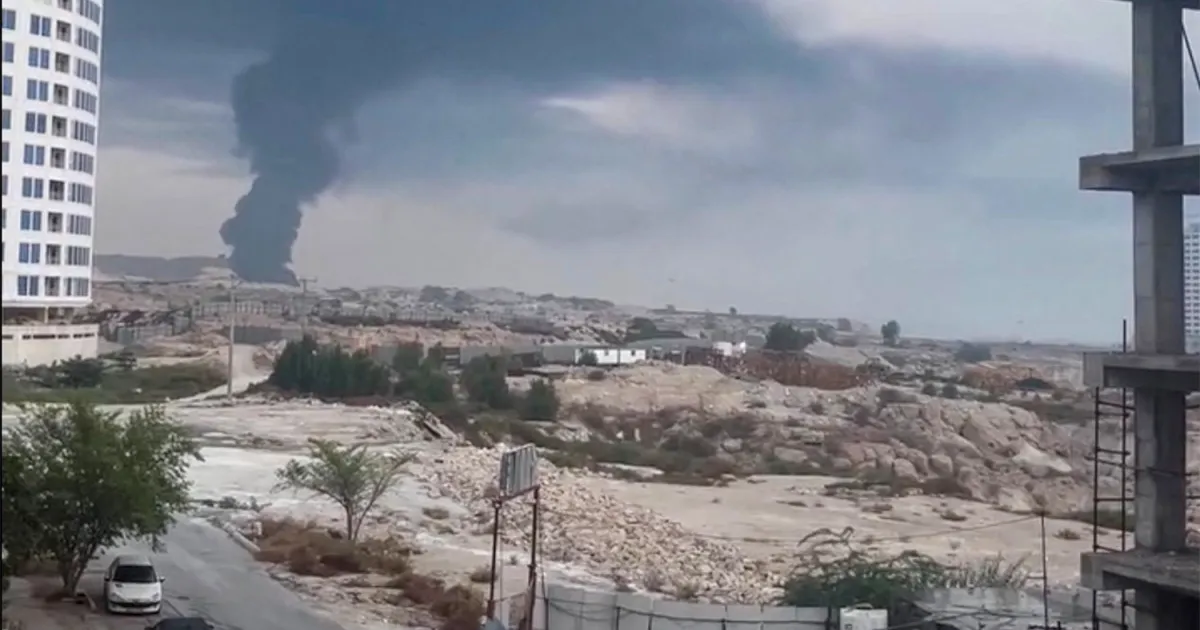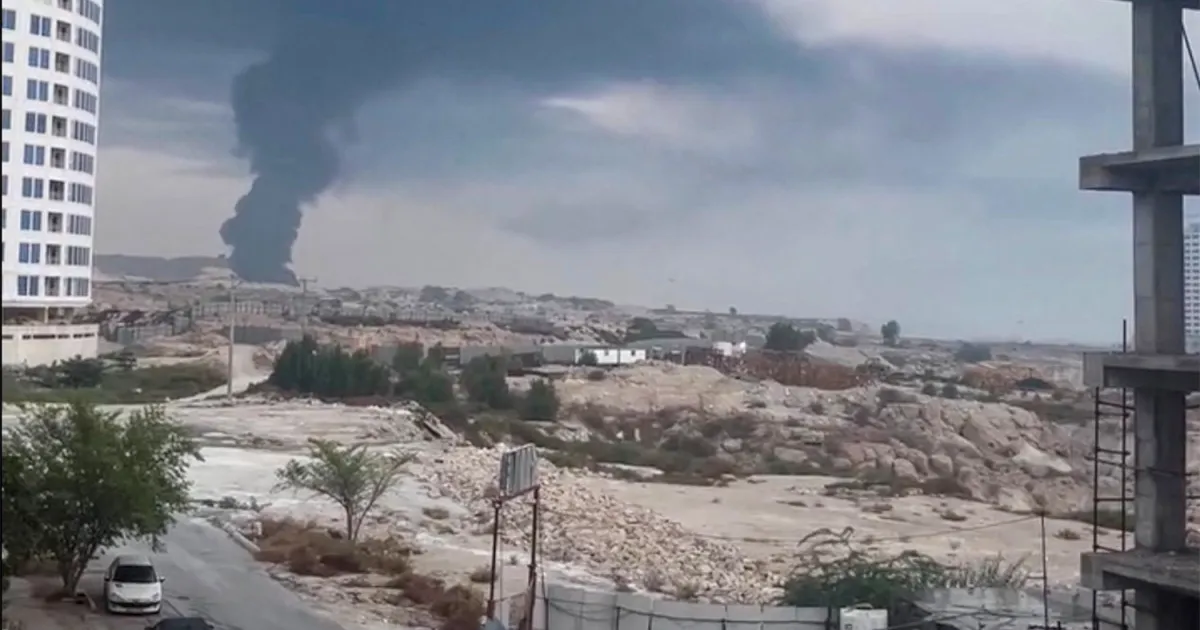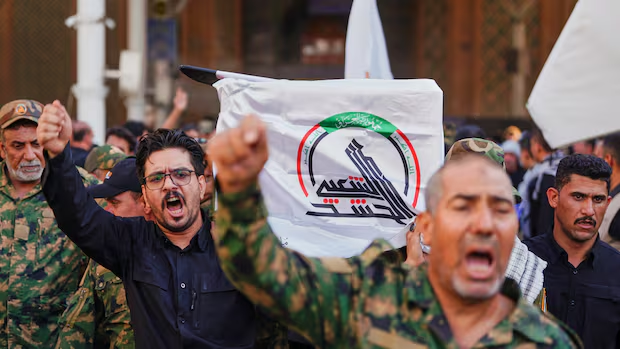
WorldAn Iranian strike hit a Chinese firm's building in northern Kuwait Thursday morning, severely damaging the structure and killing a worker, Kuwait's military said, hours after Jordan's air defences shot down five missiles launched from Iran.Iranian strike hits China-owned business amid 'heavy wave' of attacks from U.S.The Associated Press · Posted: Jul 30, 2026 6:52 AM EDT | Last Updated: 2 hours agoListen to this articleEstimated 5 minutesThe audio version of this article is generated by AI-based technology. Mispronunciations can occur. We are working with our partners to continually review and improve the results.Mourners carry a coffin draped with a cloth bearing the emblem of Iraq's Popular Mobilization Forces during a funeral in Najaf, Iraq on Thursday. (Hadi Mizban/The Associated Press)The United States and Iran each fired barrages of missiles Thursday, as the pattern of back-and-forth strikes took hold again and hope dimmed for any quick resolution to the war.An Iranian strike hit a Chinese firm's building in northern Kuwait on Thursday morning, severely damaging the structure and killing a worker, Kuwait's military said, hours after Jordan's air defences shot down five missiles launched from Iran.The attacks came after the U.S. military said it had completed "a heavy wave of strikes against Iran," conducted in response to an earlier Iranian missile attack on a U.S. base in Jordan. The U.S. military's Central Command said online that it had struck "dozens" of targets belonging to Iran's Revolutionary Guard Corps, including military command centres as well as missile and drone facilities, and coastal surveillance and defence sites.The first strikes from the U.S. in five days came after U.S. President Donald Trump vowed to hit Iran "very hard" after it targeted a base in Jordan that hosts U.S. troops. Iran's official IRNA news agency said three people were killed and two were wounded in a strike on the island of Qeshm, which lies just off the Iranian mainland in the Strait of Hormuz, the crucial waterway for global energy supplies that Iranian attacks have again effectively closed. No casualties were reported from Jordan's interception of the missiles, Jordan's state-run Petra news agency said, quoting the spokesperson for the country's armed forces. WATCH | More countries drawn into war:CBC's Aarti Pole speaks with Retired U.S. Major General Randy Manner on Iran-U.S. strikesJuly 29|Duration 7:17Get the latest on CBCNews.ca, the CBC News App, and CBC News Network for breaking news and analysis.U.S. partners with SaudisThe latest barrage came after the U.S. partnered with Saudi Arabia to strike Iran-backed militias in neighbouring Iraq, the Popular Mobilisation Forces, killing at least 20 fighters and six Iranian advisers on Wednesday.Iraqi men in the subsequent hours shouted Shia sectarian slogans and "Death to America" as they carried the bodies of slain fighters in body bags. Elsewhere, British maritime security firm Ambrey said drone strikes ignited fires on two natural gas vessels at the Egyptian port of Damietta on Wednesday. It was not immediately clear who was responsible for the strikes on a U.S.-owned floating storage facility and a Greek-owned tanker, the GasLog Salem. No injuries were reported.The office of the Egyptian prime minister said initial investigations showed the fires on the two vessels had been caused by a drone.Egypt, a close U.S. ally and regional mediator, is one of the only countries in the Middle East to have been spared direct military action during the war. A strike by Iran or its allies, if confirmed, would mark a significant widening of the conflict.Saudi Arabia had accused the Iraqi militias of firing drones against its oil facilities over the past days. An umbrella group of Iraqi militias initially denied the allegations. A view of the Gaslog Salem vessel is shown in a file photo, off the coast of South Korea. The Greek-owned tanker was reportedly hit by a drone in recent days. (Submitted by Vladimir Tonic/Reuters)Saudi Arabia is also locked in a renewed conflict with the Houthis. The rebels have declared a blockade of Saudi shipping that could choke off another crucial Middle East trade route, the Bab el-Mandeb strait from the Red Sea into the Gulf of Aden.Planet Labs satellite imagery from Monday analyzed by The Associated Press showed damage to Saudi Aramco's Abqaiq oil-processing facility. The massive facility is capable of processing approximately seven million barrels of crude oil per day.Saudi Defence Minister Khalid bin Salman met separately on Wednesday with Trump and U.S. Vice-President JD Vance, according to two people familiar with the matter who were not authorized to comment publicly about the private meetings.An interim agreement struck in June that was to see Iran and the U.S. pause fighting for 60 days — in order to negotiate issues including maritime transit in the Hormuz as well as Iran's nuclear program — collapsed in recent weeks over renewed fighting in the Strait of Hormuz.WATCH | Concerns about U.S. stockpiles:Pause in U.S. attacks on Iran prompt questions about weapon suppliesJuly 27|Duration 2:30A sudden pause in attacks by the U.S. and Iran has prompted questions about whether the break is to allow for peace talks or because the U.S. has largely drained its weapons supply.It also underscored the difficulty of winding down a five-month conflict started by the U.S. and Israel that has jolted the world economy and is unpopular among Americans. The fighting was likely to add to concerns in Washington that the U.S. is further drawing on already diminished stockpiles of sophisticated munitions in the five-month-old conflict it started with Israel on Feb. 28.Since the war began, 18 U.S. service members have been killed, with the Trump administration recently accused of seeking to obfuscate those numbers.About two-thirds of U.S. adults say the war with Iran has not been worthwhile in the latest monthly poll from the Associated Press-NORC Center for Public Affairs Research. That includes the vast majority of Democrats and independents, as well as about 37 per cent of Republicans.Roughly 61 per cent of Republicans surveyed approve of how Trump is handling Iran. The result from the same question in June's poll was 71 per cent.The AP-NORC poll of 1,165 adults was conducted July 23-27 using a sample drawn from NORC's probability-based AmeriSpeak Panel, which is designed to be representative of the U.S. population. The margin of sampling error for adults overall is plus or minus 3.7 percentage points. The margin of sampling error is plus or minus 6.0 for Republicans overall and plus or minus 5.4 for Democrats overall.LISTEN | Trita Parsi, U.S.-Iran relations historian:Front Burner27:28Is Iran becoming a 'forever war'?With files from CBC News
Kuwaiti worker killed, Iran-linked fighters in Iraq rage after deaths caused by U.S.-Saudi strikes | CBC News
An Iranian strike hit a Chinese firm's building in northern Kuwait Thursday morning, severely damaging the structure and killing a worker, Kuwait's military said, hours after Jordan's air defences shot down five missiles launched from Iran.
1,080 words~5 min read