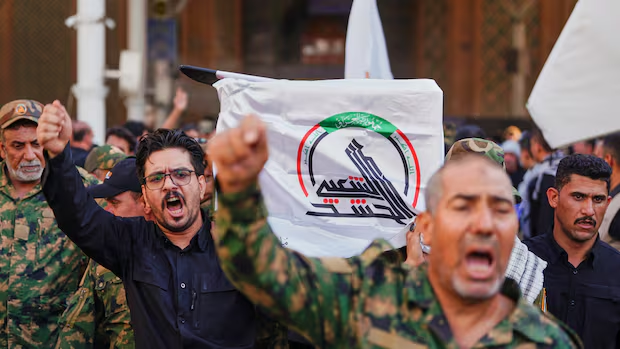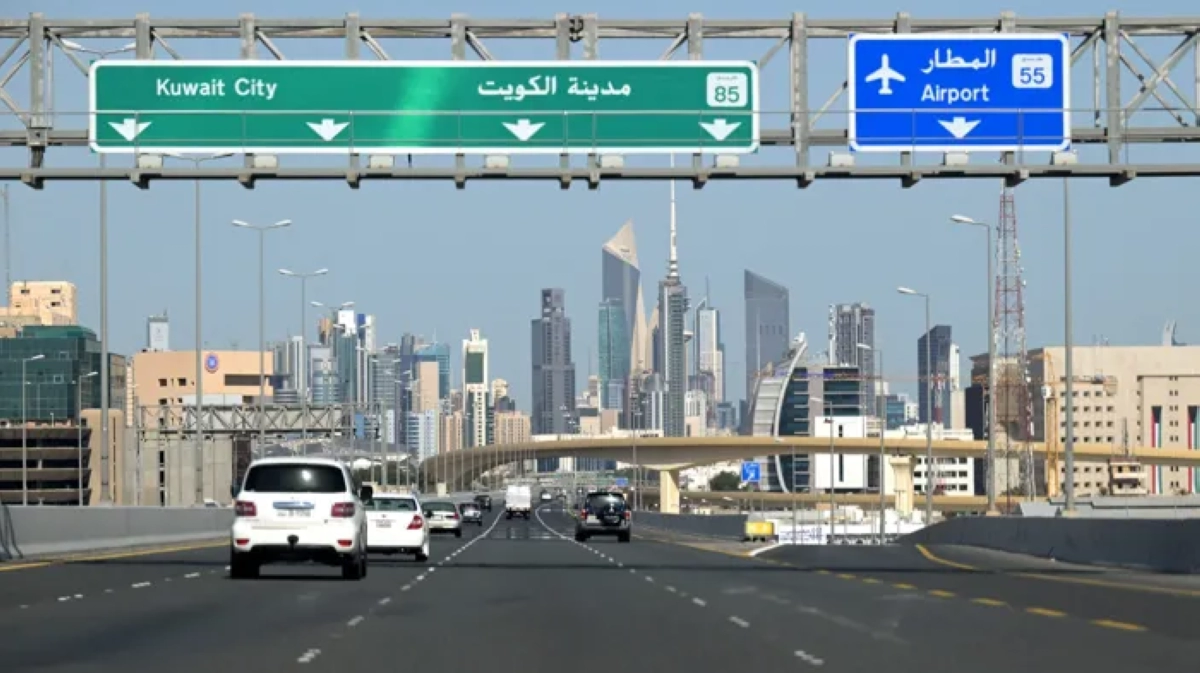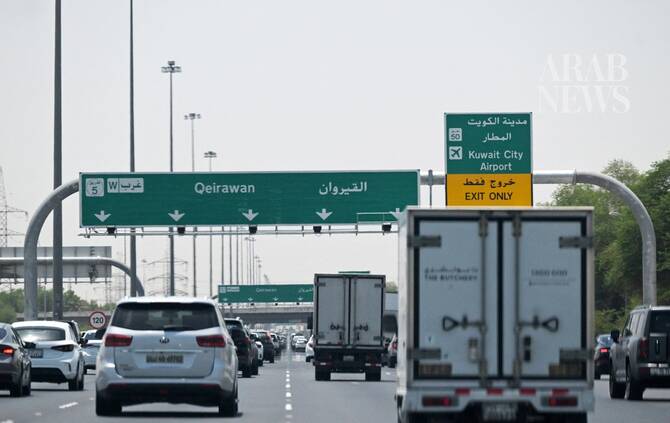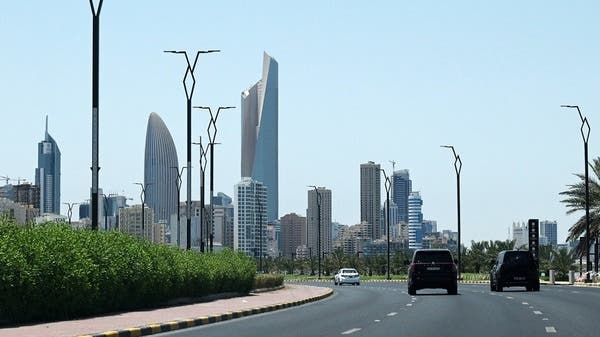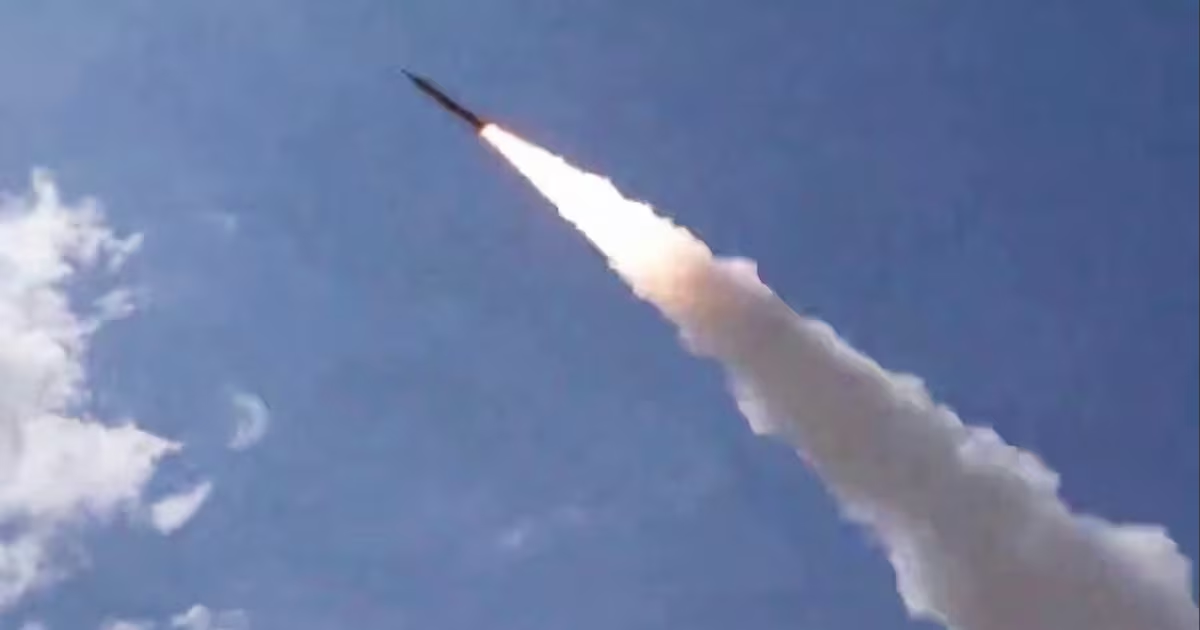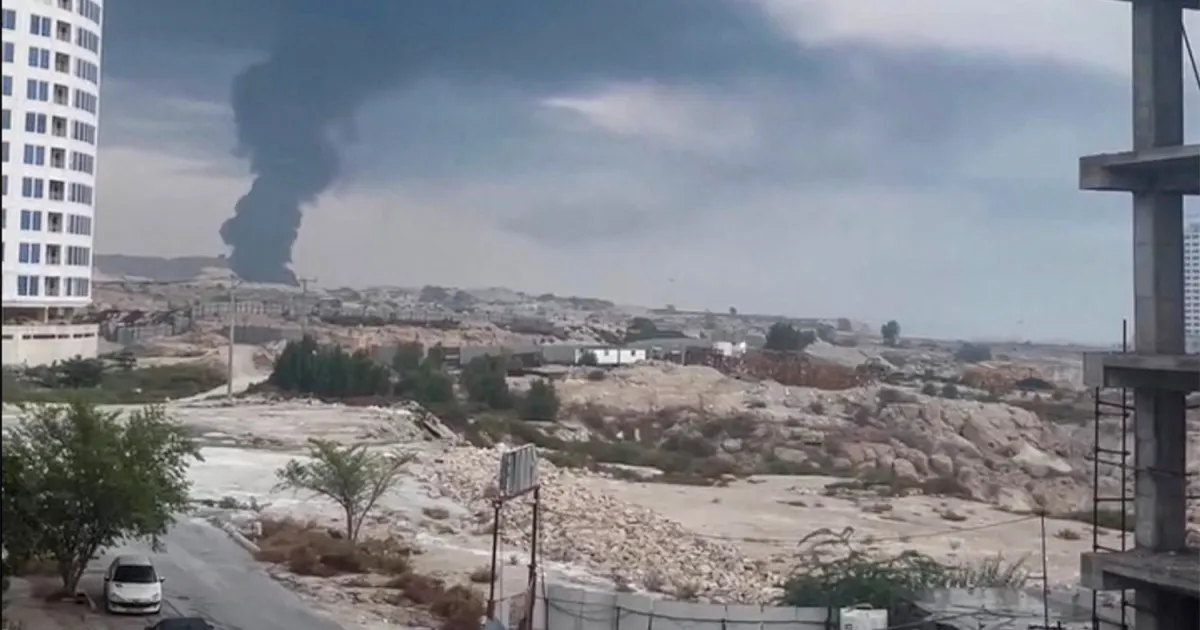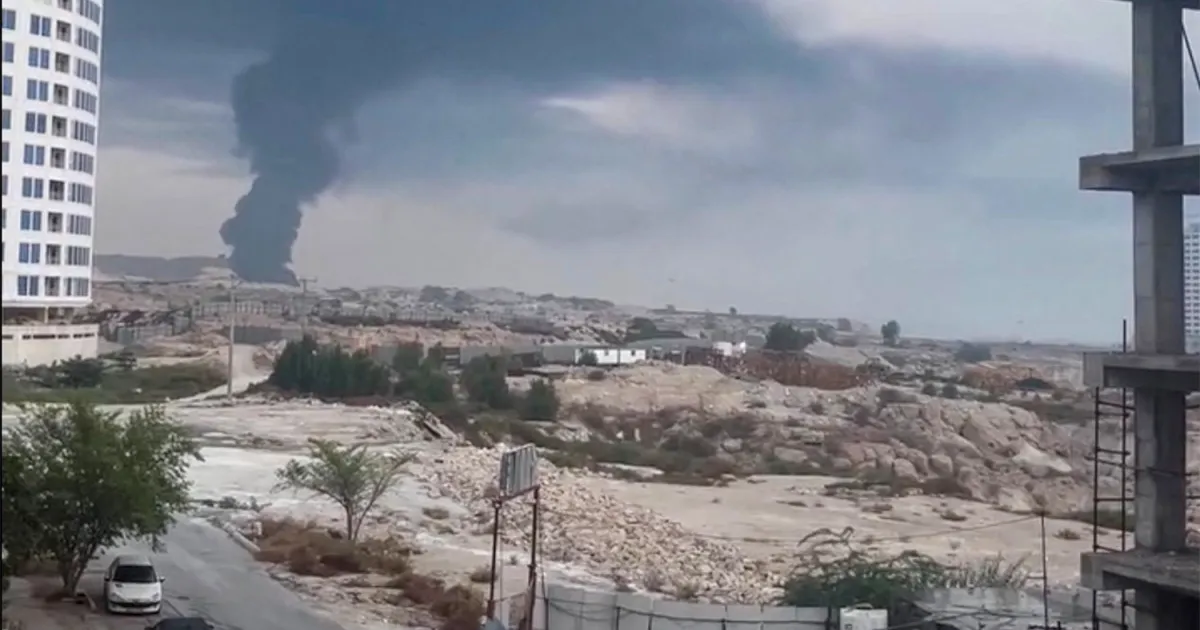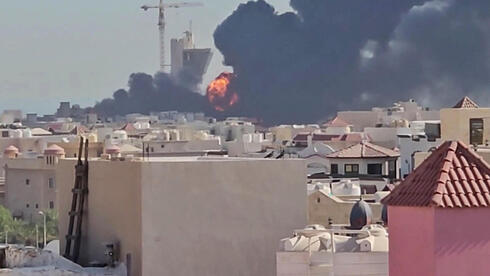
Attack severely damages building hours after Jordan intercepts five Iranian missiles and US strikes dozens of Revolutionary Guard targets; drone incidents in Egypt and Saudi Arabia deepen fears of renewed all-out warAP|An Iranian strike hit a building belonging to a Chinese company in northern Kuwait on Thursday morning, severely damaging the structure and killing a worker, Kuwait’s military said, as renewed attacks across the Middle East raised fears of a return to all-out war.US strikes in Iran (Video: CENTCOM)U.S. Central Command said it struck dozens of targets belonging to Iran’s Islamic Revolutionary Guard Corps, including command centers, missile and drone facilities, coastal surveillance positions, air defense sites and maritime capabilities.No casualties were reported from Jordan’s interception of the Iranian missiles, the state-run Petra news agency reported, citing a spokesman for the country’s armed forces.The escalation followed several days of relative calm and highlighted the difficulty of ending a five-month conflict that has disrupted the global economy and drawn growing opposition in the United States. The renewed fighting was also likely to intensify concerns over the depletion of sophisticated U.S. munitions used to defend American bases and regional allies.The latest U.S. strikes came hours after President Donald Trump vowed to hit Iran “very hard” following its attack on the base in Jordan.Iran’s official IRNA news agency said three people were killed and two others wounded in a strike on the island of Qeshm, located just off the Iranian mainland in the Strait of Hormuz.The attack followed a joint U.S.-Saudi operation against Iran-backed militias in Iraq on Wednesday that killed at least 20 fighters and six Iranian advisers.It was not immediately clear who was responsible for the attacks on a U.S.-owned floating storage facility and a Greek-owned tanker. No injuries were reported.The Egyptian prime minister’s office said an initial investigation found that the fires had been caused by a drone.GalleryAlleged aftermath of drone strike on DamiettaEgypt, a close U.S. ally and regional mediator, has largely avoided direct military action during the war. A confirmed strike by Iran or one of its allies would mark a significant expansion of the conflict.Asked during an Oval Office event whether Iran was responsible for the attacks, Trump said: “It’s a little more of the same.”“In the meantime, we’re going to be hitting them very hard because it’s our turn to hit them,” he added.Saudi Arabia has accused Iran-backed Iraqi militias of launching drones at its oil facilities in recent days.An umbrella organization representing Iraqi militias initially denied the accusations, while Yemen’s Iran-backed Houthi rebels said they had attacked Saudi energy infrastructure as part of a separate but related confrontation.Saudi Defense Minister Khalid bin Salman met separately with Trump and Vice President JD Vance on Wednesday, according to two people familiar with the meetings who were not authorized to discuss them publicly.The sources said Saudi Arabia’s decision to join the U.S. strikes against the Iraqi militias was intended to warn Iran that Riyadh would not tolerate attacks on its oil industry or other critical infrastructure.Coffins of members of the pro-Iranian Popular Mobilization Forces during a funeral in Baghdad, Iraq (Photo: AFP)At the same time, the Saudi defense minister told Trump and Vance that Riyadh wanted the war to de-escalate and hoped Washington and Tehran would return to negotiations.Before the latest round of fighting, mediators had expressed optimism that the United States and Iran could resume talks. An interim agreement collapsed in recent weeks after renewed fighting in the Strait of Hormuz, a vital route for global energy supplies that Iranian attacks have again effectively closed.A regional official said mediators were “still trying with both sides” to restore calm and revive the ceasefire. The official declined to say whether progress had been made and spoke on condition of anonymity because the negotiations were being conducted behind closed doors.Saudi Arabia is also engaged in renewed fighting with the Houthis, who have declared a blockade on Saudi shipping that could disrupt traffic through the Bab el-Mandeb Strait, another crucial trade route connecting the Red Sea and the Gulf of Aden.The Houthis said Monday that they had launched drones at oil facilities used to transport crude across Saudi Arabia to the Red Sea port city of Yanbu, a key alternative export route as Iran restricts passage through the Strait of Hormuz.The group said the attack was retaliation for what it described as a Saudi drone incursion into Yemeni airspace.Planet Labs satellite imagery from Monday, analyzed by The Associated Press, showed damage at Saudi Aramco’s Abqaiq oil-processing facility.The sprawling complex can process approximately 7 million barrels of crude oil a day, making it one of the most important components of the global energy system.
Iranian strike hits Chinese company in Kuwait, killing worker
Attack severely damages building hours after Jordan intercepts five Iranian missiles and US strikes dozens of Revolutionary Guard targets; drone incidents in Egypt and Saudi Arabia deepen fears of renewed all-out war
772 words~4 min read