Part 2 of the DEV series: The Real Boundary Between No-Code and Engineering
In Part 1 of this series, I argued that developers do not necessarily dislike no-code. They dislike losing control over security, business logic, system boundaries, failure behavior, and production accountability.
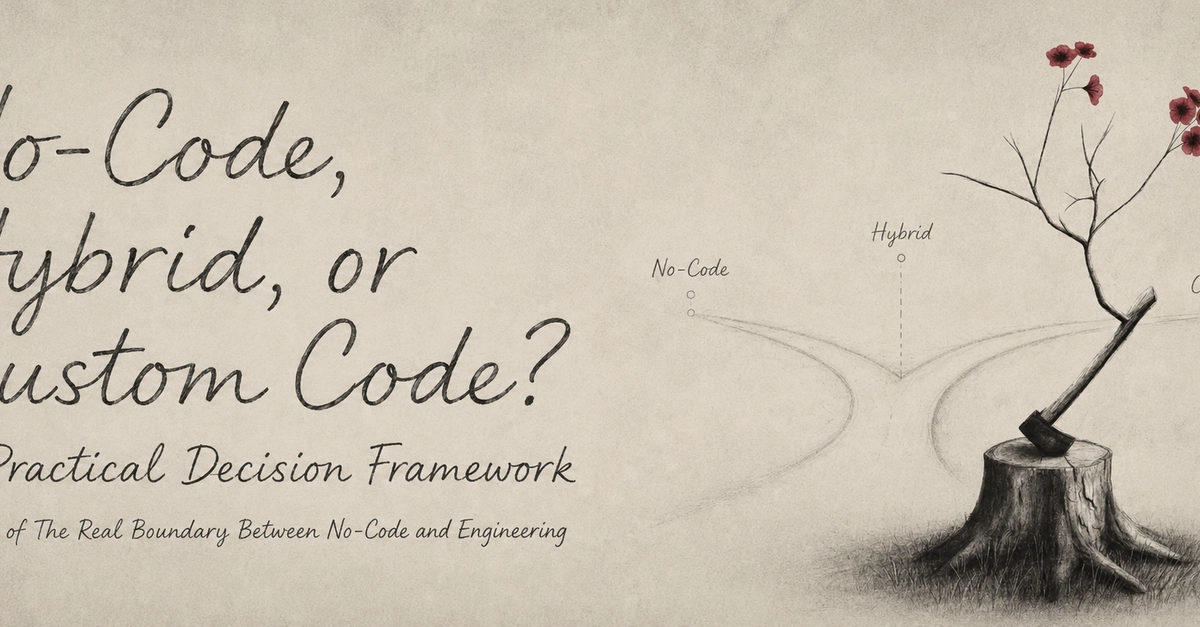
That argument creates a practical question. How should a team decide whether a workflow belongs in a visual builder, a hybrid architecture, or custom code?
The answer cannot simply be to use no-code whenever possible. It also cannot be to write code merely because custom development appears more serious. A workflow should be evaluated according to what it does, how frequently it changes, what can go wrong, and who must maintain it.
From a market-analysis perspective, four factors are especially useful: repeatability, risk, frequency of change, and integration complexity. Together, these factors form what I call the No-Code Work Allocation Test.