Every low-code vs no-code debate I've watched inside an engineering org ends the same way: someone pulls up a feature comparison table, counts checkboxes, and picks whichever tool has more of them. Drag-and-drop builder, check. API connectors, check. Pre-built templates, check. The demo looks great. One rule, one test click, output matches expectation.
Then six months later the same team is in a design review asking two very different questions that both trace back to the same missed step: why does a "no-code" pricing rule need three engineers to change safely, and why does checkout latency spike every time that rule fires after a quiet stretch.
The checklist was never the problem. The framing was. Nobody asked who owns this change, and nobody asked whether this tool was built for the traffic it's about to see. Both questions get skipped for the same reason — they don't show up in a demo. They only show up in production.
What's actually different between low-code and no-code?
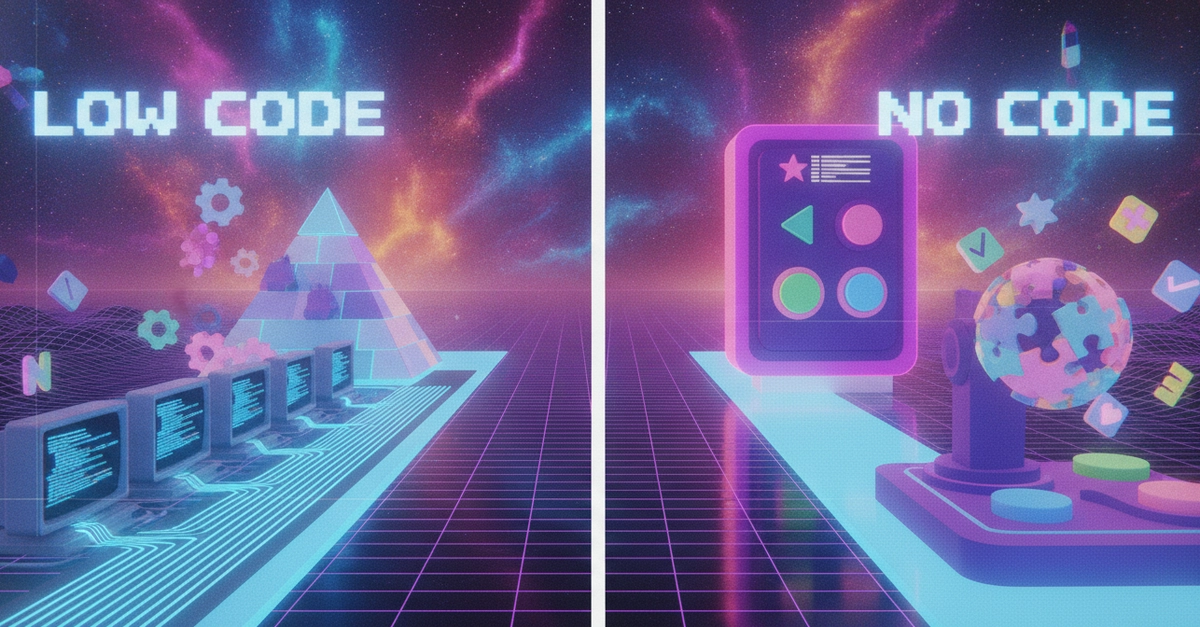
The dictionary version goes: low-code means visual tooling with an escape hatch into custom code, no-code means visual tooling with no code at all. That's technically true and mostly useless for a decision. The difference between low-code and no-code actually shows up in who's expected to sit in the driver's seat — low-code still assumes a technical person configuring things, no-code assumes a business user doing the same job without one.