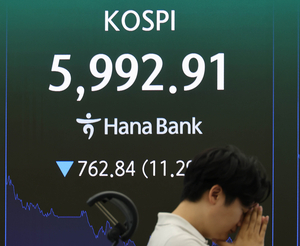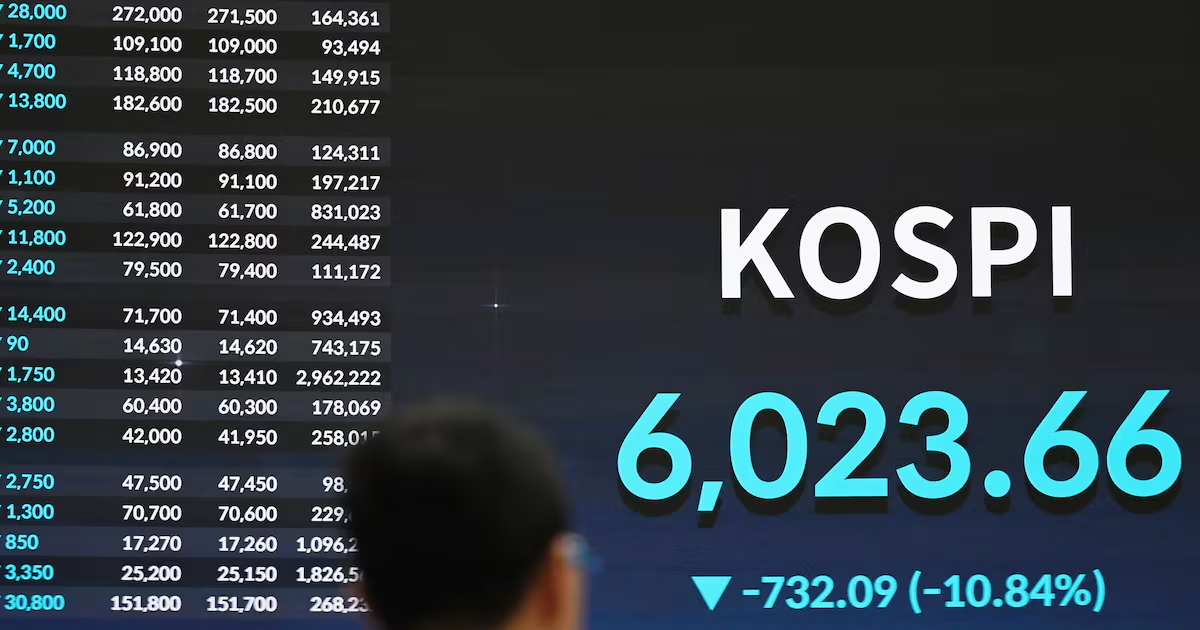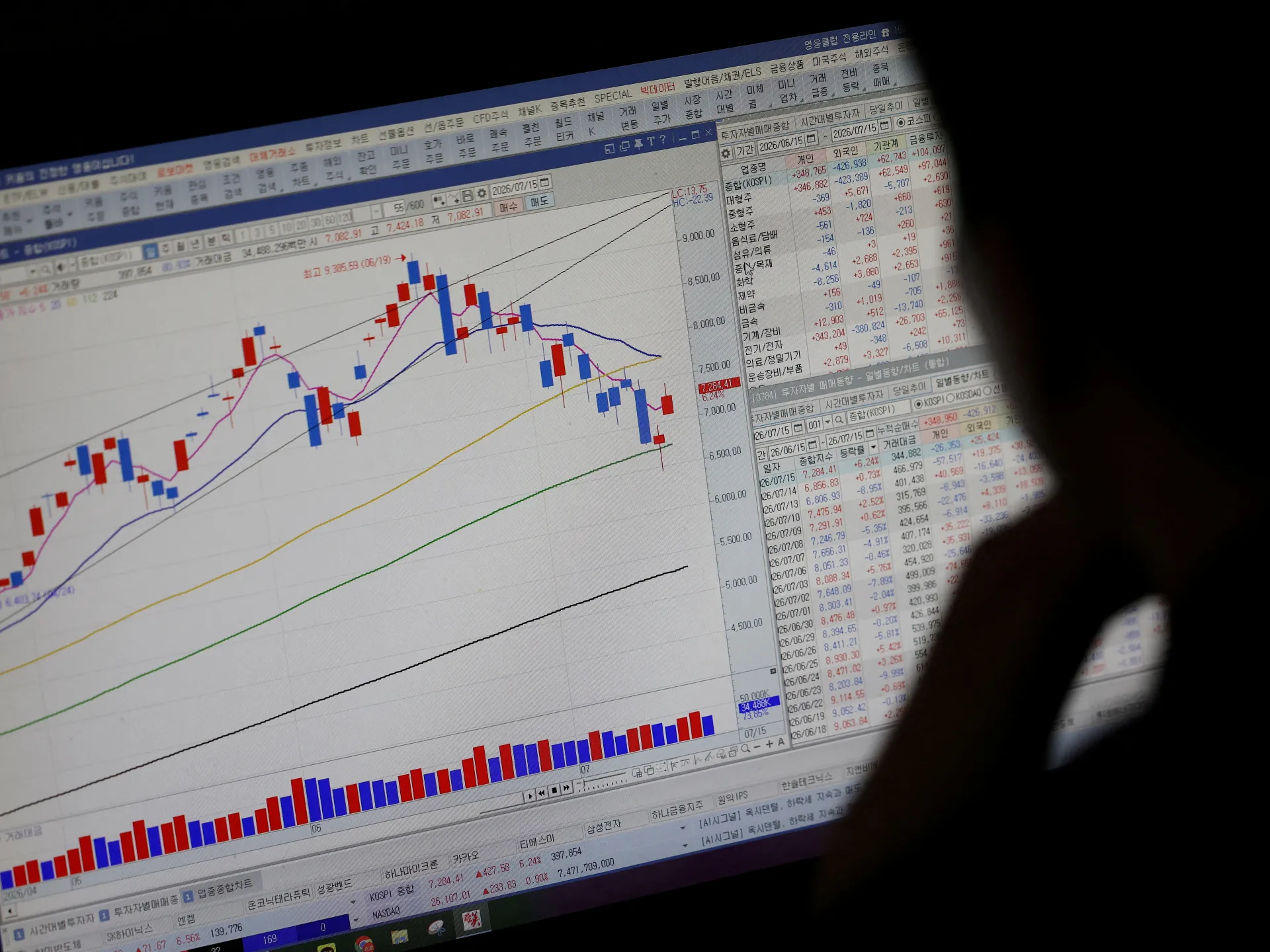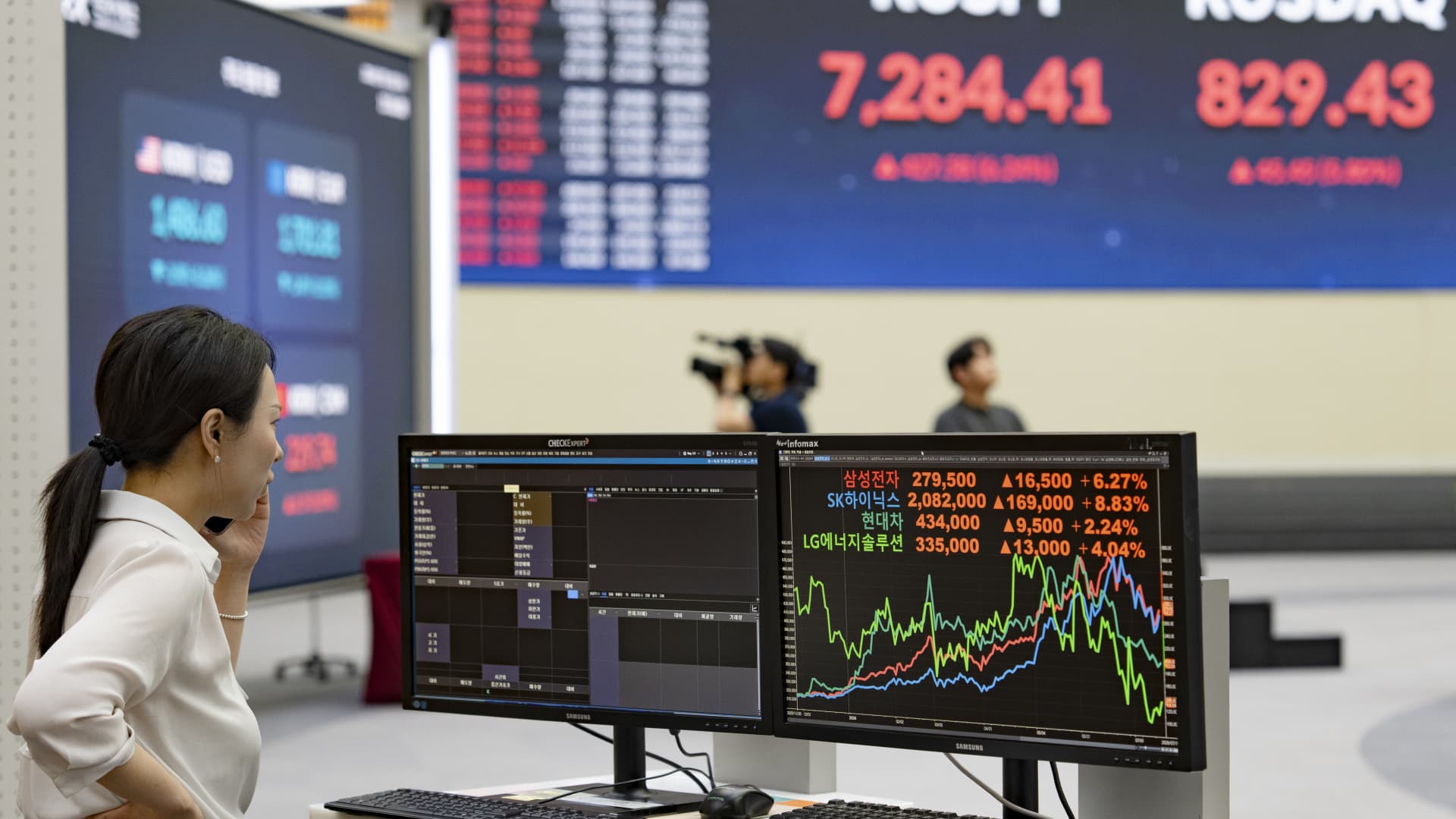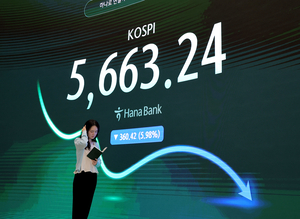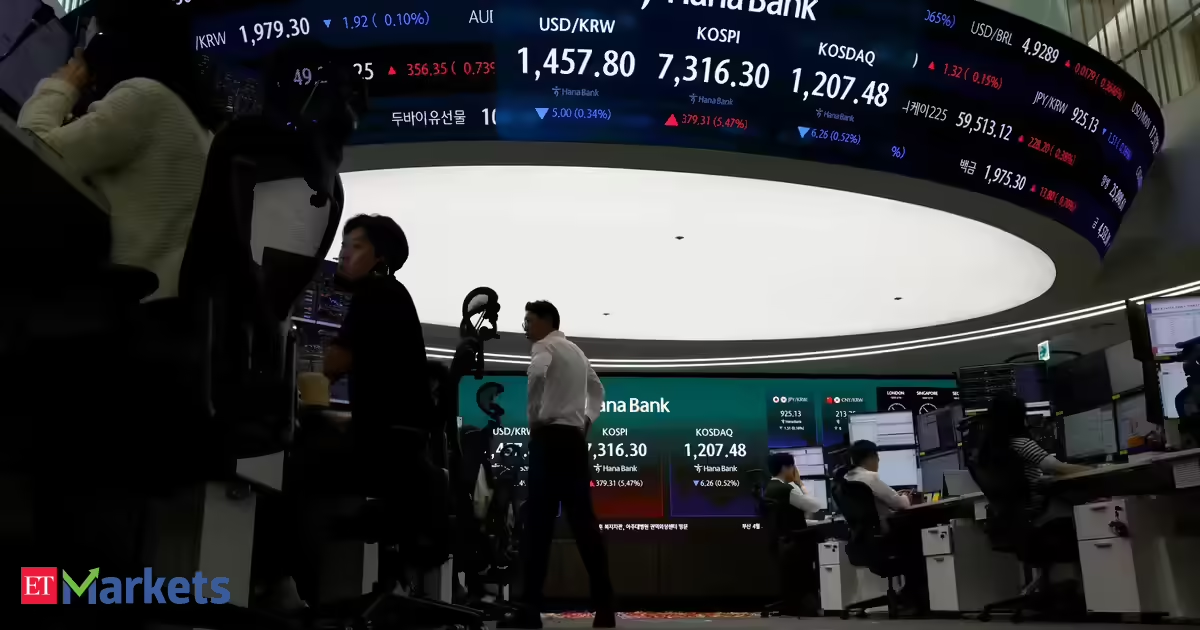
Explaining stock market movements is always a little bit of a fool’s errand; no one really understands why stocks boom or crash on a given day or in a given week. Over the long run, the stock market displays lots of “excess volatility” — prices move up and down much more than is warranted by changes in earnings or other measures of fundamental value. There are plenty of theories about why those swings happen, but it’s very hard to know which of those — if any — is in operation at any given time. And so although every big stock market movement is followed by lots of articles claiming to know why, you should take them all — including this one — with several grains of salt. Anyway, having said all that…The Korean stock market has been crashing for weeks now. Around March, Korean stocks went on an epic tear; the KOSPI index rose from around 5,000 to over 9,000. Then, just over a month ago, it all went into reverse, with the index falling back to around 5,500:There are probably two stories regarding why this happened — one about fundamentals, and another about finance. In fact, this is typical for bubbles and crashes, not just in stocks but in every asset class. There’s almost always some kind of connection to fundamentals — some story about how we’re in a new economy, followed by doubts about whether that story is really true, and so on. But the big market movements are almost always accelerated by purely financial factors — “noise traders” armed with piles of excess cash, opportunistic speculators looking to ride the wave of sentiment, and so on.1For Korea, the fundamental story was about memory stocks. Korean companies like SK Hynix and Samsung make a lot of the world’s computer memory. Under normal circumstances, computer memory isn’t a great business to be in — the technology is fairly commoditized, the industry is brutally competitive, it takes a LOT of capital to build the factories, and it’s very risky to make long-term bets on the evolution of memory technology. But computer memory is really important for AI data centers. And so the AI boom kicked off the mother of all memory booms. Only a few companies had the scale to meet a large amount of this demand explosion, and the two biggest of these were in South Korea. SK Hynix’s operating profit went from under $10 billion in the first quarter of 2025 to over $35 billion in the first quarter of 2026:Hynix, which specializes in memory, briefly had a higher market capitalization than Samsung, simply because the memory boom is so huge. Korea’s exports rose over 70% in just one year; in fact, the country’s whole national GDP growth rate increased by a noticeable amount over the past two quarters, just because of this one product:That’s a pretty strong fundamental story about why South Korean stocks should be worth a lot more. So it’s no surprise that the Korean stock market boomed as soon as people realized in early 2026 that AI technology is going to be extremely valuable. Here’s a thread about just how epic the runup in these companies’ stock prices was:The Kobeissi Letter@KobeissiLetterWhat happened?
Why did South Korean stocks just crash?
The AI boom creates a lot of uncertainty.
1,992 words~9 min read