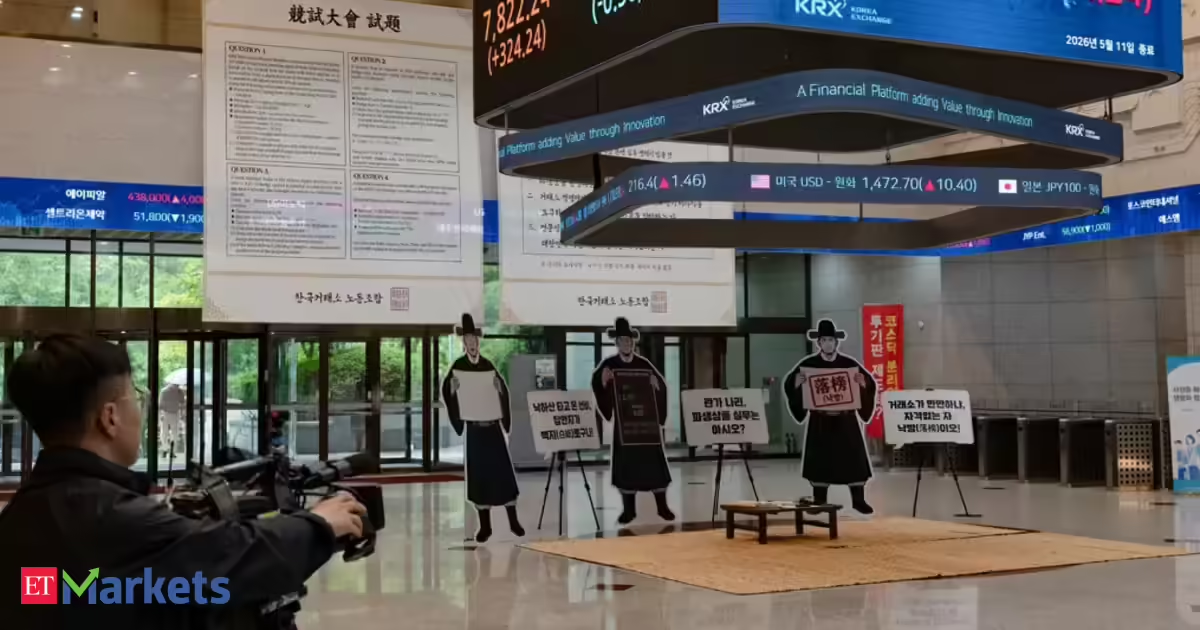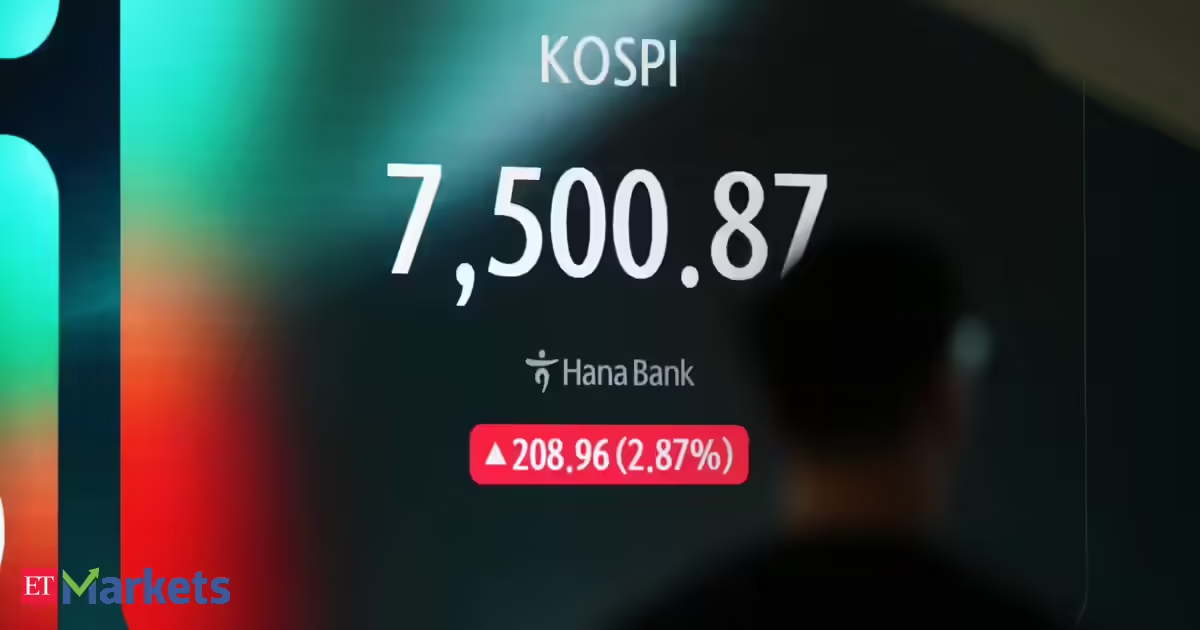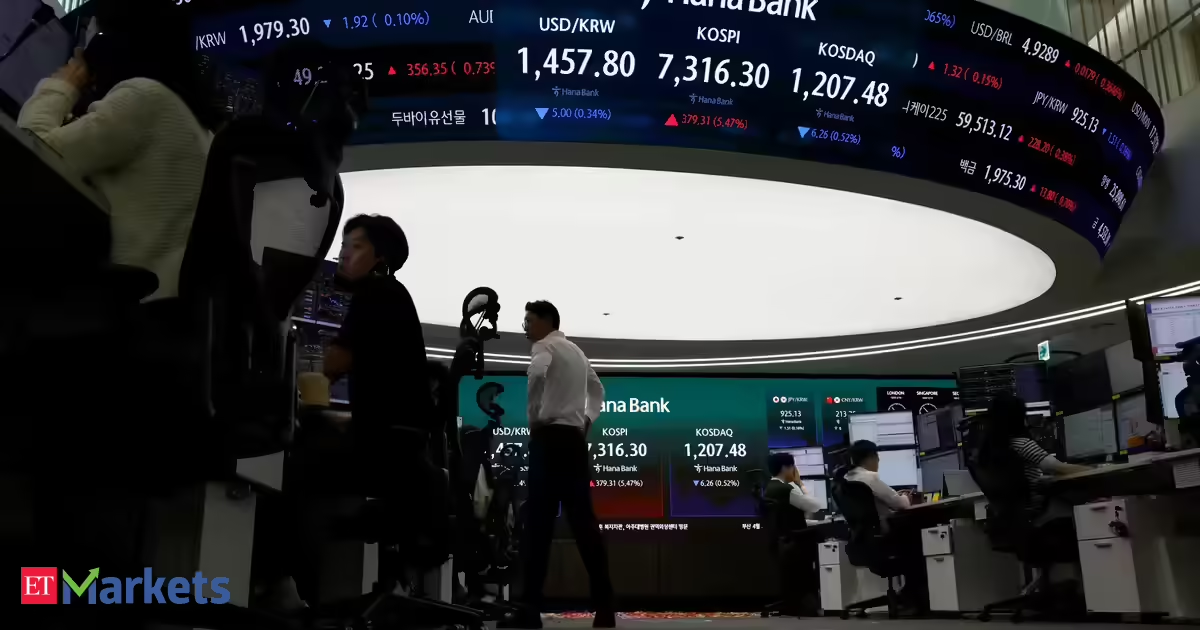
South Korea's stock market suffered a sharp selloff on Friday after a historic rally pushed valuations and investor positioning to extreme levels, exposing how heavily the market had become dependent on a handful of artificial intelligence-linked semiconductor stocks. The benchmark Kospi plunged 6%, wiping out early gains after briefly crossing the 8,000 mark for the first time in history during morning trade.The sudden reversal stunned investors because the rally had appeared unstoppable just days earlier. The Kospi had nearly tripled from around 2,600 levels a year ago, making it one of the world’s best-performing major equity markets.What's behind the rally earlier?The biggest reason behind both the rally and the crash was South Korea’s dominance in AI-linked memory chips. The market had become heavily concentrated around Samsung Electronics and SK Hynix, the two semiconductor giants that supply advanced memory chips used in artificial intelligence data centres globally.Demand for AI infrastructure has exploded over the past year as global technology companies race to build AI models and expand computing capacity. That triggered a massive surge in orders for high-bandwidth memory chips, leading investors to aggressively buy Korean semiconductor stocks.Samsung shares had rallied nearly 190% over the past six months, while SK Hynix surged more than 220% during the same period.Together, the two companies accounted for nearly half of the Kospi index weighting and contributed roughly two-thirds of the benchmark’s gains this year.Why Kospi crashed?That concentration became the market's biggest vulnerability. Once foreign investors started booking profits, the rally quickly reversed because too much of the market’s momentum depended on the same set of stocks.Samsung Electronics fell nearly 9% on Friday while SK Hynix dropped 8%, dragging the broader index sharply lower. Foreign investors sold 5.6 trillion won worth of Korean shares during the session, extending total outflows for the week to 14.3 trillion won.Analysts said the selloff was less about collapsing earnings and more about an overheated market running out of momentum after an extremely rapid rally. "The pullback looks like exhaustion after a rally that came too fast, too hard," Samsung Securities derivatives analyst Jun Gyun said, according to Bloomberg.The market was also hit by concerns around Samsung’s ongoing labour dispute. Investor nervousness increased after Samsung’s labour union indicated that negotiations with management may resume only after June 7, raising fears that a prolonged strike could disrupt semiconductor production.The labour issue became an additional trigger for investors already looking to reduce exposure after the massive run-up in chip stocks.Global factors also contributed to the weakness.Rising oil prices, geopolitical uncertainty in West Asia and a lack of meaningful outcomes from the latest US-China summit weakened broader risk appetite across Asian markets.Higher global bond yields also pressured technology shares worldwide. The scale of volatility became so intense that the Korea Exchange temporarily halted program selling after futures slumped more than 5%.In a symbolic sign of the sudden reversal, the exchange reportedly cancelled a celebration event it had planned for the Kospi crossing the 8,000 milestone. The sharp swings also reflect growing speculative activity in Korean markets.Retail investors have increasingly borrowed money to amplify bets on semiconductor and AI-linked shares, while leveraged exchange-traded funds tracking Samsung and SK Hynix have become extremely popular.Analysts said rebalancing activity in those leveraged products likely intensified Friday’s decline. The market has also become one of the world’s most volatile major indices in recent months, with daily swings of more than 5% becoming increasingly common.Despite the correction, many analysts still believe the long-term AI-driven semiconductor story remains intact. South Korea has aggressively positioned itself as a global AI manufacturing hub and recently announced plans to sharply increase investments in artificial intelligence infrastructure.Also read: Bloodbath on K-Street! South Korea's Kospi crashes 6% after world-beating rally to 8,000"There is no guarantee that the same level of AI demand will continue in coming years," Sejong University professor Kim Dae-jong told AFP.(Disclaimer: Recommendations, suggestions, views and opinions given by the experts are their own. These do not represent the views of Economic Times)
Kospi Crash Explained: Why South Korea's red-hot stock market tumbled 6% after record rally
South Korea's stock market saw a dramatic fall on Friday. This happened after a massive rally pushed valuations to extreme levels. The market's dependence on a few AI chip companies became clear. Samsung Electronics and SK Hynix, key players, experienced significant drops. This led to a broad index decline. Global factors also contributed to the market's weakness.
660 words~3 min read