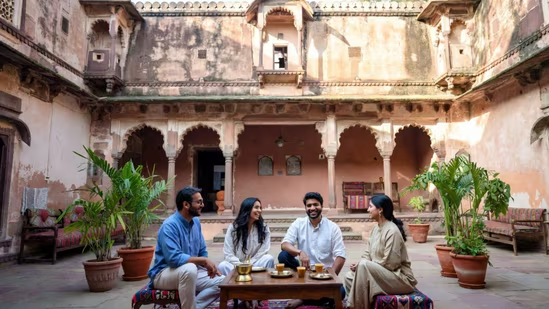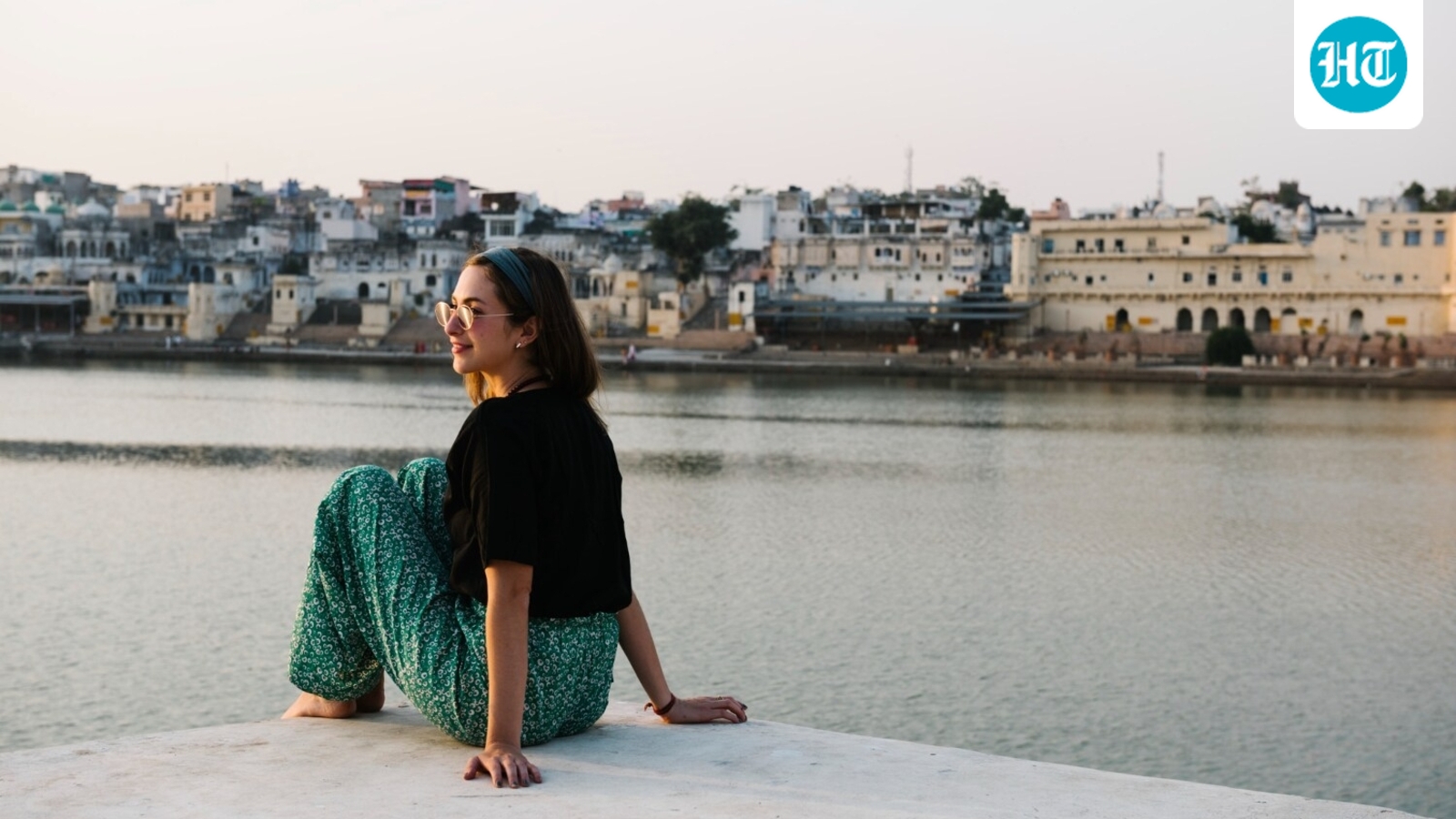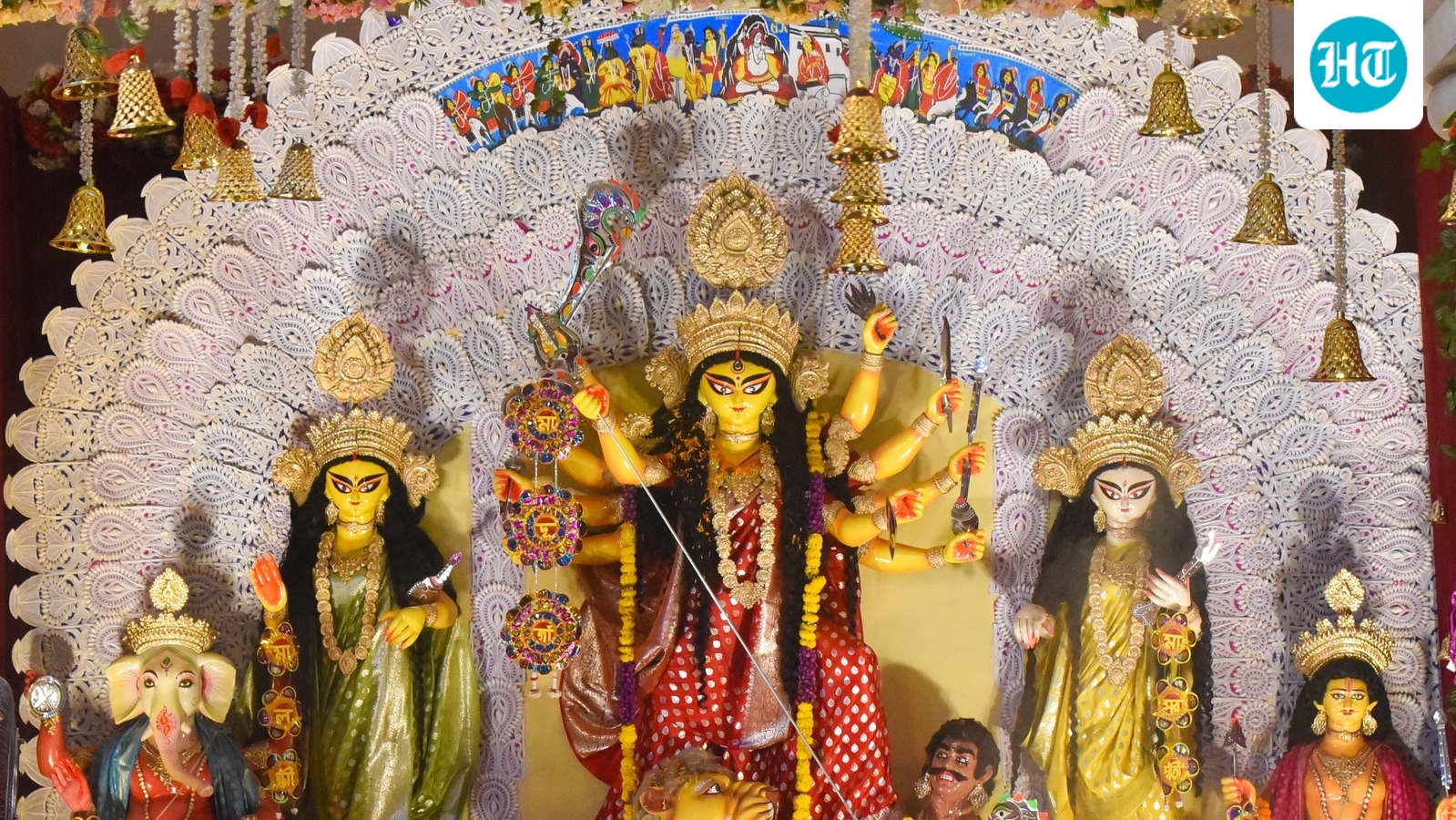
Tourists are now planning trips around festivals, with Durga Puja emerging as one of the top choices. (Parveen Kumar/Hindustan Times) Experts share what defines a culture-led trip and why cultural experiences are shaping holidays – not as an afterthought but as the main reason to travel. Whenever you travel to any place, after sightseeing and checking famous landmarks off your bucket list, you typically round up the experience by exploring the local ‘way of life’. Culture has always been an integral part of travel, but lately, there has been a significant shift in how people approach it.ALSO READ: Monsoon trip is no longer off-season: 6 destinations to visit this season for misty hills, waterfalls and lush viewsEarlier, tourists typically chose a destination first and explored its local culture after arriving. Now, this process is getting reversed. So, what exactly is new?Skyscanner's India Culture Travel Index, unveiled at The Stainless Gallery in Delhi on July 29, revealed that travellers are now deciding which cultural experience they want before choosing the destination accordingly.In other words, culture is no longer an incidental or secondary part of the itinerary; it is becoming the primary reason the trip is being planned in the first place.What defines cultural tourism?Rajasthan is one of the leading cultural destinations because of its architectural marvels. (Picture credit: Freepik)Based on a survey of 2000 regular Indian travellers, the index found that 84 per cent developed a greater interest in cultural travel within India in recent years. Similarly, 67 per cent would actively plan a holiday around at least one cultural experience. The main observation is that culture is no longer treated as an add-on or afterthought. It holds immense gravity in trip preparation, becoming the focal point.So, what defines a cultural experience? The index identified heritage and historical sites as the strongest motivator, with 47 per cent of travellers willing to plan a trip around them. Other factors include festivals and regional food experiences. For festivals, Durga Puja, Ganesh Chaturthi and Navratri Garba are among the top festivals around which travellers are planning trips.According to Skyscanner's data, Kerala, Rajasthan and Uttarakhand rank among the country's leading cultural destinations as travellers head to these places for architectural landmarks, historic communities and traditions.43 per cent of Indian travellers say they would plan a trip to experience the regional culinary scene. (Picture credit: Freepik)How is Gen Z discovering cultural experiences?Weighing in on this question, Neel Ghose, travel and destinations expert at Skyscanner, believes social media plays a major role in helping younger travellers discover cultural experiences.What is the priority now?As the nature of online discovery changes, people are approaching trip planning differently. They are asking different questions. According to Neel, ‘Where should we go?’ is no longer the first question. Instead, more travellers are enthusiastic about ‘What should we experience?’ The destination then becomes the answer. Travellers are following this instinctive answer now.Ghose was also of the opinion that social media in a way ‘democratised’ travel. It has exposed people to different places and experiences that they otherwise would not have known about.Speaking to HT Lifestyle exclusively, he elaborated on the role of social media, “This generation is actually like understanding and rediscovering more of their cultural heritage through social media, and that's kind of inspiring them to take the next travel journey.”From Lathmar Holi to Ganesh Chaturthi, young people are choosing to travel around the time of festivals. (REUTERS)What is Gen Z using to plan their trips?Ghose called Gen Z an ‘AI native’ generation that uses AI to research the places beforehand, especially about their culture. He shared his observation that younger travellers are using Skyscanner's AI tool to ask specific questions based on their cultural interests.Explaining how these searches work, Ghose said, “If someone is interested in a particular part of India or a specific architectural style, they can ask targeted questions on Skyscanner and receive relevant recommendations, including cities they explore and the most affordable flights to reach them.”The takeaway? Gen Z folks are research-oriented planners. They are gravitating towards an interest-first approach for trip planning. For this, they leverage both social media and AI tools. Technology, therefore, acts as a necessary bridge between cultural curiosity and destination discovery for younger tourists.In a nutshell, based on Ghose's input, it is clear that for Gen Z, social media and AI are two fundamental drivers of cultural discovery and shaping the way they travel.Neel Ghose's parting insight was that culture is a behavioural shift, reminding us that this passion is here to stay and not fizzle out like any passing trend.Now that we have discussed culture at length, let us understand what it means in contemporary times and why tourists may encounter a mismatch between expectation and reality.Take the example of the Paris syndrome, where sometimes the reality of a destination is different from the romanticised image. A similar gap can emerge when travellers expect traditions to stay as they were in the past.Can culture evolve and still remain authentic?Tourists expect a cultural experience that they think would be preserved exactly how it existed in the past. However, Dr Navina Jafa, an expert in heritage tourism, sustainability, cultural strategy and Kathak dance, challenged this assumption. She offered a very nuanced and human perspective, dispelling the idea that authenticity requires culture to remain frozen in time.Where does culture originate?Culture is at the intersection of the community and their surroundings. Dr Jafa emphasised that geography determines culture. So when the geographical conditions change, communities respond by adapting their cultural practices.In a one-on-one chat with us, she said, “Culture is parampara, which is ever-fluid. But where does culture emerge from? That is the question we need to ask. Culture is a human response to natural settings.”She advocated that geography cannot be separated from cultural tourism. Whether it is local food, clothing or architecture, crafts and festivals, everything comes down to the environment communities live in.Dr Jafa further added, “If environments change, people living in those habitats will respond differently. They will adapt and develop different cultural traditions, allowing stories to have a sense of continuity.”Her observation is crucial because it tells us that culture is ‘living’ and constantly evolving. The authenticity is not embedded in how it remains unchanged, but in the continuity of the stories it carries.Planning your next culture-led trip? Meet the traditions behind the destinationsVisitors can try their hand at ajrak block printing. (Picture credit: Adrija Dey)Before planning a culture-led trip, it helps if you understand the tradition that gives a destination its identity. One way to do this is by watching artists demonstrate their crafts in person. The exhibition by Skyscanner at The Stainless Gallery allows visitors to see regional traditions unfold in real time.You will see: Ajrakh block printing from Rajasthan, Bengal's Kalighat painting, Natungram wooden dollmaking, Dhokra metalwork, dhurrie weaving from UP, Haryana's stone-dust painting and more.Through conversation with the artisans, we found that these crafts are actually part of a living culture, with the knowledge and skill passed down from one generation to the next.Madhumita Chitrakar, a Patachitra artist from Paschim Medinipur, West Bengal, began learning the art from her family at the age of eight. Her grandmother taught her. She also sings when she presents her art to visitors, narrating the mythological and folk stories behind the paintings. Visitors can hear her sing the story of Radha-Krishna while showing the scene on the painted scroll. She also explores contemporary themes such as deforestation and the coronavirus pandemic, illustrating how culture remains alive by evolving with the times.Nisha and Madhumita are local artisans who have learned the craft from their families. (Picture credit: Adrija Dey)Sustainability is also prominent in these regional crafts. Nisha, a stone-dust painting artisan from Haryana, repurposes the fine marble or stone powder typically discarded during stone cutting. The artisans of this community combine this powder with natural gum and later paint with oil colours to create beautifully textured paintings inspired by nature.The exhibition will remain open to visitors at The Stainless Gallery, New Friends Colony, Delhi, from 11 am to 7 pm on July 30 and July 31.With the live demonstrations and conversations with the artisans, you can understand cultural traditions better and even discover which cultural experience you want to plan your next trip around.Adrija Dey’s proclivity for observation fuels her storytelling instinct. As a lifestyle journalist, she crafts compelling, relatable narratives across diverse touchpoints of the human experience, including wellness, mental health, relationships, interior design, home decor, food, travel, and fashion that gently nudge readers toward living a little better. For her, stories exist in flesh and bones, carried by human vessels and shaped through everyday endeavours. It is the small stories we live and share that make us human. After all, humans and their lores are the most natural and raw repositories of stories, and uncovering them, for her, is akin to peeling an orange under a winter afternoon sun. Always up for a chat, she believes the best stories come from unfiltered yapping, where "too much information" is kind of the point. A graduate of Indraprastha College for Women, University of Delhi, and an alumna of the Indian Institute of Mass Communication (IIMC), Delhi, Adrija spends her idle hours cocooned with herbal tea and a gripping thriller, scribbling inner monologues she loosely calls poetic pieces, often with her succulents in attendance. On lazier days, she can be found binge-watching, for the nth time, one from her comfort-show holy trinity: The Office (US), Brooklyn Nine-Nine, or Modern Family. Dancing by herself to her peppy playlists, however, is an everyday ritual she swears by religiously.Read MoreSustainabilityTravelCultureCatch every big hit, every wicket with Crick-it, a one stop destination for Live Scores, Match Stats, Quizzes, Polls & much more. Explore now!.Catch your daily dose of Fashion, Taylor Swift, Health, Festivals, Travel, Relationship, Recipe and all the other Latest Lifestyle News on Hindustan Times Website and APPs.See Less
Experiences before destinations: Priorities of Indian travellers are changing as they make culture the focus of holidays
Experts share what defines a culture-led trip and why cultural experiences are shaping holidays – not as an afterthought but as the main reason to travel. | Travel
1,642 words~7 min read