For most of my professional life, I have been interested in how minds work: how people understand one another, how they fail to do so, and how intelligence sometimes arises not simply inside a single individual, but in the space between people. Artificial intelligence has given that old question a new urgency. The more I work with AI systems, the less I find myself asking only how intelligent they are, and the more I ask what happens when humans and AI begin to think together. I am not suggesting that AI is sentient in any human sense. My point is simpler and more practical: these systems can now take part in exchanges that shape how we reason, learn, decide, and trust.
That matters because AI is no longer confined to research laboratories or specialist companies. It is entering schools, offices, hospitals, design studios, call centers, and ordinary online life. Increasingly often, people are not using AI simply to retrieve information, but to help draft, compare, explain, summarize, question, and explore. When that happens, the central issue is no longer only the machine itself. It is the interaction.
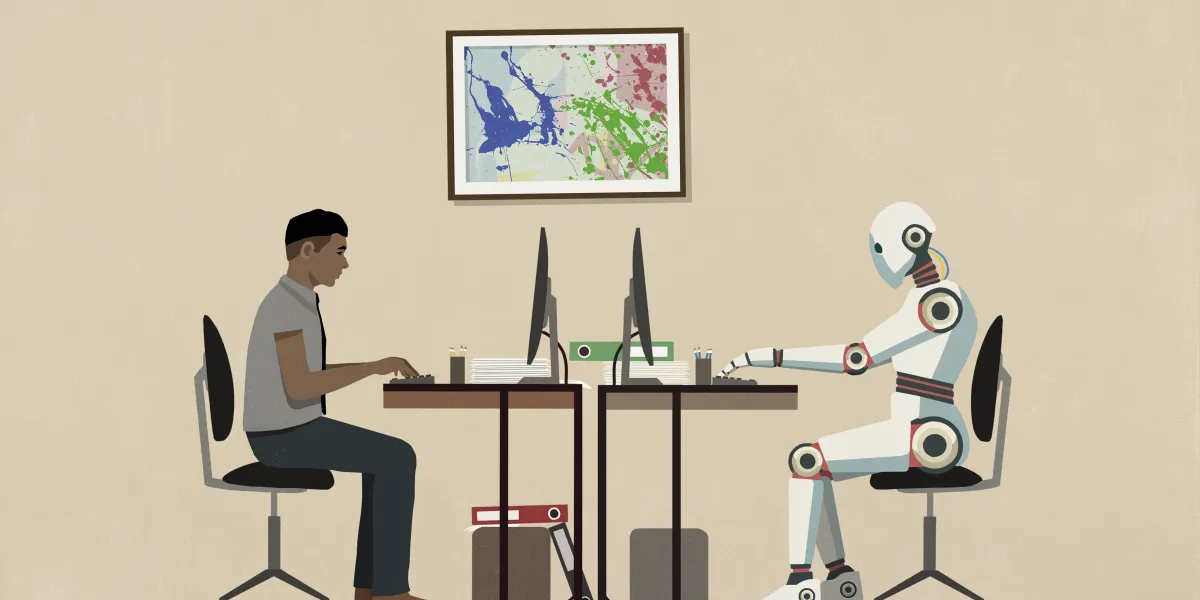
Earlier technologies extended human capacities in familiar ways. The telescope extended vision. The engine extended muscular power. The computer extended calculation. AI is different because it operates in language. It answers questions, reshapes ideas, offers alternatives, and generates explanations. For that reason, it begins to feel less like a passive tool and more like a colleague. That shift matters. When a technology enters language, it also enters the social world of interpretation, misunderstanding, persuasion, and trust.