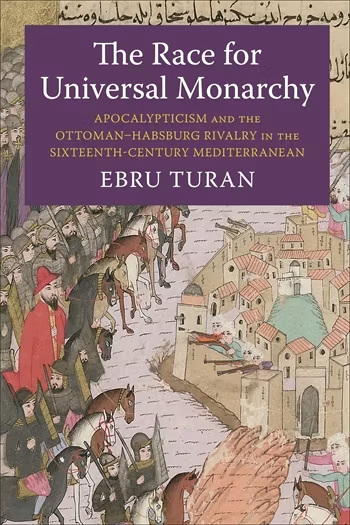
The sixteenth century saw the rise of two Mediterranean empires driven by apocalyptic fever who sought to bring Christianity and Islam together under the rule of one emperor. Ebru Turan’s new book The Race for Universal Monarchy: Apocalypticism and the Ottoman-Habsburg Rivalry in the Sixteenth-Century Mediterranean looks at the Ottoman Habsburg rivalry through the lens of competing ideologies shaped by overlapping historical events. The Crusades shifted political ideologies in both Europe and the Middle East creating a need to justify acquiring power in line with religious end times beliefs. Both Charles V, King of Spain and Archduke of Austria, and Suleyman I, the Ottoman Sultan, not only viewed their clash as part of the usual political rivalry, both saw their leadership as representing a universal vision for peace and unity of the Mediterranean that was connected to a religious imperative. Turan putting the Habsburg and Ottoman next to each other comparatively changes the way historians understand the development of both empires.
The Ottoman ghaza tradition is something that changes in light of this study. Traditionally, the Ottoman state has been depicted as being governed by an aggressive crazed Islamist expansionism looking to subjugate Christian Europe, but what Turan argues is the Ottoman ghaza policies were rooted in responding to Muslim fears of Christian expansionism that not only sought to subjugate Muslims, but also eliminate Islam altogether. ‘From their earliest appearance, the Ottoman rulers positioned themselves as the bulwark of Islam against the aggression of Christendom.’ In other words, the ghaza was viewed by the Ottomans as a defensive posture against crusader attacks, but it also provided the Ottomans with the justification that it should be the leader of the Islamic world as only they could halt crusader expansionism that would usher in an apocalyptic era.