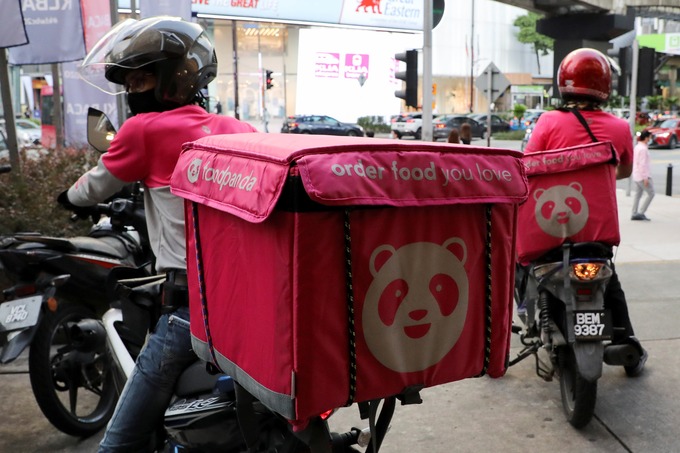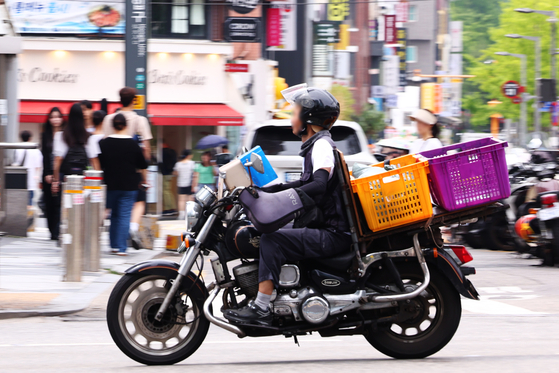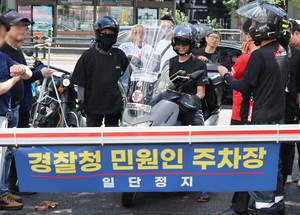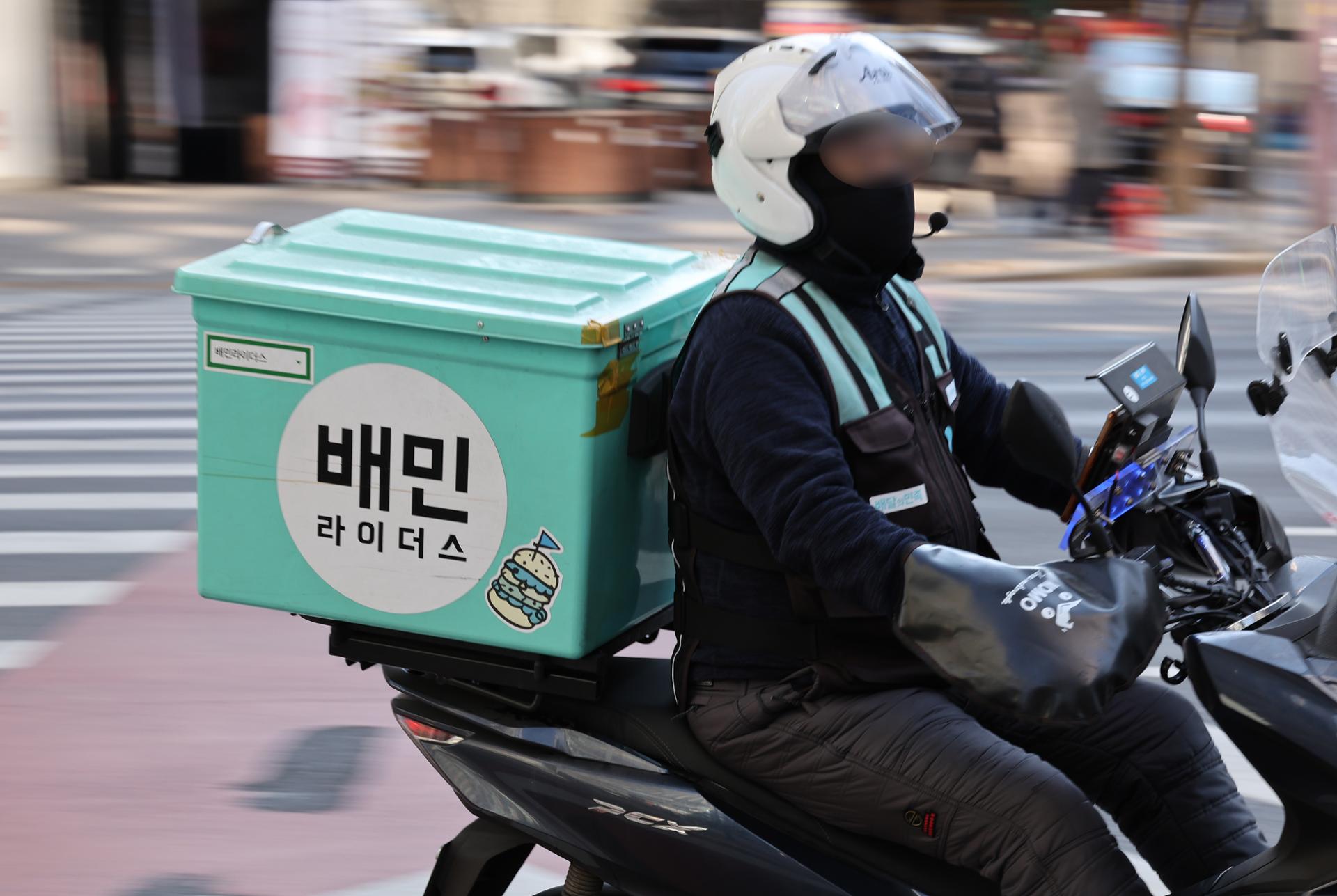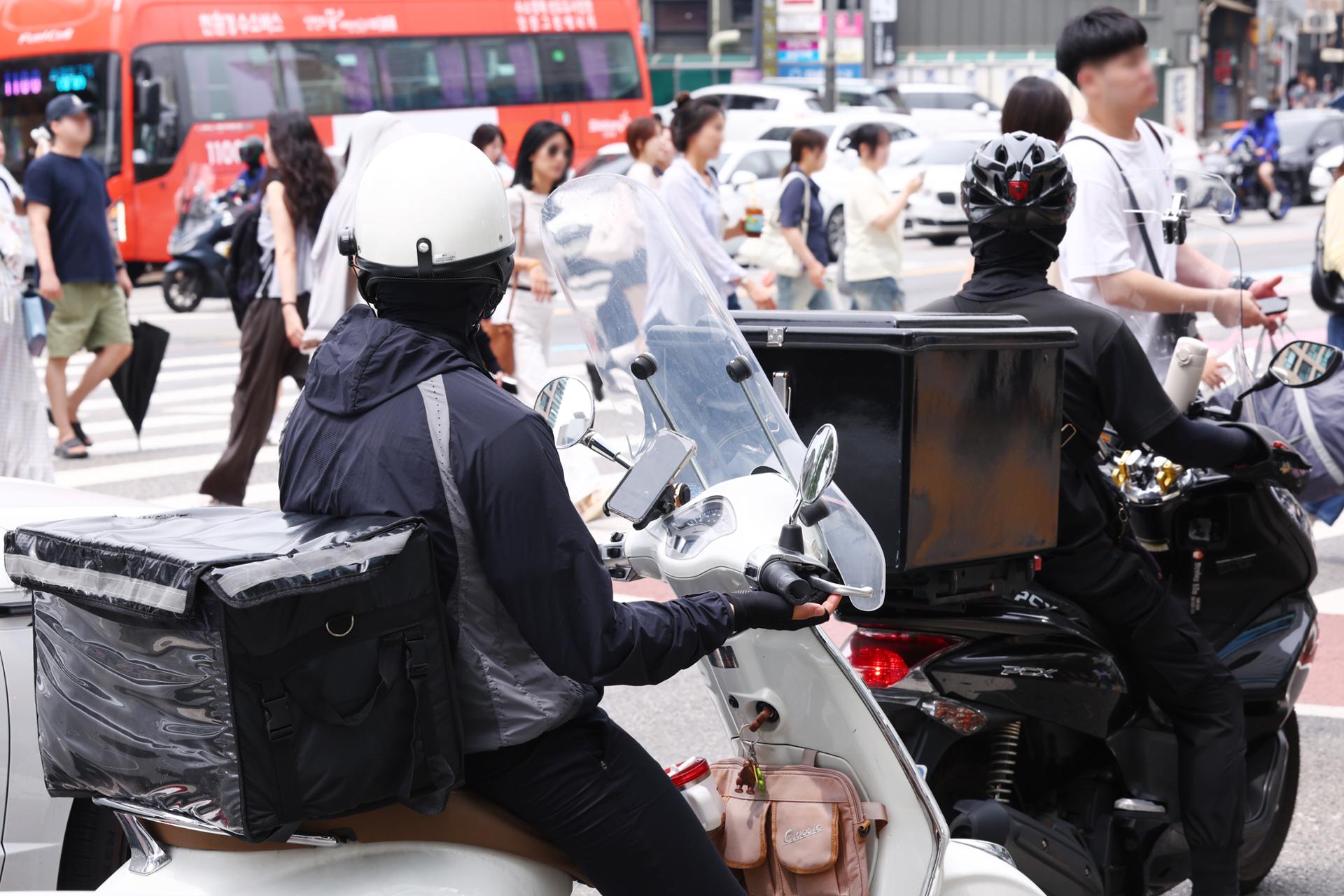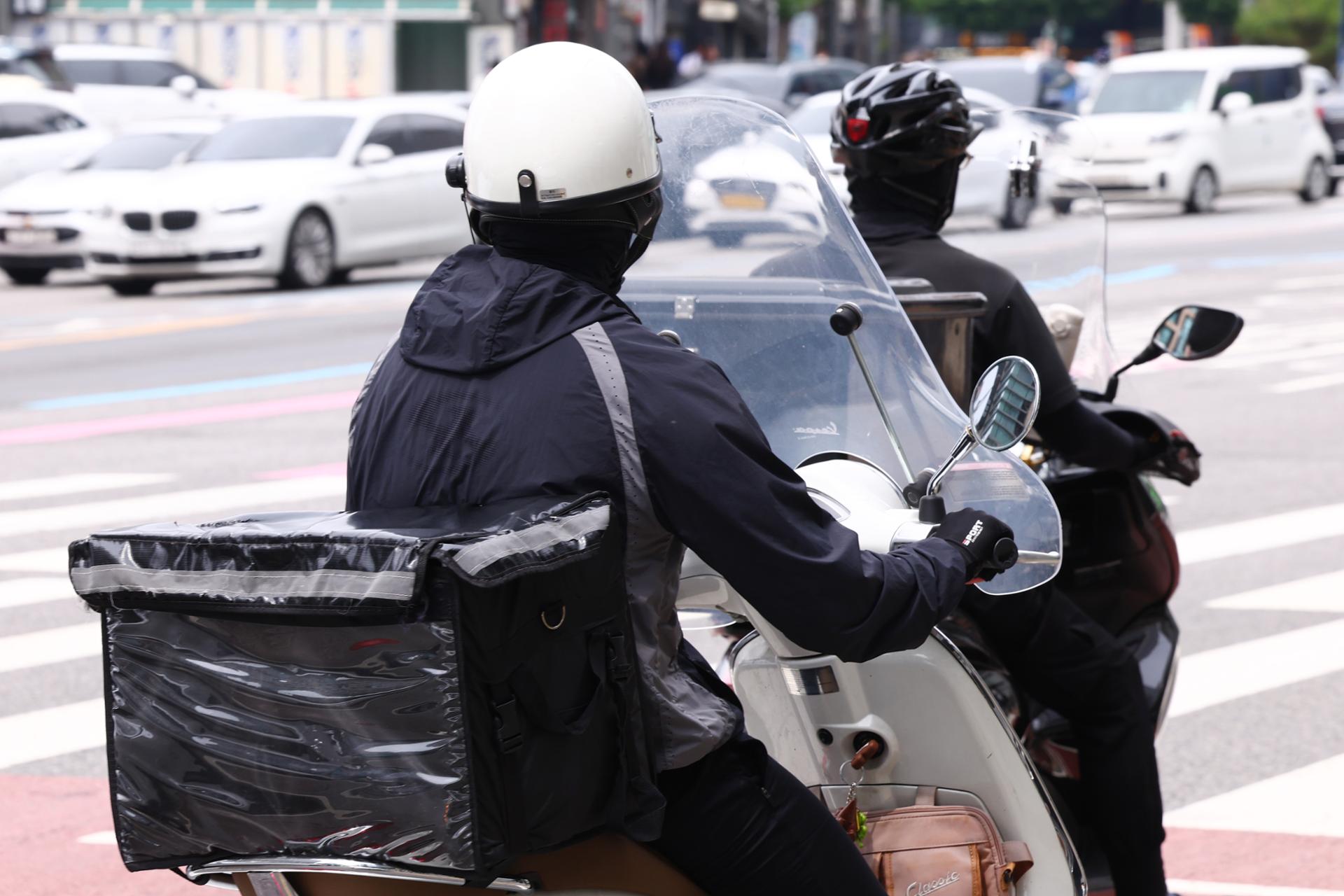
A delivery rider makes a delivery in Seoul on July 8. (Yonhap) Visitor restrictions at some apartment complexes in South Korea have sparked controversy, as delivery workers voice complaints about what they say are unreasonable regulations.The dispute centers on requirements such as removing helmets, providing personal information or using separate entrances for delivery workers. Some riders say such demands are demeaning and infringe upon their privacy. They also say complicated processes can disrupt their work, as most deliveries via platforms are commission-based.Another pressing issue is the lack of legal protections or government systems to protect the delivery workers, which they say leaves them vulnerable to such arbitrary treatment.A video that circulated online Thursday showed a confrontation between a delivery rider and a resident at an apartment complex in Busan.According to the video, the apartment required delivery riders to remove their helmets and record their personal information before entering the complex. The rider refused, citing privacy concerns, and asked the resident to come outside to collect the order instead. The resident declined and refused to pay the delivery fee.The incident reflects a recurring dispute reported at apartment complexes across the country.Delivery riders have shared an online map listing about 50 apartment complexes that allegedly require riders to remove their helmets at the entrance or restrict them to service elevators.In 2021, the Rider Union filed complaints with the National Human Rights Commission of Korea against 103 apartment residents' associations over such practices. The commission, however, dismissed the complaints, ruling that apartment complexes have broad discretion to establish their own security and management rules.Delivery platform operators, including Baemin, said they have internal guidelines for responding to cases in which riders are treated unfairly. Riders, however, say they often have little choice but to accept deliveries to such apartment complexes because assignments are made automatically through platform algorithms.Legal experts say that requiring excessive personal information from riders could potentially violate the Personal Information Protection Act. They argue, however, that broader institutional safeguards are needed because platform workers remain largely outside the protections provided under the Labor Standards Act.The number of quick-service delivery workers surged from 12,823 in 2020 to 162,746 in 2024, according to government data.
Delivery riders seek legal safeguards over apartment entry rules
Visitor restrictions at some apartment complexes in South Korea have sparked controversy, as delivery workers voice complaints about what they say are unreasona
363 words~2 min read