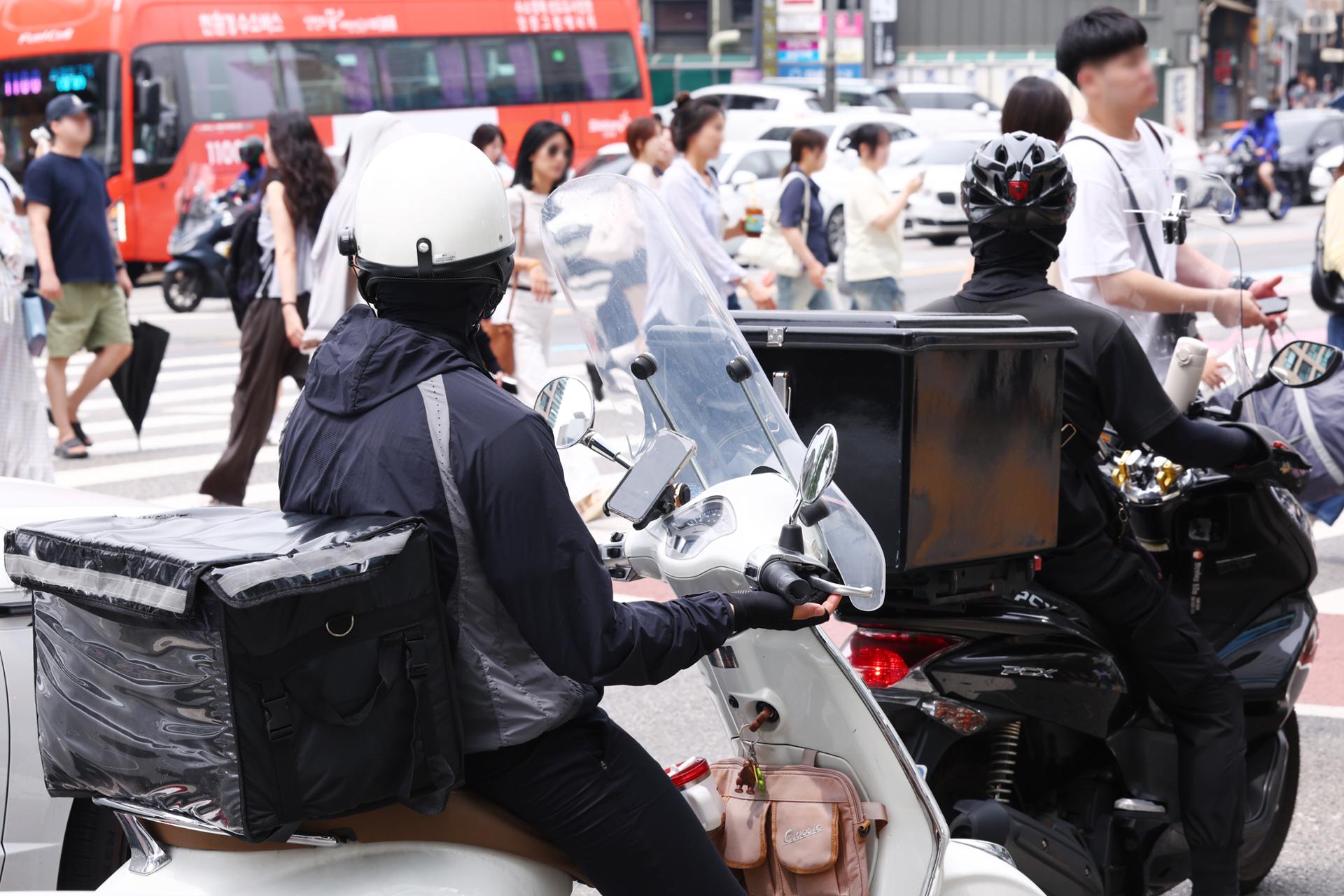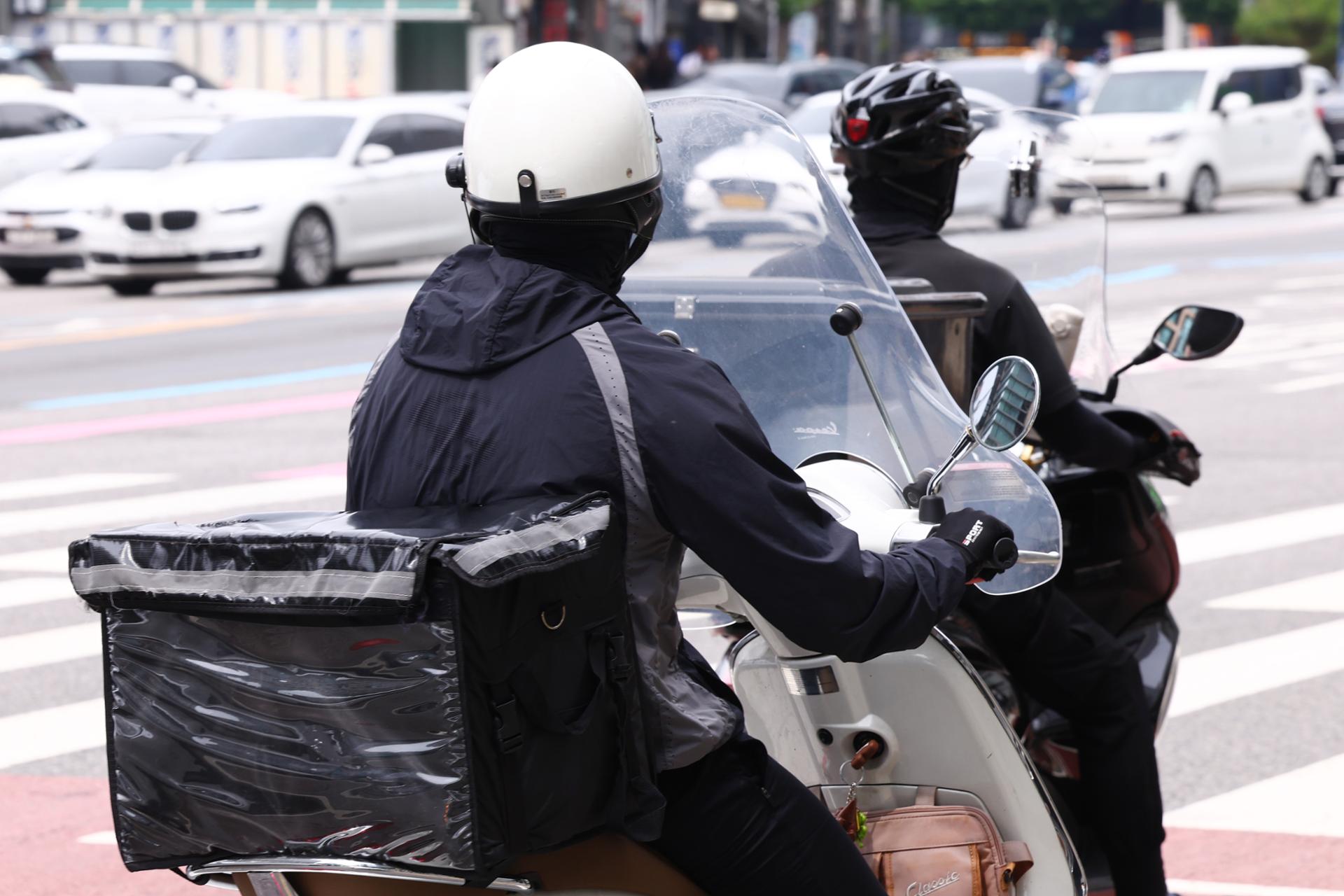
Appellate court says platform workers have employer-employee relationship in terms of wages and duties Unionized delivery workers and bicycle riders hold a protest over a motorcycle parking issue in front of the National Police Agency in Seoul on Tuesday. (Yonhap) A Seoul appellate court has recognized a delivery rider as an employee under the Labor Standards Act, in a ruling that could affect the legal status of workers hired through online and mobile delivery platforms.The Seoul High Court on Friday ruled partially in favor of a unionized delivery worker who filed a civil lawsuit against a local delivery platform, seeking unpaid wages and reinstatement, according to the Korean Public Service and Transport Workers’ Union on Wednesday.The court found that if the worker provided labor under the platform’s direction and supervision, he should be considered an employee, the union said.Much of Korea’s food delivery market is handled by workers contracted through mobile or online platforms, rather than hired by restaurants. But platform delivery workers have generally been treated as independent contractors, partly because they can choose whether to accept or reject delivery orders.According to the latest government survey released in 2024, Korea had 883,000 platform workers as of 2023, including 485,000 in delivery and driving services.Legal recognition as an employee would entitle such workers to protections under the Labor Standards Act, including job security, paid leave, severance pay and other benefits.A lower court had ruled against the worker, saying the platform did not assign specific tasks or give detailed instructions, and that the worker’s discretion showed he was not an employee.The Seoul High Court, however, found that platform delivery workers cannot secure delivery orders on their own and that their pay is effectively determined by the company. On that basis, the court said the worker should be regarded as an employee, according to the union.“The ruling recognizes the employee status of platform workers. It shows that employers cannot avoid obligations under the Labor Standards Act, including insurance, paid leave and severance pay,” the union said.
Delivery rider wins employee status in court
A Seoul appellate court has recognized a delivery rider as an employee under the Labor Standards Act, in a ruling that could affect the legal status of workers
335 words~2 min read