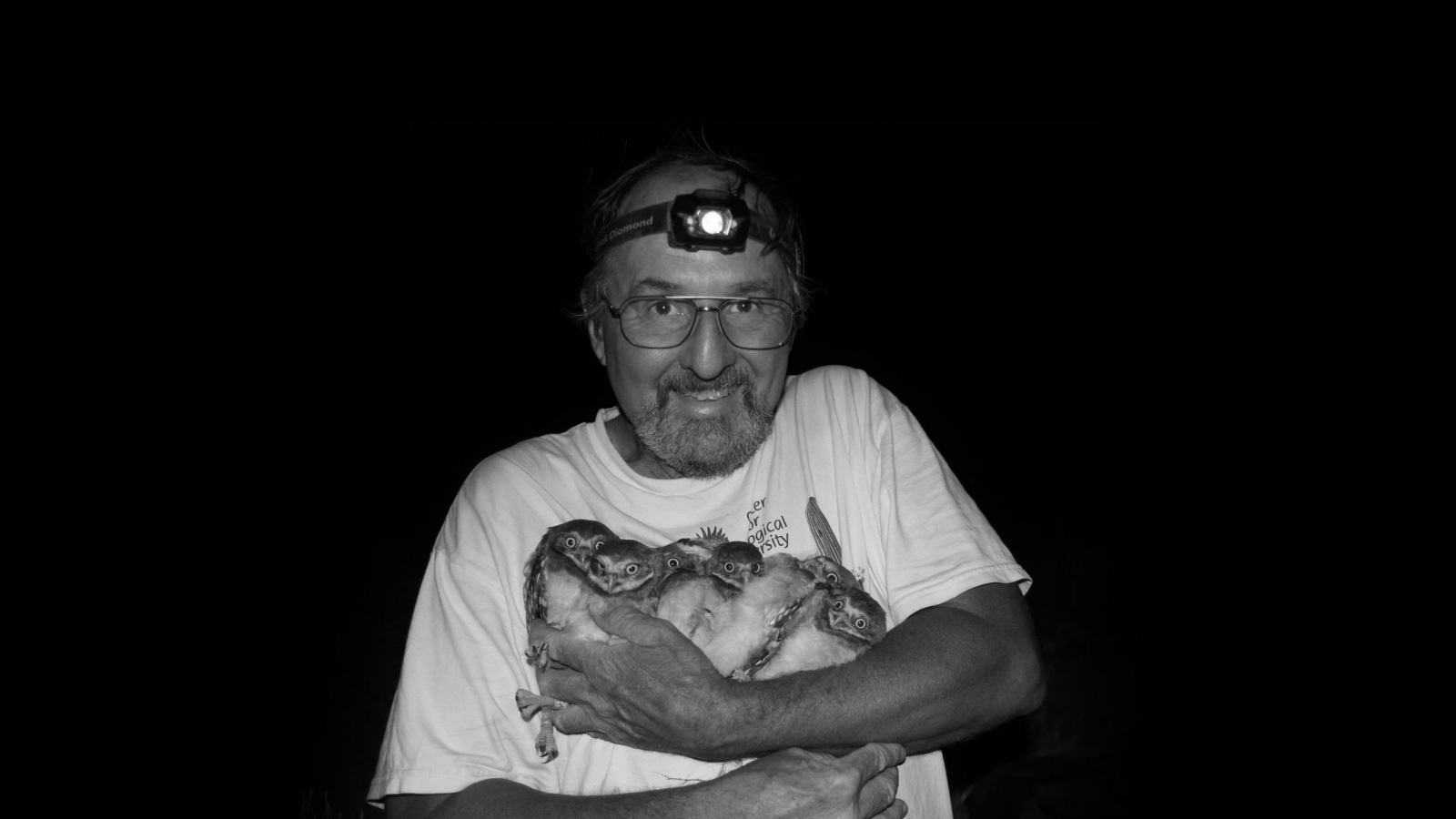
Burrowing owl numbers at Oregon’s former Umatilla Chemical Depot had fallen to only a few breeding pairs after badgers disappeared and suitable burrows became scarce.David H. Johnson and his collaborators built artificial burrows from plastic barrels and pipes, helping the population recover and creating a major long-term research site.Johnson founded the Global Owl Project, connected researchers across dozens of countries, mentored younger scientists, and studied both owl biology and their place in human cultures.After being diagnosed with Stage 4 colon cancer in 2022, he continued working through treatment. The Umatilla project now continues under other researchers, public agencies, and the Confederated Tribes of the Umatilla Indian Reservation.
At the former Umatilla Chemical Depot in eastern Oregon, the weapons were gone, though their presence had shaped the land. Concrete bunkers stood among sagebrush and dry grass. Pronghorn moved through the open country. Badgers, once common there, had largely disappeared.
Their absence mattered to the small owls that lived close to the ground. Burrowing owls do not usually dig their own homes. They occupy tunnels made by mammals, especially badgers and prairie dogs. At Umatilla, the decline of those animals had removed much of the owls’ shelter. By the late 2000s, only a few breeding pairs remained.