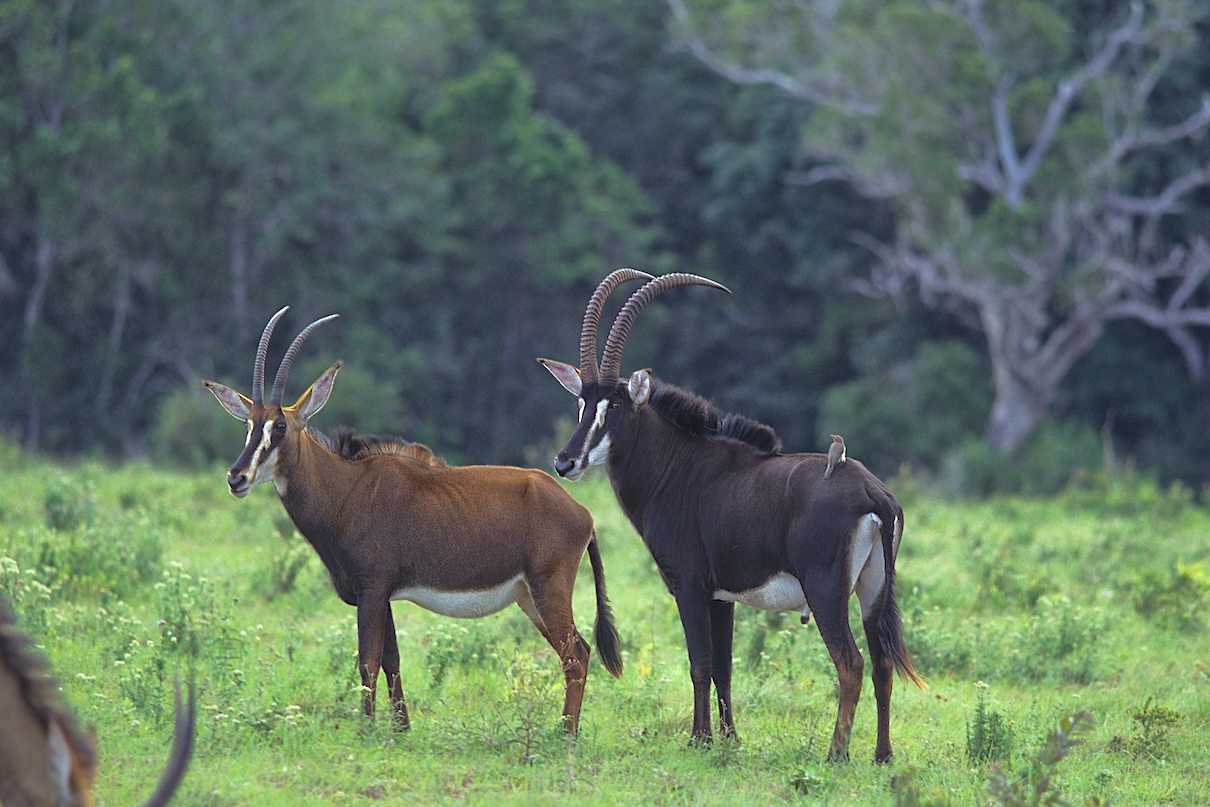
There is a recent trend of introducing ungulates like various antelope species outside their natural home ranges, a practice that carries large risks and should only be carried out under very limited circumstances, a new op-ed argues.This is why the IUCN’s guidelines for responsible wildlife translocation classify the importation of nonnative wildlife as something to be carried out only under a very narrow set of exceptional circumstances.“Isn’t the essence of conservation about, as much as possible, allowing evolution to run its course un-engineered? The IUCN guidelines exist for good reason, and history suggests they should be followed,” the authors write.This article is a commentary. The views expressed are those of the authors, not necessarily of Mongabay.
Introducing animals outside their natural ranges is a practice fraught with risk, one that the International Union for the Conservation of Nature (IUCN) — the recognized global authority on the natural world — explicitly discourages. The IUCN’s guidelines for responsible wildlife translocation classify the importation of nonnative wildlife as a “critical risk” to be carried out only under a very narrow set of exceptional circumstances. There are very good reasons for these precautions. The natural world is awash with examples of species that were released outside their natural ranges becoming invasive, with devastating consequences. Even if species released outside their natural ranges don’t become invasive, they may still drastically disrupt the ecological dynamics of a community.