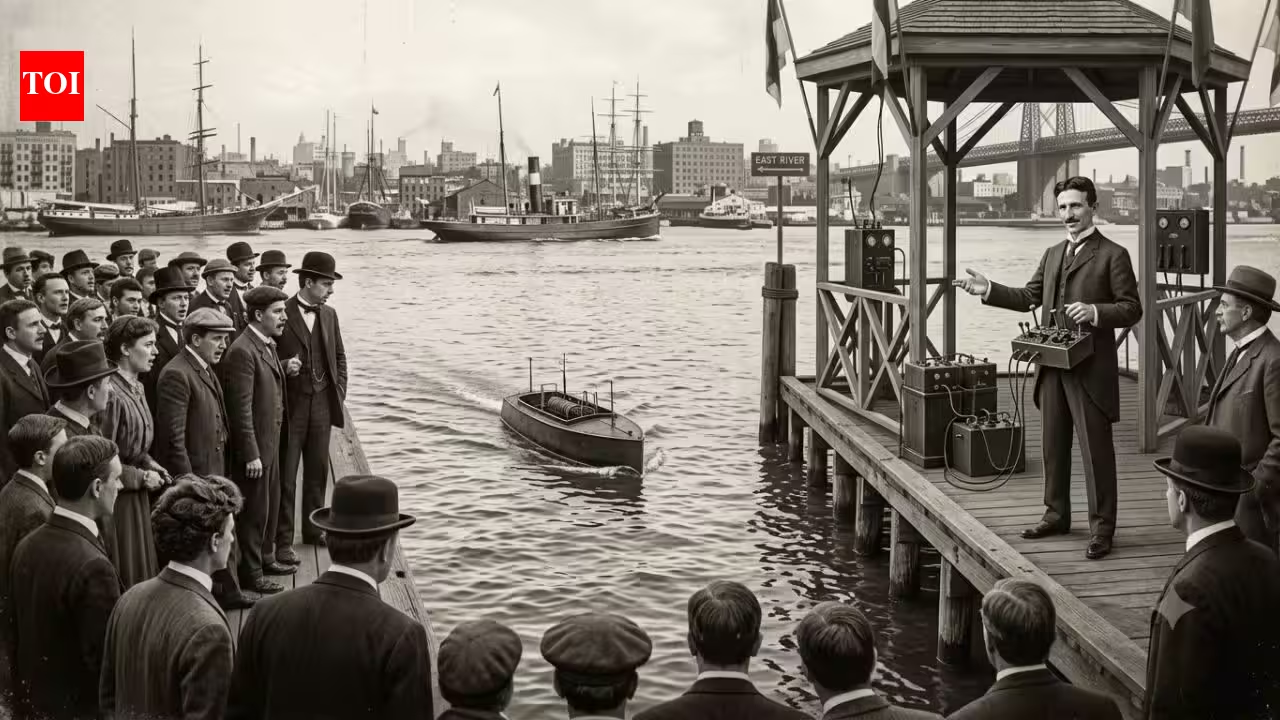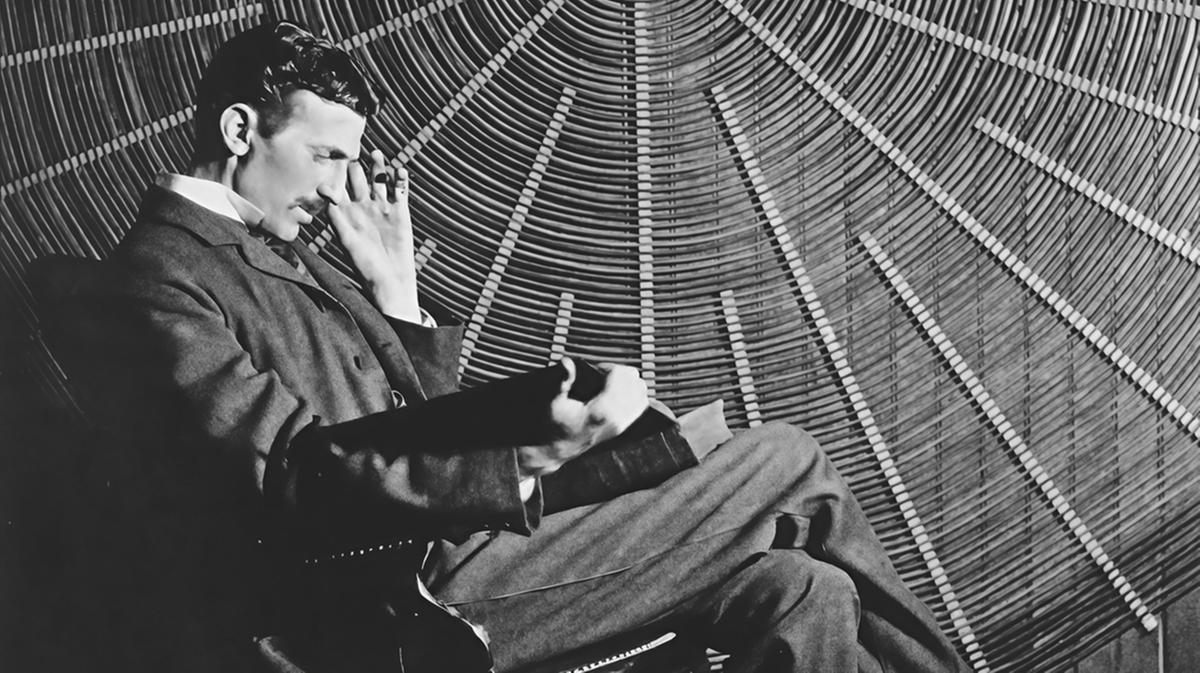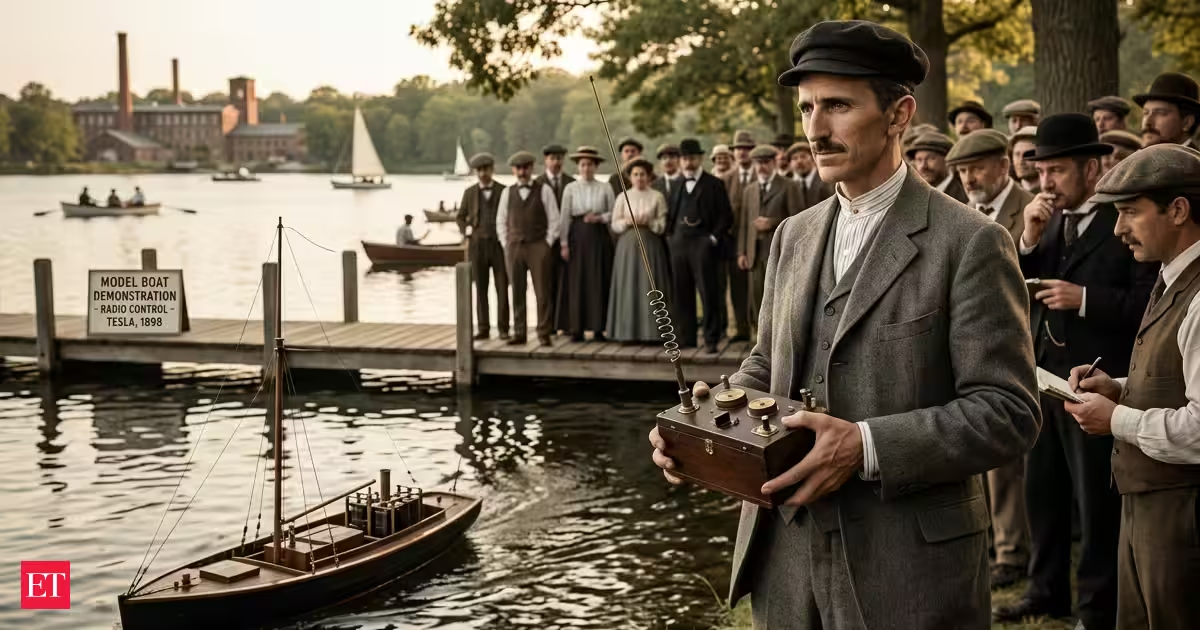
In 1898, an immigrant inventor created a remote-controlled boat powered by a battery and operated it with the help of radio signals while everyone thought it was magic as the real reason was yet to become popular. The inventor was Nikola Tesla, who introduced the wireless-controlled boat during an electrical exhibition at Madison Square Garden in New York City. Visitors had never seen a machine respond to commands without wires. Since radio waves were not widely understood, many believed something unusual was happening. Tesla later explained that the boat worked through radio signals. His demonstration became one of the first public examples of wireless remote-control technology.Nikola Tesla introduced wireless technology in 1898Nikola Tesla presented his invention during the 1898 Electrical Exhibition at Madison Square Garden in New York City. The event included a specially built indoor pool where visitors gathered to watch the demonstration.Tesla showed a steel boat measuring around four feet in length. The vessel carried batteries that powered its systems. Instead of using wires, Tesla controlled the boat through radio signals sent from a small handheld control box.The audience watched the boat move across the water without anyone touching it. Tesla controlled:The propellerThe rudderThe onboard lightsThe boat responded to every command sent wirelessly.In 1898, an immigrant inventor created a remote-controlled boat powered by a batteryMany visitors had never heard about radio waves in 1898. Wireless communication was still unfamiliar to the public. Because of this, people struggled to understand how the boat worked. Some believed Tesla was performing magic. Others thought he was using telepathy. A few even suggested that a trained animal might be hidden inside the boat to control it.Tesla explained that the movement came from radio signals. His demonstration showed that machines could receive commands wirelessly without physical connections. Today, this idea forms the basis of many technologies, including remote-controlled devices, drones, robotics, and wireless systems.The vessel received a U.S. patentTesla protected his invention through a U.S. patent.The invention received:U.S. Patent No. 613,809Title: Method of and Apparatus for Controlling Mechanism of Moving Vessels or VehiclesThe patent described how moving machines could receive wireless commands through radio communication. It became one of the earliest patents covering remote-control technology.Tesla called the invention a 'Telautomaton'Tesla referred to his radio-controlled vessel as a "telautomaton." The name reflected his idea that machines could perform actions automatically after receiving wireless instructions.His vision went beyond a single boat. Tesla believed similar systems could control many different machines from a distance. Although the public viewed the invention mainly as entertainment, Tesla believed it represented the beginning of a new technological era.Tesla wanted military use for the technologyTesla believed wireless-controlled machines could reduce risks during warfare. He proposed using radio-guided boats and torpedoes that could be operated from a safe distance.However, the U.S. Navy and many investors did not adopt the idea at that time. Many considered the invention a novelty instead of a practical military system. Years later, remote-control technology became important in defense equipment used around the world.Some discussions continue over similar inventionsDiscussions continue among historians and technology enthusiasts regarding the development of remote-control technology. Some online discussions, including those on Reddit, point out that inventors in Britain also worked on remote-control patents during roughly the same period.Even with these discussions, Tesla's public demonstration remains one of the earliest and most widely documented examples of a working radio-controlled vehicle shown before a large audience.Who was Nikola Tesla?Nikola Tesla was born on July 10, 1856, in the Austro-Hungarian Empire. He later became a Serbian-American engineer, inventor, and futurist. He studied engineering and physics during the 1870s, although he did not complete a university degree.During the early 1880s, Tesla worked in telephony and later joined Continental Edison. In 1884, he moved to the United States. He briefly worked at Edison Machine Works in New York before establishing his own laboratories and companies.Tesla changed electrical engineeringTesla became known for his work on alternating current (AC) electricity. His AC induction motor and polyphase AC system became major developments in electric power distribution. Westinghouse Electric licensed several of Tesla's patents in 1888. Those inventions later became part of electrical systems used in many countries.Tesla also worked on:Tesla coilsMechanical oscillatorsElectrical discharge tubesEarly X-ray imagingWireless lightingWireless communicationWorldwide wireless power transmissionThe Wardenclyffe Tower projectTesla later attempted to build the Wardenclyffe Tower. His goal was to create an international wireless communication and power transmission system. Funding problems prevented the project from being completed. Although the tower was never finished, it reflected Tesla's belief that wireless communication would connect people across long distances.Tesla's later years and legacyDuring the 1910s and 1920s, Tesla continued working on new inventions. Many projects achieved limited commercial success. He spent much of his later life living in New York hotels. Nikola Tesla died in New York City on January 7, 1943.Years after his death, recognition for his work increased. In 1960, the International System of Units (SI) named the unit of magnetic flux density "tesla" in his honor. Interest in Tesla's inventions grew again during the 1990s. In 2013, Time included Tesla among the 100 most significant figures of all time.Why the 1898 demonstration still matters?Tesla's radio-controlled boat represented an early step toward modern wireless technology. The demonstration proved that machines could receive commands through invisible radio signals instead of wires.Although many people misunderstood the invention during the exhibition, later developments in electronics, robotics, communications, and remote-controlled systems followed the same basic principle.The demonstration remains an important chapter in the history of science and engineering because it introduced a practical example of wireless remote control many years before the technology became common.
In 1898, an immigrant engineer invented wireless technology, created a battery-powered boat and operated it with a pocket-size remote while everyone thought it was magic: How Nikola Tesla demonstrated the world's first radio-controlled vessel 'Telautomaton'?
In 1898, an immigrant inventor created a remote-controlled boat powered by a battery and operated it with the help of radio signals while everyone thought it was magic as the real reason was yet to become popular. Nikola Tesla introduced one of the earliest wireless-controlled machines at Madison Square Garden. His invention surprised visitors, inspired future wireless technology, received a U.S. patent, and later became an important milestone in the history of remote control and radio communication.
925 words~4 min read