The bill Lindsey O. Graham Sanctioning Russia Act of 2026 (S. 5025) – named for the Ukraine-supporting senator who died shortly before its introduction – is a bipartisan plan for new laws that would strengthen US sanctions on Russia and on countries, companies, and persons that do business with Russia. As written, the bill authorizes the US president to take action to sanction any Russian person or entity he determines is “refusing good-faith peace negotiations with Ukraine…Violating a negotiated peace agreement…Initiating…military invasion of Ukraine…(or) Overthrowing, dismantling, or subverting the Ukrainian government.”JOIN US ON TELEGRAMFollow our coverage of the war on the @Kyivpost_official. 1.) Which Russians are being sanctioned and how would the sanctions work? Among the offices and officials specifically named as falling under sanction are Russia’s president, defense minister, foreign minister, army commander, air force commander and central bank, as well as the semi-commercial financial groups Sberbank, VTB Bank and Gazprombank and their subsidiaries. Individual businessmen assisting in sanctioned activity – for instance Russian oligarchs producing arms or exporting energy for the Kremlin – could be subject to sanctions as well, but the bill doesn’t name them. Owners and operators of Russia’s “shadow tanker” fleet are identified as potential sanctions targets. Any sanctioned financial institution, business or person could be cut off from access to the US-dominated worldwide money transfer system SWIFT. US energy exports to Russia are banned, as is transfer of advanced US oil and gas industry extraction and processing technologies. Most trade of Russian financial and energy instruments, by US business, is made illegal.
Plenty of Loop-Holes, “Waivers” and Weasel Room in the US’ Russia Sanctions Bill
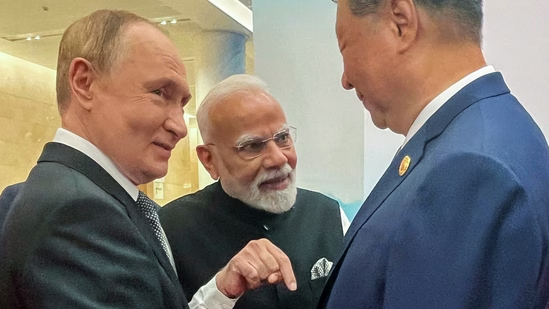
The law makes two giant economies not super worried about US sanctions – India and China – the bad guys. Also, for the sanctions to work, Trump has to want to enforce them.
2,034 words~9 min read