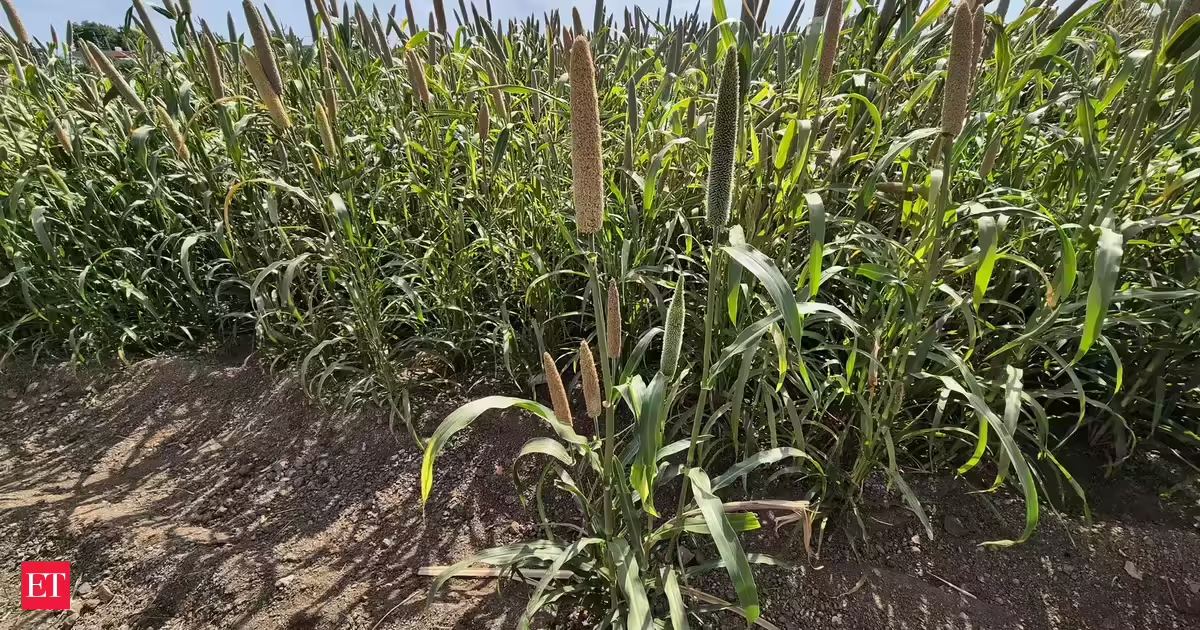
India holds immense potential to become a competitive manufacturing hub for alternative proteins (also known as smart proteins), and realising this potential will require sustained public and private investment in research and infrastructure, according to Sneha Singh, Managing Director of Good Food Institute (GFI) India.Alternative proteins consist of plant-based meat, eggs, and dairy, fermentation-derived products, and cultivated meat.Stating that smart proteins have been identified as one of the six priority areas under the Government’s BioE3 policy, she said scientific bodies such as DBT-BIRAC have already supported smart protein R&D through grants and expansive early-stage funding for startups.“India can leverage its large agricultural base of high-protein crops, competitive manufacturing costs, and a skilled workforce across agriculture, biotechnology, and food technology,” she told businessline in an online interaction.India must expand domestic capacity for high-value ingredients and specialised processing equipment, develop shared pilot and production facilities, establish clear regulatory pathways for novel foods, and strengthen practical training and industry-academia collaboration, she said.Indegenous cropsGFI India’s white paper on crop optimisation highlights several Indian legumes, lentils, and nutri-cereals that have strong potential as ingredients for plant-based meat, dairy, and eggs.High-protein pulses such as pigeon pea and mung bean, along with underutilised varieties like horse gram, can be processed into functional ingredients such as protein isolates and concentrates.Millets can improve the texture of plant-based meat or serve as a base for plant-based dairy, with products such as millet milk gaining popularity.She said that certain indigenous crops such as amaranth or finger millet contain all nine essential amino acids and have a high protein digestibility profile fit for plant-based alternatives.Value-added processingOn how value-added processing can create significantly higher economic returns to stakeholders, she said: “As consumer preferences are increasingly driven by health, convenience, and sustainability, there is a timely economic opportunity for India to emerge as a leading player in the plant-based smart protein ingredients and end product industry to fulfil this domestic and export demand.”Developing local smart protein manufacturing value chains can create lucrative demand for diversified crops and deliver higher, more predictable farm-gate incomes. Value-added or post-harvest processing also creates new entry points for farmer producer organisations (FPOs), cooperatives, MSMEs, and startups within the agricultural value chain.Another promising avenue is the use of agricultural byproducts for fermentation-derived protein applications, which can provide farmers with additional income streams beyond harvest.Market sizeAccording to the Union Ministry of Food Processing Industries, the domestic market size of plant protein ingredients alone is expected to reach $30 billion by 2033. GFI estimates that globally, the plant-based meat industry will grow anywhere from $88 billion to $368 billion by 2035. These sizable industries will equate to scaled demand and returns for farmers growing diverse, protein-rich crops, and for MSMEs who work across the value chain, she said.Processing clusters situated close to the agricultural bases would connect farmers to industry, while generating opportunities for MSMEs in ingredient manufacturing, logistics, equipment, and more.Asked about India’s share in $30-billion global market for the value-added alternative proteins, she said India currently represents a small but growing share of the global alternative protein industry, with plant-based products as the only category commercially available in the country.Over the next three to five years, growth is likely to be led by plant-based ingredients and products, while the more nascent categories of fermentation-derived proteins and cultivated meat continue to develop. Investing in agricultural R&D, domestic ingredient extraction, and shared infrastructure could reduce import dependence, lower production costs, and enable Indian companies to serve both domestic and export markets, she said.National missions“Building on the Government’s existing National Missions, we expect to see indigenous crops such as millets, pulses, and legumes move from the margins to the mainstream of ingredient innovation. With further investment by ministries into India’s food processing and manufacturing ecosystem, these crops will form the backbone of affordable, culturally relevant plant-based alternatives,” Singh said.Specialised research into processing technologies, taste, and nutritional benefits by public research institutions will also support a reduction in production costs, and greater consumer adoption. In tandem, efforts by multilateral bodies and civil society organisations can build evidence and integrate plant-based proteins into nutritional and agricultural programmes, she said.“Ultimately, smart protein’s continued evolution in India will depend on building a resilient food system aligned with national priorities of nutrition security, economic growth, and agricultural and climate resilience,” she added.Published on July 29, 2026
India has ingredients to become alternative protein manufacturing hub: GFI India
Scientific bodies such as DBT-BIRAC have already supported smart protein R&D through grants and expansive early-stage funding for startups, says its MD Sneha Singh
718 words~3 min read